
Air Classifier Mill: The Complete Buyer’s Guide for Importers and Distributors
Buying a grinding mill across a border is not a price comparison. It is a check on specifications, drawings, test data and after-sales reach. This guide walks through the sequence in the order the decisions actually happen, so you can compare quotations that look identical on paper.
Who this guide is for
It is written for importers, trading companies and distributors who are buying an एयर क्लासिफायर मिल from a manufacturer abroad, usually for the first time. Therefore it assumes you already know roughly what the machine does, and it concentrates on the parts that decide whether the purchase works: the quotation basis, the audit, the test report, the import file and the spare-parts route. If you need the engineering background instead, start with the air classifier mill overview or with what an ACM mill is.
1. What the term means inside a quotation
Three suppliers can quote “air classifier mill” and mean three different scopes. One sends a mill only, another includes the air circuit, and a third includes the whole line with installation. Because the word covers all three, the first job is to fix the scope before you compare any figure.
In its narrow sense the machine has an impact rotor and a dynamic classifier wheel in one housing, so the top size is set by wheel speed rather than by a screen. Consequently the quotation should state which of those two drives is included, and at what power. Our ACM mill page lists the standard configuration, and you can use it as a reference point when reading an offer from anyone else.
Beyond the mill, four items decide the real scope. Firstly, the feed device, because a mill without a controlled feeder produces an unstable curve. Secondly, the air circuit of cyclone, filter, fan and ducting. Thirdly, the control cabinet and instrumentation. Fourthly, installation, commissioning and training, which are often quoted separately.
| Term in the offer | What you must confirm |
|---|---|
| Mill only | Whether feeder and discharge are included, since a bare mill cannot run alone |
| Complete set | A written component list, because the phrase has no standard meaning |
| क्षमता | The bulk density and D97 at which the figure was measured |
| सुंदरता | Whether it is D97, D50 or a range, and measured on which material |
| शक्ति | Installed versus running load, and the voltage and frequency assumed |
2. The four inputs that decide the machine
Every sizing decision follows from four numbers you already hold. Sending all four in the first email therefore shortens the process by a week or more.
- Material and hardness. Name the substance and its Mohs value, because both drive the wear package and the rotor design.
- Target fineness. Give D97 and, if available, D50, since “fine powder” cannot be engineered against.
- Required output. State kg/h and whether that is finished product or feed rate, as the two differ by the circulating load.
- Site conditions. Voltage, frequency, available headroom and dust classification, because these decide the electrical build.
Two of these deserve a warning. Output figures scale with bulk density, so a mill rated at 1,000 kg/h on calcium carbonate may deliver far less on a light fibrous material. Moreover, the fineness target sets the energy, and energy sets the running cost, so loosening D97 from 10 μm to 20 μm can cut power consumption substantially without harming the product.

Which structure to ask for
Three mechanical layouts cover most enquiries, and the choice is about access and drive arrangement rather than grinding performance. Because the layout affects maintenance time, it is worth deciding before the quotation stage.
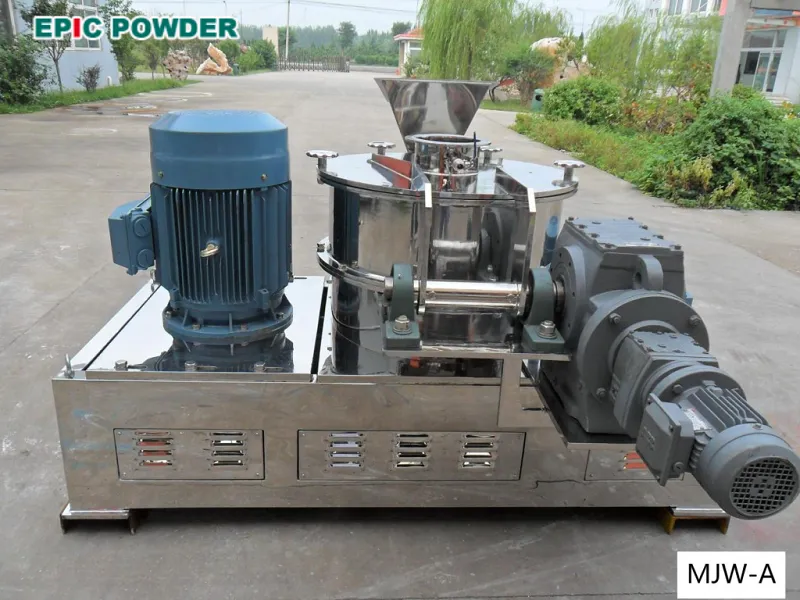
On the एमजेडब्लू-ए, both drives sit side by side in a horizontal frame, so the footprint is short and each end stays reachable. एमजेडब्लू-एल instead uses a vertical body with the classifier drive on top, which suits tall buildings and the widest capacity range. Finally, एमजेडब्लू-डब्लू drives the grinding disc and the wheel independently, and therefore reaches the highest classifier speed for the sharpest cut.
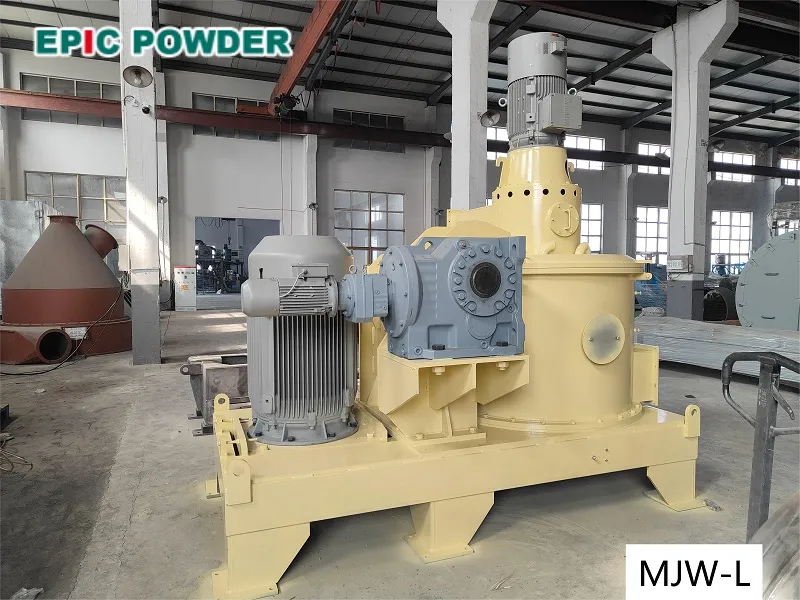
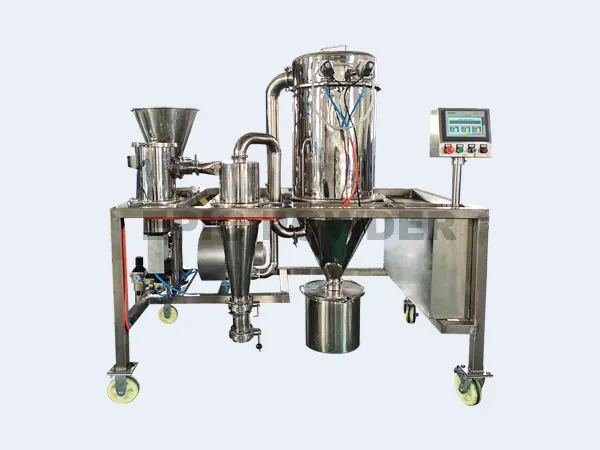
Two further formats complete the range. The एमजेएल-डब्ल्यू is a belt-driven impact mill without a wheel, so it suits coarse duty ahead of fine grinding. Meanwhile the laboratory unit exists so a curve can be proven before a production frame is ordered. You can see all of them side by side in the air classifier mill category.
3. What actually drives the price
Buyers often expect one number per model. In fact a quotation moves with six variables, and knowing them lets you see which supplier is quoting a smaller machine to win on price.
| Cost driver | How it changes the number |
|---|---|
| Frame size and motors | The largest single item, because rotor and classifier power scale with throughput |
| Target fineness | Finer cuts need more speed, more energy and a heavier bearing set |
| Wear protection | Ceramic or carbide linings add cost but extend life on abrasive minerals |
| Material of construction | Carbon steel is standard; stainless adds cost and lead time |
| Explosion or inert build | Motors, sensors, earthing and valves all change, so the premium is real |
| Scope of the air circuit | Cyclone, filter, fan and ducting can exceed the mill itself in value |
Consequently, the cheapest offer frequently turns out to be a smaller frame size quoted against a looser fineness. Ask each supplier to state the model, the installed power and the basis of capacity in one line, then compare those three across offers. A supplier who cannot put them in writing has not sized the machine.
Why we do not publish a price list
The same frame can be built for a food plant and for a mine, and the difference sits in the wear parts, the surface finish and the electrical package. Therefore a list price would be misleading for both. What we can do is quote against your four inputs and show the cost of each option separately, so you can see what each upgrade buys.
4. How to compare quotations on the same basis
Four offers rarely share a structure, yet comparing them is mechanical once you force them onto one page. Build a table with the rows below and fill it yourself, because the act of filling it exposes the gaps.
| Row to force onto every offer | Why it changes the ranking |
|---|---|
| Model and frame size | Larger frames cost more, so a low price often hides a smaller machine |
| Capacity basis | Throughput only compares at equal density and equal D97 |
| Scope list | Feeder, filter, fan and cabinet swing the total by a wide margin |
| Wear-part specification | Standard steel versus ceramic changes both price and maintenance |
| Lead time and Incoterm | FOB and CIF prices are not comparable, and neither are 45 and 120 days |
| Warranty and spares terms | Twelve months on parts is not the same as twelve months on site |
Once the table is complete, score each supplier on four weighted criteria: technical fit, evidence, commercial terms and after-sales reach. Technical fit usually carries half the weight. However, after-sales reach decides the second and third year of ownership, so give it real weight rather than treating it as a tie-breaker.
5. Auditing a supplier before you commit
A video call and a catalogue are not an audit. Eight points are worth checking, and most can be covered in one factory visit or one structured video walk-through.
| Point to verify | What a good answer looks like |
|---|---|
| Own design or rebadged machine | They can show drawings, rotor patterns and their own model numbering |
| Machining capability | They machine the rotor and the wheel in-house, because balance depends on it |
| Balancing equipment | A balancing stand exists, since a wheel at 8,500 rpm cannot be balanced by eye |
| Assembly and test bay | Machines are run before shipment, not only painted |
| Wear-part drawings | Parts are made to a drawing you can reorder against later |
| Test laboratory | A lab mill and a particle size analyser are on site for sample work |
| Export experience | They can name destinations and show packing standards for sea freight |
| Documentation set | Manual, drawings, wiring diagram and spare list come as standard |
Three signals deserve a second look. Firstly, a supplier who cannot say which parts they make and which they buy is usually assembling rather than manufacturing. Secondly, a quotation that arrives without a drawing revision number will be hard to enforce later. Thirdly, a price that sits far below the others is worth investigating rather than celebrating, because something in the scope has been removed.
Ask for the drawing, not the brochure
A general arrangement drawing shows the real dimensions, the drive arrangement and the access routes for maintenance. Brochure photos hide all three, and dimensions matter when you plan the pit, the crane lift and the maintenance clearance.
6. The sample test, and what the report should prove
No specification survives contact with a real powder. Therefore a trial on your own material is the single most useful step before a purchase order, and it should be free of charge apart from freight.
Send 5–10 kg of material that genuinely represents production, not a hand-picked sample. Include the moisture content and the source, because both affect the result. If your process feeds a blend, send the blend.
| Section of the report | What it should contain |
|---|---|
| Material record | Your material name, moisture and bulk density as received |
| Test conditions | Model used, wheel speed, air volume and feed rate |
| परिणाम | The measured curve with D10, D50 and D97, not a single number |
| Recommendation | A model, a throughput and an installed power figure |
| Limits observed | Any sticking, heat rise or wear noted during the run |
Read the curve rather than the headline number. A steep drop above D97 means the classifier is working properly, whereas a long coarse tail means the cut is leaking. In addition, check how much material sits below 5 μm, because that fraction costs the most energy and often adds nothing to the product.
7. Import mechanics: code, packing, container, terms
Most delays in a first import come from paperwork rather than from the machine. The four items below are worth settling before the order is placed, not after.
| वस्तु | What to settle early |
|---|---|
| HS code | Usually declared under 8474.20 as grinding machinery, yet some brokers use 8479.89, so confirm the rate with your own broker |
| Packing | Plywood case with rust prevention, plus a moisture barrier for sea freight |
| Container loading | A 20GP holds roughly 28 m³ and a 40HQ about 68 m³, so a full line may need two |
| Incoterm | FOB, CIF and DAP shift cost and risk differently, so state which one you are comparing |
| Payment terms | A deposit with the balance before shipment is common, so agree the inspection trigger in writing |
Allow for the destination side as well. Because import clearance, inland haulage and rigging are usually excluded from a CIF price, they should appear in your landed-cost sheet from the start. For a machine of this size, the crane and the foundation work often cost more than the freight.
Documents the forwarder will ask for
Six documents travel with the machine, and a missing one can hold the container at the port while demurrage accumulates. Therefore collect them before the shipment leaves, not after it arrives.
- Commercial invoice. Value, Incoterm and HS code, matching the purchase order exactly.
- Packing list. Case numbers, dimensions and weights, because customs and the crane operator both need them.
- Bill of lading. Issued after loading, and the document your bank will ask for under a letter of credit.
- Certificate of origin. Needed for preferential duty in many markets, so request it with the order.
- Insurance certificate. Required under CIF, and worth having under FOB as well.
- Test and inspection records. Not a customs document, yet it is what your own customer will ask for.
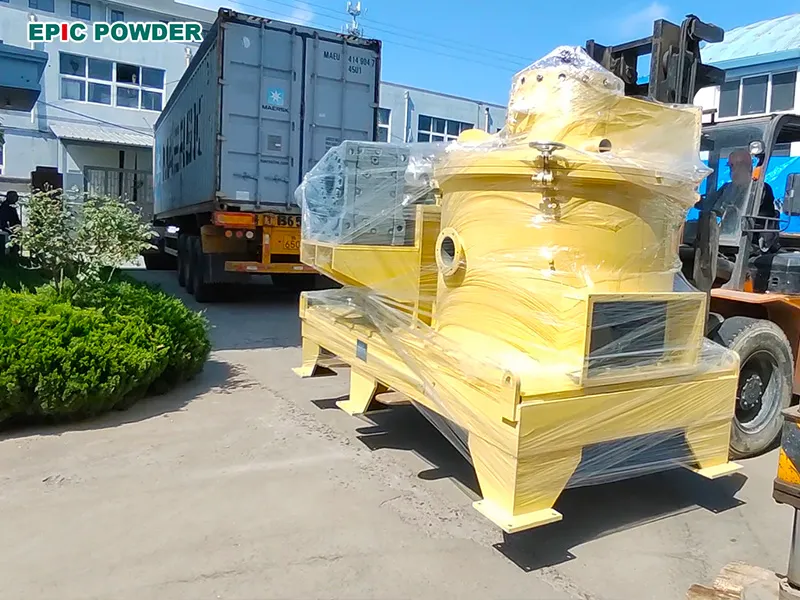
Wood packaging and ISPM 15
Most destinations require solid wood packing to be heat treated and stamped under ISPM 15. Because an unstamped crate can be refused or fumigated at your cost, confirm the stamp on the packing list before dispatch. Plywood cases are exempt in many countries, so ask which one the supplier uses by default.
Ask for photos before the container closes
A short photo set of the crated machine, the case markings and the container interior costs nothing and settles most damage claims. In addition, it shows whether the load was braced, which is the usual cause of transit damage on heavy equipment.
8. Installation, commissioning and the first month
The machine arrives as parts, not as a working plant. Therefore plan the sequence before the container lands, since a mill sitting on the floor waiting for a crane costs more than the crane.
Four steps are standard. Firstly, verify the foundation and the anchor positions against the drawing. Secondly, level the base and check the drive alignment before any wiring. Thirdly, run the fan and the air circuit empty, then add material gradually. Fourthly, record the baseline curve during commissioning, because that record becomes your reference when output drifts six months later.
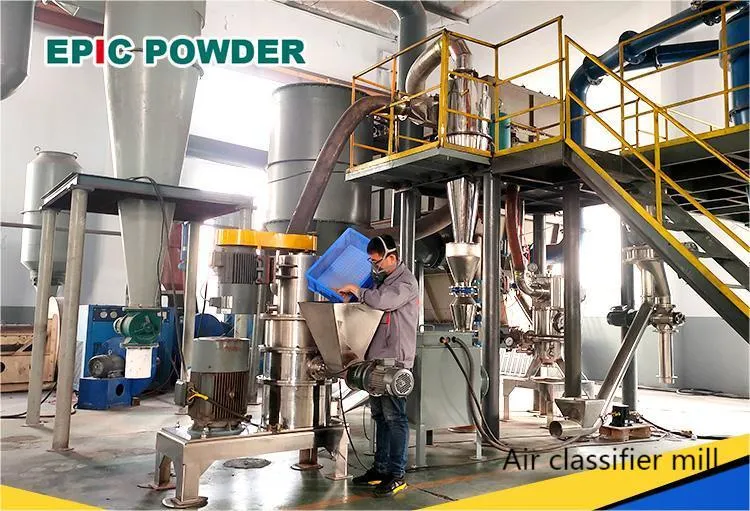
Commissioning is also the moment to train operators on three habits: watching the feed rate, listening for imbalance, and logging the wheel speed against the measured D97. Because those three variables explain most quality complaints, a written log turns guesswork into diagnosis.
9. Spares and service across borders
Wear parts are where an overseas purchase either proves itself or fails. Impact elements, the grinding track, the deflector liner and the classifier wheel all wear, and their life ranges from a few months on abrasive minerals to several years on soft carbon black.
Order the first spare set with the machine, because a second shipment of two small parts costs far more than the parts. Moreover, confirm that the supplier keeps the drawings and can remake the parts years later. A pattern part made locally without the drawing rarely balances correctly, and imbalance damages bearings long before it damages the part.
Service reach matters too. Ask who answers technical questions, in which language, and within what response time. Besides that, ask whether remote support is available for the variable frequency drives, since most starting problems are parameter problems rather than mechanical failures.
10. If you sell machines rather than powder
Distributors buy differently from end users, and the conversation should change accordingly. Four subjects belong in the first meeting, because each one affects whether the line can be sold twice.
- Territory. Ask for a defined area and a defined product range, since an undefined territory protects nobody.
- Demonstration. A reference installation nearby sells more than a brochure, so plan one early.
- Training. Your engineers need commissioning training, because a local presence is the actual product you sell.
- Stock. Agree which wear parts you hold locally, since delivery time decides repeat orders.
How distributor pricing usually works
Most manufacturers price in tiers that reflect volume and the services the distributor carries. Because a distributor who stocks parts and commissions machines costs the factory less in support, that distributor normally receives better terms than one who forwards enquiries only.
Three elements are worth clarifying in writing. Firstly, whether the price includes the air circuit or only the mill, since the two structures produce very different margins. Secondly, how spare parts are priced relative to the machine, because parts are often the healthier revenue line. Thirdly, what happens to the price if the exchange rate or the steel index moves during a long delivery, since a fixed price with no clause usually hides a risk premium.
Exclusivity is worth discussing, although it usually follows performance rather than preceding it. A workable structure links exclusivity to an annual volume and a stock commitment, so both sides carry an obligation. Meanwhile, ask how the manufacturer handles direct enquiries from your territory, because that answer reveals how the relationship will actually work.
11. Total cost of ownership, the number that decides
Purchase price is the smallest part of a five-year cost in most installations. Energy, wear parts and downtime dominate, and all three can be estimated before you order.
| Cost line | How to estimate it |
|---|---|
| Energy | Specific energy of roughly 15–60 kWh per tonne depending on fineness and material |
| वियर पार्ट्स | Element and liner life in tonnes, multiplied by the local price of the set |
| Downtime | Hours per wear change multiplied by the value of lost output |
| Air circuit | Fan power and filter pressure drop, which run continuously |
| Freight and duty | Landed cost, including clearance and inland transport |
A worked example, with the assumptions stated
Take a plant running 6,000 hours a year at 1 tonne per hour, so 6,000 tonnes annually. If one machine draws 20% less power at 30 kWh per tonne, the saving is roughly 36,000 kWh a year. At an industrial rate of 0.10 USD per kWh that is about 3,600 USD annually, or 18,000 USD over five years. Consequently a 15,000 USD price difference disappears within four years, and the cheaper machine becomes the expensive one.
The assumptions matter more than the arithmetic, so replace them with your own tariff and duty cycle. Nevertheless the shape of the calculation stays the same, and it is the reason a quotation should always carry an installed power figure at your operating point.
Run the comparison over five years and the ranking often changes. A machine that costs a little more but draws 20% less power can pay back the difference within two years at three-shift operation. Therefore ask every supplier for the installed power at your duty point, and treat a missing figure as a missing offer.
12. Questions importers ask most
Specification and fit
How do I know which model size I need?
Send material, target D97 and required kg/h to two or three suppliers, then compare the frame size and installed power they propose. If the proposals differ by more than one frame, one of them has used a different capacity basis.
Can one machine cover several products?
Often yes, although the wear package and the cleaning routine have to suit the most demanding product. For food or pharmaceutical grades, changeover cleaning usually matters more than the grinding itself.
What fineness should I specify?
Specify the coarsest D97 your product tolerates, because finer always costs more energy. Then ask for the curve, since two mills quoting the same D97 can differ in the amount of fines they produce.
Commercial and delivery
What is a realistic lead time?
Standard models usually ship 45–75 days after drawing approval, with larger or explosion-proof builds at the longer end. Custom materials and full-line scope add to that, so ask for a schedule rather than a single number.
How is payment normally structured?
A deposit with the balance before shipment is common, usually with a pre-shipment inspection. Therefore agree the inspection trigger and the documents required for release at the same time as the price.
Can I visit the factory before ordering?
Yes, and it is worth doing for a first order. If travel is not practical, ask for a live video walk-through that includes the machining area, the balancing stand and a machine under test.
What should the warranty cover?
Twelve months on parts is typical. Check whether wear parts are excluded, whether labour is included, and how a claim is handled across a border, because the last point decides whether the warranty is usable.
After-sales and ownership
How long do wear parts last?
It depends on abrasiveness and fineness more than on tonnage. Expect a few months on abrasive minerals and several years on soft material, so ask for a life estimate in tonnes rather than in months.
Can I buy spare parts locally?
Simple items can often be sourced locally, but impact elements and the classifier wheel should come from the original drawing. Because balance is critical, a pattern part can cause vibration that costs more than the saving.
Do you supply a complete line?
Yes. Mill, feeder, cyclone, bag filter, fan, ducting and control cabinet can be supplied as one matched system with commissioning support, or as a standalone mill if you prefer to build the circuit locally.
Work through the sections above in order and the purchase becomes a checklist rather than a gamble. Fix the scope first, then the four inputs, then the cost drivers, and only then compare money. Because each step narrows the field, the final negotiation usually takes one round instead of five.
Send your capacity and D97, get a real quotation
Give us the material, the target fineness and the output you need. We answer with a model, an installed power figure and the basis behind the capacity, so you can put the offer next to the others and compare like for like.
Written by the EPIC Powder engineering team, Qingdao, China. The MJW series is designed, built and supported by EPIC Powder, and spare parts are made to our own drawings at the same factory. Related reading: what an ACM mill is, how to choose an air classifying mill और MJW-L model data. Last updated 2 November 2026.