Petroleum coke (commonly referred to as petcoke) is a byproduct of crude oil refining. It is primarily composed of carbon and is characterized by high calorific value and low ash content. Petcoke is widely used in fuels, carbon products (such as graphite electrodes and prebaked anodes), and lithium battery anode materials. With the continuous growth of downstream demand—particularly driven by the rapid expansion of the new energy sector—the need for deep processing of petroleum coke has increased significantly. Grinding is a critical step in this process, converting lump petcoke into fine powder to meet the requirements of various applications. However, petroleum coke grinding presents multiple technical challenges. This article analyzes these challenges and explores whether the Air Classifier Mill (ACM) represents the optimal solution.
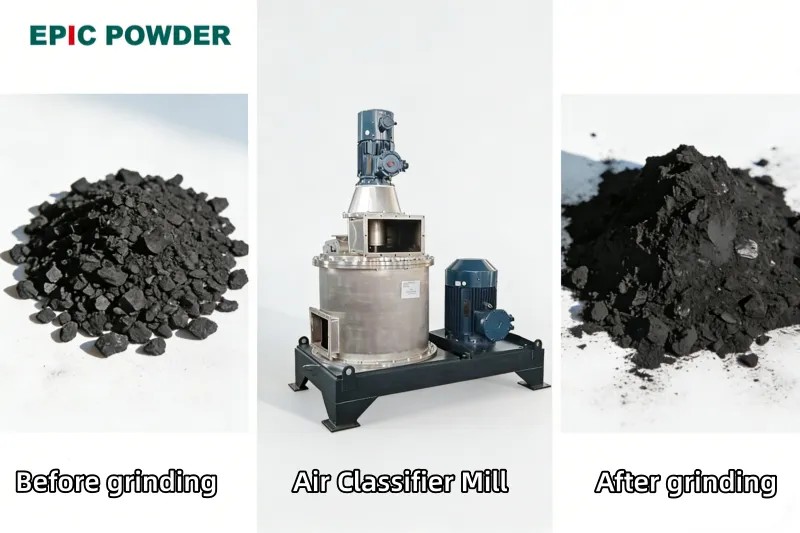
Challenges in Petroleum Coke Grinding
The physical and chemical characteristics of petroleum coke make it difficult to grind. The main challenges include the following:
High Hardness and Strong Abrasiveness
Petroleum coke typically has a Mohs hardness of 3–4. Certain grades, such as shot coke or needle coke, are even harder and exhibit a low Hardgrove Grindability Index (HGI). This results in severe equipment wear, shortened service life of grinding rotors and liners, and high maintenance costs. Excessive wear may also introduce metal impurities, negatively affecting powder purity—especially critical for high-end carbon materials and lithium battery anode applications.
Moisture and Volatile Content
Green petroleum coke may contain 8–15% moisture and relatively high volatile content. Moisture can cause material buildup, blockages, and reduced grinding efficiency. Volatiles released during grinding increase the risk of fire or explosion. Although pre-drying or hot-air systems can mitigate these issues, they significantly increase energy consumption.
Strict Particle Size and Distribution Requirements
Different applications demand different particle sizes:
- Fuel applications: ~200 mesh (74 μm)
- Carbon products: finer than 325 mesh
- Lithium battery anodes: ultrafine particles with narrow size distribution
Conventional grinding equipment often leads to over-grinding or wide particle size distributions, negatively affecting combustion efficiency or end-product performance.
Dust Explosion and Environmental Risks
Fine petroleum coke powder is highly flammable and explosive. The grinding process generates large amounts of dust, requiring explosion-proof designs and high-efficiency dust collection systems. At the same time, increasingly strict environmental regulations make dust emission and noise control major concerns.
Energy Consumption vs. Throughput
As finer particle sizes are targeted, energy consumption increases sharply while throughput decreases. Traditional ball mills are energy-intensive, while vertical mills offer higher efficiency but require high capital investment, which may be impractical for small- and medium-sized enterprises.
These challenges demand grinding equipment that combines high wear resistance, precise classification, low-temperature operation, and high energy efficiency.
Is the Air Classifier Mill (ACM) the Best Solution?
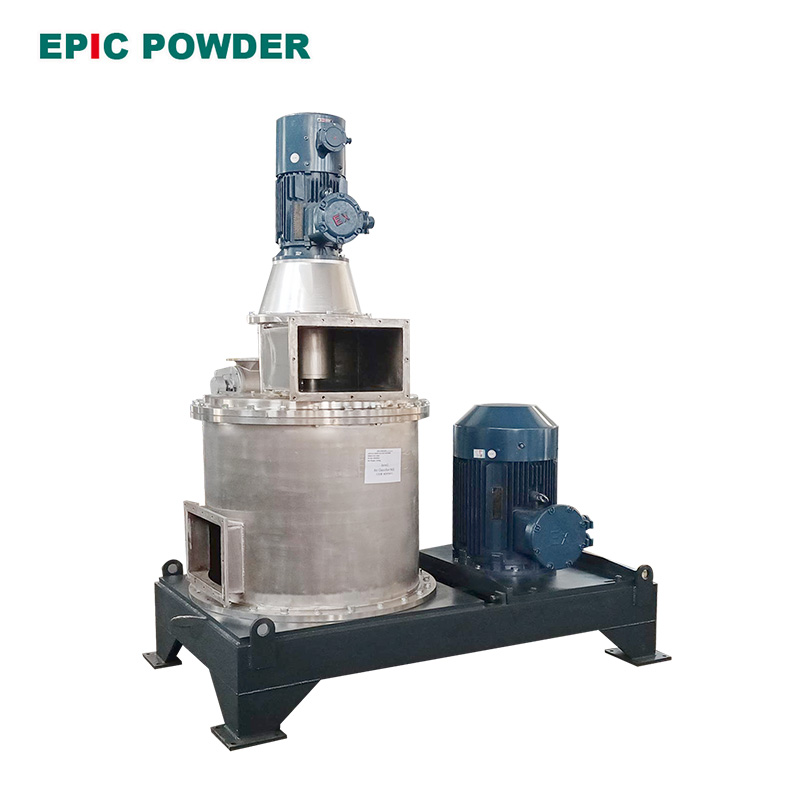
For applications requiring fine to ultrafine grinding of petroleum coke with precise particle size distribution control, the Air Classifier Mill (ACM) is an excellent solution—and in many cases, the optimal one.
Working Principle and Structural Advantages of the ACM
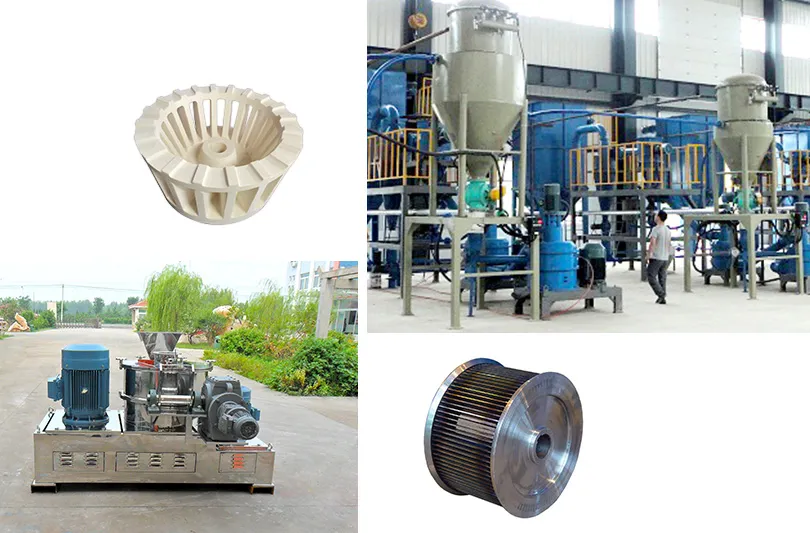
The Air Classifier Mill, also known as a dynamic air-classifying impact mill, integrates grinding, classification, and conveying into a single system.
Working Principle:
Material is impacted and pulverized by a high-speed rotating grinding rotor (hammer). An internal high-precision classifier wheel simultaneously separates particles: qualified fine powder is discharged, while oversized particles are returned to the grinding zone for further size reduction.
ACM Performance in Addressing Petroleum Coke Grinding Challenges
| Petroleum Coke Challenge | ACM Solution | Key Advantages |
|---|---|---|
| High abrasiveness | Rotors and liners made of wear-resistant materials (ceramics, high-hardness alloys) | Reduced maintenance cost, extended equipment life, improved continuous operation |
| Strict particle size distribution | Built-in high-precision classifier wheel (core advantage) | Precise online control of top cut size; easily adjustable D50 with narrow distribution |
| Dust explosion / flammability | Fully enclosed system, easily integrated with inert gas (e.g., nitrogen) protection | Enhanced operational safety and high product purity (prevention of oxidation) |
| High efficiency and integration | One-step grinding and classification | Simplified process flow and significantly improved overall production efficiency |
Conclusion
Through its integrated classification function, strong adaptability to abrasive materials, and excellent sealing performance, the Air Classifier Mill (ACM) effectively overcomes the major challenges associated with petroleum coke grinding, including severe wear, difficult particle size control, and safety risks.
Therefore, for manufacturers seeking high-quality, narrow particle size distribution, and high-purity ultrafine petroleum coke powders, the Air Classifier Mill (ACM) is not only a technically sound solution but also one of the most economically efficient and practical choices available today.

“Thanks for reading. I hope my article helps. Please leave a comment down below. You may also contact Zelda online customer representative for any further inquiries.”
— Posted by Emily Chen