
Στη σύγχρονη επιστήμη υλικών, ο ακανόνιστος πορώδης άνθρακας είναι ένα «αγαπημένο» υλικό για τις ανόδους και τους υπερπυκνωτές μπαταριών ιόντων λιθίου. Αυτά τα υλικά, όπως ο σκληρός άνθρακας ή τα αερογέλες γραφενίου, διαθέτουν εξαιρετικά υψηλή ειδική επιφάνεια. Ωστόσο, η επεξεργασία τέτοιων υλικών ήταν πάντα μια πρόκληση: τα ακανόνιστα σχήματα οδηγούν σε κακή ρευστότητα, ενώ η εύθραυστη πορώδης δομή είναι επιρρεπής σε κατάρρευση υπό υπερβολική μηχανική δύναμη κατά την κονιορτοποίηση. Αυτή η κατάρρευση έχει ως αποτέλεσμα μειωμένη ειδική επιφάνεια και απώλεια της αρχικής φυσικοχημικής δραστηριότητας. Πώς μπορεί κανείς να επιτύχει «υπερμεγέθη» εξασφαλίζοντας παράλληλα «δομική προστασία»; Ο μύλος ταξινόμησης αέρα (ACM, όπως η σειρά MJW), με την ακριβή κονιορτοποίηση διάτμησης και τον μηχανισμό στιγμιαίας ταξινόμησης, έχει γίνει η κύρια λύση. Προσφέρει ακριβή κονιοποίηση διάτμησης και έναν μηχανισμό στιγμιαίας ταξινόμησης για να εξασφαλίσει την επιτυχή εξαιρετικά λεπτή κονιοποίηση ακανόνιστου πορώδους άνθρακα.
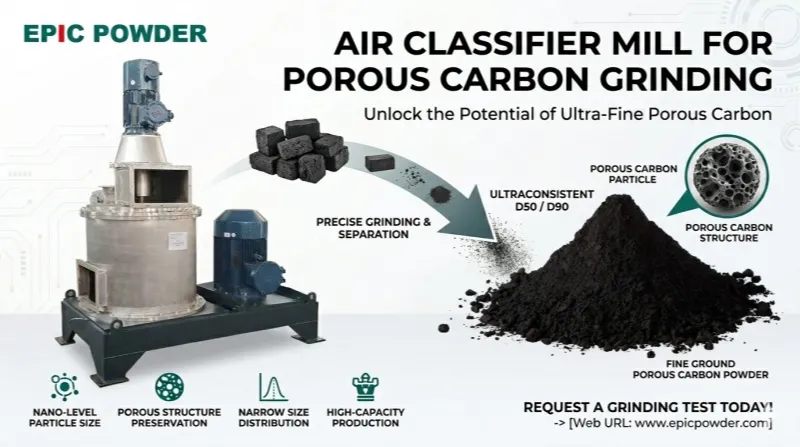
I. Χαρακτηριστικά Υλικού και Σημεία Πόνου Επεξεργασίας Ακανόνιστος πορώδης άνθρακας
Για να επιτευχθεί ακριβής κονιορτοποίηση, πρέπει πρώτα να κατανοηθεί η «ιδιοσυγκρασία» του υλικού.
- Πορώδες και ΕυθραυστότηταΑυτά τα υλικά είναι γεμάτα με μικροπόρους και μεσοπόρους. Υπό κρούση υψηλής ταχύτητας, τα τοιχώματα των πόρων λειτουργούν σαν μικροσκοπικά ικριώματα. Δεν μπορούν να αντέξουν υπερβολικές κανονικές δυνάμεις. Αυτό τα καθιστά επιρρεπή σε δομικό «κλείσιμο».
- Ακανόνιστα Γεωμετρικά ΣχήματαΣε αντίθεση με τα σφαιρικά σωματίδια, τα ακανόνιστα σωματίδια δέχονται ανομοιόμορφη δύναμη. Αυτό συχνά οδηγεί σε εντοπισμένη υπερβολική άλεση μέσα στον θάλαμο.
- Θερμική ευαισθησίαΤα πορώδη υλικά έχουν γενικά χαμηλή θερμική αγωγιμότητα. Η θερμότητα που παράγεται κατά την άλεση πρέπει να απομακρύνεται γρήγορα. Διαφορετικά, μπορεί να προκαλέσει αλλαγές στην επιφάνεια ή φράξιμο πόρων.
- Απαιτήσεις υψηλής καθαρότηταςΕιδικά στον τομέα των υλικών μπαταριών, η εισαγωγή οποιωνδήποτε μεταλλικών ακαθαρσιών είναι μοιραία.
ΙΙ. Αρχή Λειτουργίας του Μύλος ταξινομητή αέραΓιατί είναι η ιδανική επιλογή;
Ο μύλος ταξινόμησης αέρα είναι μια εξαιρετικά λεπτή συσκευή ξηρής κονιοποίησης που ενσωματώνει την άλεση και την ταξινόμηση σε μία ενιαία μονάδα. Η βασική του δομή αποτελείται από έναν δίσκο άλεσης (που περιστρέφεται με υψηλή ταχύτητα) και έναν τροχό ταξινόμησης (ελεγχόμενο με συχνότητα).
1. Εύκαμπτος μηχανισμός κονιοποίησης
Σε αντίθεση με τη μακροπρόθεσμη φθορά των σφαιρόμυλων, το ACM χρησιμοποιεί σφυριά υψηλής ταχύτητας για την εφαρμογή κρούσης και διάτμησης. Για τον πορώδη άνθρακα, η ταχύτητα περιστροφής ρυθμίζεται ώστε να αξιοποιεί τις δυνάμεις διάτμησης. Αυτό ελαχιστοποιεί την κατακόρυφη συμπίεση. Είναι ένας κρίσιμος παράγοντας στην εξαιρετικά λεπτή κονιοποίηση του ακανόνιστου πορώδους άνθρακα, προστατεύοντας παράλληλα τις εσωτερικές δομές.
2. Άμεση ταξινόμηση για την αποφυγή υπερβολικής λείανσης
Αυτό είναι το μεγαλύτερο πλεονέκτημα του ACM. Τα κονιοποιημένα σωματίδια μεταφέρονται αμέσως από τη ροή του αέρα προς τον τροχό του ταξινομητή.
- Πιστοποιημένη εξαιρετικά λεπτή σκόνη: Διέρχεται από τον τροχό ταξινόμησης και εισέρχεται στον συλλέκτη κυκλώνα.
- Μη εξειδικευμένη χονδροειδής σκόνη: Απορρίπτεται και επιστρέφεται για περαιτέρω επεξεργασία. Αυτός ο μηχανισμός «άλεσης και εκκένωσης» εμποδίζει το υλικό να παραμείνει στον θάλαμο για πολύ καιρό. Μειώνει την καταστροφή της δραστηριότητας των πόρων.
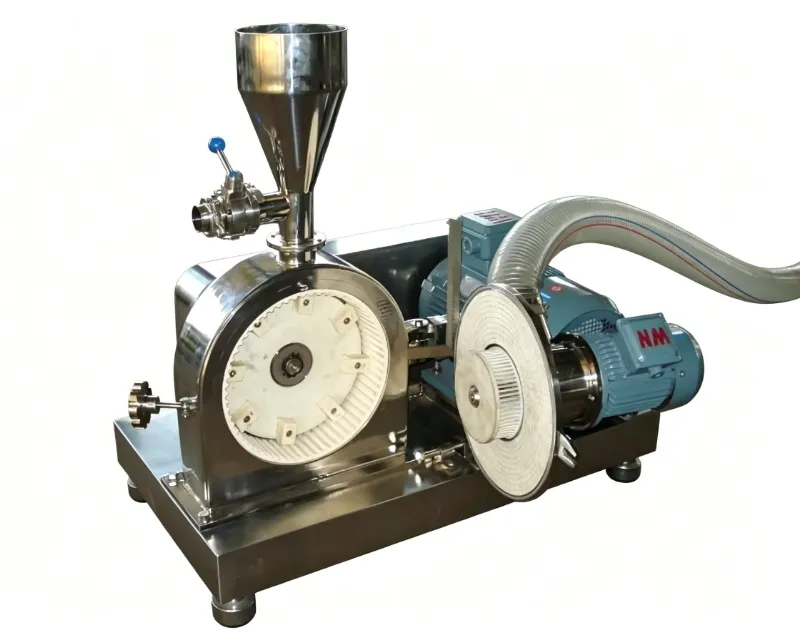
III. Βασικές στρατηγικές διεργασιών για τη διατήρηση της δραστηριότητας των πόρων
Η επίτευξη εξαιρετικά λεπτής κονιοποίησης χωρίς να καταστραφούν οι πόροι απαιτεί λεπτορυθμισμένο έλεγχο σε τέσσερις διαστάσεις:
1. Αναλογία αέρα προς υλικό και σύστημα ψύξης (Διαχείριση θερμότητας)
Η τεράστια ειδική επιφάνεια του πορώδους άνθρακα οδηγεί σε σημαντική θερμότητα τριβής. Αυξάνοντας την αναλογία αέρα προς υλικό και χρησιμοποιώντας μεγάλο όγκο αέρα, το σύστημα απομακρύνει γρήγορα την παραγόμενη θερμότητα, διατηρώντας χαμηλή τη θερμοκρασία μέσα στον θάλαμο άλεσης. Για υλικά με ακραίες απαιτήσεις, οι χειριστές μπορούν να εξοπλίσουν ένα σύστημα πηγής κρύου αέρα για να διασφαλίσουν ότι οι υψηλές θερμοκρασίες δεν προκαλούν φυσική κατάρρευση των χημικών ιδιοτήτων και των δομών των πόρων.
2. Έλεγχος Συχνότητας και Βελτιστοποίηση Διατμητικής Δύναμης
Για ακανόνιστα υλικά, η γραμμική ταχύτητα του δίσκου λείανσης πρέπει να υπολογίζεται αυστηρά.
- Χαμηλή ταχύτητα, πολλαπλοί κύκλοιΜερικές φορές, για να προστατεύσουμε τους πόρους, μειώνουμε την ταχύτητα του δίσκου λείανσης και αυξάνουμε την κυκλοφορία του αέρα. Παρόλο που η απόδοση λείανσης με ένα πέρασμα μπορεί να μειωθεί, η διαδικασία αποφεύγει τις κρούσεις υψηλής έντασης, με αποτέλεσμα υψηλότερο ποσοστό συγκράτησης πόρων (τιμή BET) στο τελικό προϊόν.
3. Κεραμική επεξεργασία (Προστασία καθαρότητας και αντοχή στη φθορά)
Δεδομένου ότι ο πορώδης άνθρακας (ειδικά ο σκληρός άνθρακας) είναι λειαντικός και ευαίσθητος στα μεταλλικά ιόντα, οι χειριστές συνήθως επενδύουν τα εσωτερικά μέρη επαφής του ACM (όπως σφυριά, επενδύσεις, τροχούς ταξινομητή και σωλήνες) με κεραμικά αλουμίνας ή καρβιδίου του πυριτίου. Αυτό όχι μόνο παρατείνει τη διάρκεια ζωής του εξοπλισμού, αλλά διασφαλίζει επίσης ότι ο κονιοποιημένος πορώδης άνθρακας διατηρεί μια ενεργή κατάσταση με «μηδενική μόλυνση μετάλλων».
4. Περιορισμός της Κατανομής Μεγέθους Σωματιδίων (PSD)
Ο ακριβής έλεγχος της ταχύτητας του τροχού του ταξινομητή καθορίζει την κατανομή μεγέθους των σωματιδίων του τελικού προϊόντος. Για τα υλικά των μπαταριών, μια στενή κατανομή σημαίνει πιο ομοιόμορφες διαδρομές διάχυσης ιόντων. Με τη λεπτή ρύθμιση της αναλογίας μεταξύ της ταχύτητας του τροχού του ταξινομητή και της συχνότητας του επαγόμενου ανεμιστήρα έλξης, οι χειριστές μπορούν να επιτύχουν ένα τελικό προϊόν με εξαιρετικά στενή καμπύλη PSD.
IV. Τυπική μελέτη περίπτωσης: Άνοδος σκληρού άνθρακα για Μπαταρίες ιόντων λιθίου
Σε ένα έργο για έναν γνωστό κατασκευαστή ανόδων μπαταριών λιθίου, ο πελάτης έπρεπε να κονιορτοποιήσει ακανόνιστο πορώδη σκληρό άνθρακα από 2 mm σε D50:8 μm, με την απαίτηση η απώλεια ειδικής επιφάνειας (BET) μετά την κονιορτοποίηση να είναι μικρότερη από 5%.
Τεχνική Λύση:
- Επιλογή Εξοπλισμού: Το Μύλος ταξινόμησης αέρα σειράς MJW Χρησιμοποιήθηκε από την Epic Powder, εξοπλισμένη με πλήρως κεραμική επένδυση.
- Βασική διαμόρφωσηΧρησιμοποιήθηκαν ειδικά σχεδιασμένα σφυριά τύπου διάτμησης και βελτιστοποιήθηκε το προφίλ των δοντιών του δίσκου λείανσης.
- Παράμετροι διεργασίαςΟ τροχός ταξινόμησης χρησιμοποιούσε έλεγχο συχνότητας, με την ταχύτητα να ρυθμίζεται μεταξύ 3500–4500 rpm, σε συνδυασμό με έναν συλλέκτη σκόνης παλμικής δέσμης υψηλής απόδοσης.
- ΑποτελέσματαΤο τελικό προϊόν D50 ήταν σταθερό στα 8,2 μm, με το D100 λιγότερο από 25 μm. Οι δοκιμές έδειξαν ότι η δομή των πόρων παρέμεινε άθικτη και η ειδική επιφάνεια BET διατηρήθηκε στα 435 m2/g (από τα αρχικά 450 m2/g), πράγμα που σημαίνει ότι η απώλεια ήταν αμελητέα.
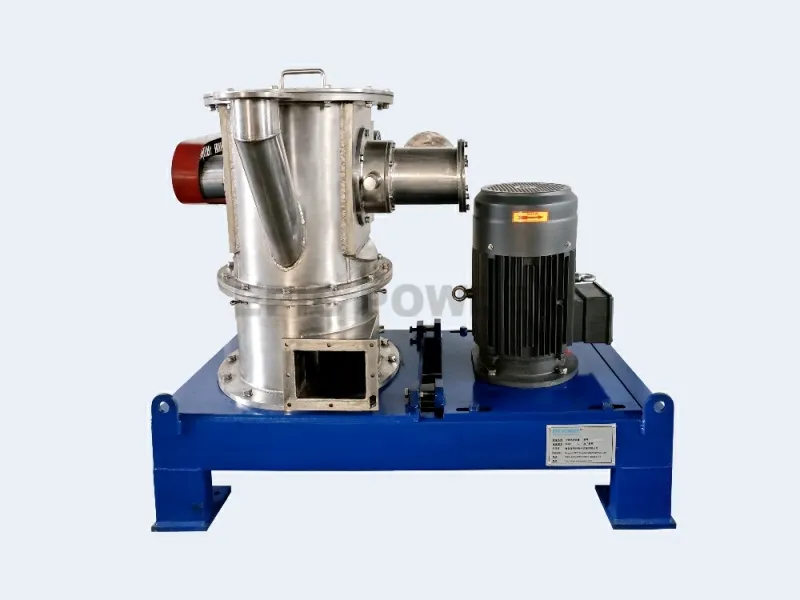
V. Μελλοντικές Προοπτικές: Νοημοσύνη και Κλίμακα
Με την παγκόσμια αύξηση της ζήτησης για υλικά αποθήκευσης ενέργειας, η εξαιρετικά λεπτή κονιοποίηση ακανόνιστου πορώδους άνθρακα κινείται προς... μεγάλης κλίμακας χωρητικότητα και νοημοσύνη.
- Συστήματα κλειστού βρόχουΓια εύφλεκτο ή εκρηκτικό πορώδες άνθρακα (όπως υλικά άνθρακα που περιέχουν θείο), οι χειριστές χρησιμοποιούν ένα σύστημα κλειστού βρόχου με προστασία αζώτου και παρακολουθούν την περιεκτικότητα σε οξυγόνο για να διασφαλίσουν την ασφάλεια της παραγωγής.
- Ανίχνευση μεγέθους σωματιδίων σε απευθείας σύνδεσηΗ ενσωμάτωση διαδικτυακών αναλυτών μεγέθους σωματιδίων επιτρέπει τον έλεγχο κλειστού βρόχου σε πραγματικό χρόνο της ταχύτητας του τροχού του ταξινομητή με βάση το μέγεθος σωματιδίων του προϊόντος.
συμπέρασμα
Η επίτευξη εξαιρετικά λεπτής κονιοποίησης ακανόνιστου πορώδους άνθρακα μέσω ενός μύλου ταξινόμησης αέρα δεν είναι απλώς μια απλή διαδικασία μείωσης φυσικού μεγέθους. Είναι μια τεχνική τέχνη «μηχανικής ισορροπίας». Βελτιστοποιώντας το πεδίο ροής αέρα, ρυθμίζοντας τον μηχανισμό διάτμησης και εφαρμόζοντας αυστηρό έλεγχο θερμότητας, είναι απολύτως εφικτό να παραχθούν υλικά άνθρακα υψηλής απόδοσης που πληρούν τις απαιτήσεις μεγέθους σωματιδίων διατηρώντας παράλληλα τέλεια δραστηριότητα πόρων.
Ως ηγέτης στον τομέα του βιομηχανικού εξοπλισμού σκόνης, η Epic Powder (Επική Πούδρα Qingdao Machinery Co., Ltd.) έχει δεσμευτεί να παρέχει εξατομικευμένες μηχανολογικές υπηρεσίες σε πελάτες παγκοσμίως. Είτε πρόκειται για προκαταρκτικά πειράματα επιλογής μοντέλου για ακανόνιστο πορώδη άνθρακα είτε για επιτόπια τεχνική επίβλεψη για γραμμές παραγωγής δέκα χιλιάδων τόνων, χρησιμοποιούμε επαγγελματικά δεδομένα και εμπειρία για να σας βοηθήσουμε να αξιοποιήσετε στο έπακρο τις δυνατότητες των υλικών σας.

«Ευχαριστώ που διαβάσατε. Ελπίζω το άρθρο μου να σας βοηθήσει. Παρακαλώ αφήστε ένα σχόλιο παρακάτω. Μπορείτε επίσης να επικοινωνήσετε με τον εκπρόσωπο πελατών της Zelda online για περαιτέρω ερωτήσεις.»
— Δημοσιεύτηκε από την Emily Chen