Are you wondering if your ACM pulverizer system is truly safe from unexpected dust explosions? Choosing when and how to implement nitrogen inert gas protection can mean the difference between a smooth production run and a catastrophic facility disaster.
As an industrial processing expert, I know that mitigating risk isn’t just about ticking boxes. It is about protecting your team, your equipment, and your bottom line, based on real, hard-tested safety data. ACM systems are inherently high-energy environments. Under the right conditions, the materials you process can turn a standard milling operation into a ticking time bomb.
In this quick guide, you’ll learn the exact scenarios where nitrogen inerting is non-negotiable, how it safeguards your setup, and how to stay strictly compliant with ATEX and NFPA regulations.
Let’s dive right in.
Understanding the Risk: Why ACM Systems are Vulnerable
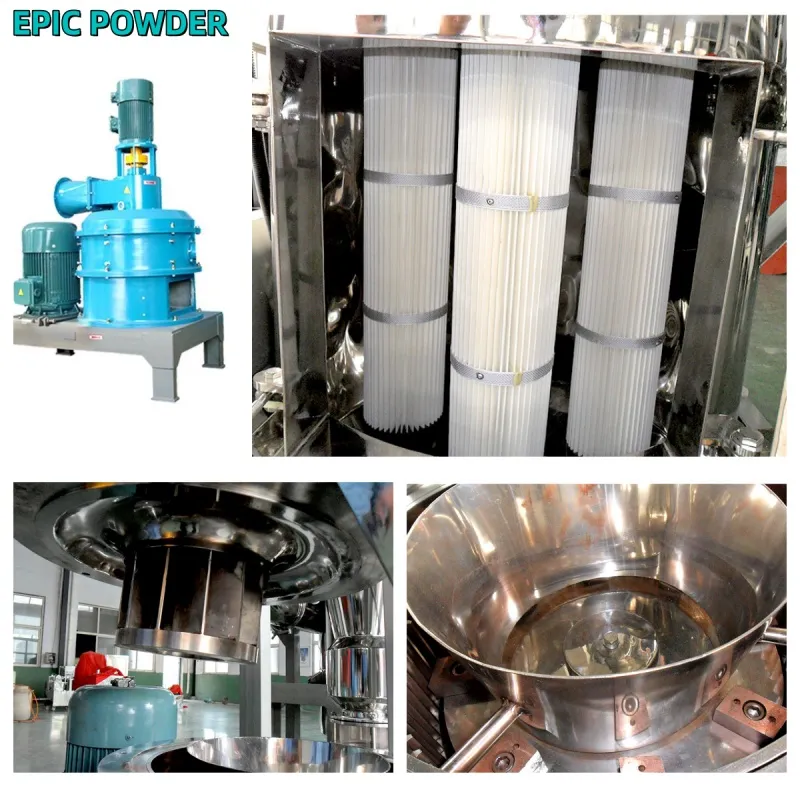
Air Classifying Mills (ACM) are highly efficient for fine grinding and precise particle size distribution. However, processing combustible materials in a standard ACM environment introduces a severe, often overlooked risk: dust explosions.
The Explosion Pentagon in ACM Pulverizers
An ordinary milling setup naturally provides three elements of the classic fire triangle: fuel (the fine powder), heat (generated by high-speed mechanical shearing), and oxygen (from the process air). When handling fine powders inside an ACM pulverizer, two additional factors complete the Explosion Pentagon:
- Dispersion: The milling chamber continuously lofts fine particles into a dense cloud.
- Confinement: The enclosed metal housing of the mill and cyclone captures the cloud, allowing pressure to build rapidly if ignited.
Critical Vulnerability Factors
Standard ACM systems are inherently vulnerable due to their operational mechanics:
- High-Velocity Friction: The rapid rotation of the grinding rotor creates localized thermal energy. A single piece of tramp metal or a stray spark can instantly ignite the cloud.
- Massive Surface Area: As particles are reduced to micron sizes, their specific surface area multiplies exponentially. This drastic increase in surface area accelerates chemical reaction rates, making the dust highly reactive and drastically lowering the Minimum Ignition Energy (MIE).
- Constant Airflow: Traditional open-loop systems draw in vast volumes of ambient oxygen, maintaining an ideal environment to feed a deflagration.
Without an Inert Gas ACM configuration, processing materials like sugar, resins, polymers, aluminum powder, or pharmaceuticals transforms your milling operation into a high-risk hazard. Displacing oxygen with an inert medium is not just a safety upgrade. It is an operational necessity to protect your facility, your personnel, and your bottom line.
4 Key Scenarios When Your ACM System REQUIRES Nitrogen Protection
Standard milling setups work fine for basic materials, but certain applications demand strict atmosphere control. Integrating an inert gas ACM system becomes non-negotiable when your process hits these four critical thresholds:
- Handling Explosive or Combustible Dusts: If you are milling materials with a low Minimum Ignition Energy (MIE)—such as certain plastics, chemicals, or organic powders—a single spark can trigger a catastrophic dust explosion. Replacing oxygen with nitrogen eliminates the combustion source.
- Processing Oxidation-Sensitive Materials: Many chemical compounds, pharmaceuticals, and food ingredients degrade, discolor, or lose potency when exposed to oxygen at high speeds. An inert gas protected ACM pulverizer shields these sensitive products throughout the entire milling cycle.
- Achieving Ultra-Fine Particle Sizes: Fine grinding drastically increases the total surface area of your material. This massive surface-area-to-volume ratio makes the powder exponentially more reactive and prone to rapid ignition.
- Running Closed-Loop Operations: When maximizing efficiency, a closed-loop setup is essential. Implementing an ACM re-circulation system allows you to safely contain, monitor, and recycle the nitrogen gas stream while keeping oxygen levels strictly below the limiting oxygen concentration (LOC).
How a Nitrogen Inerting System Works in an ACM Setup
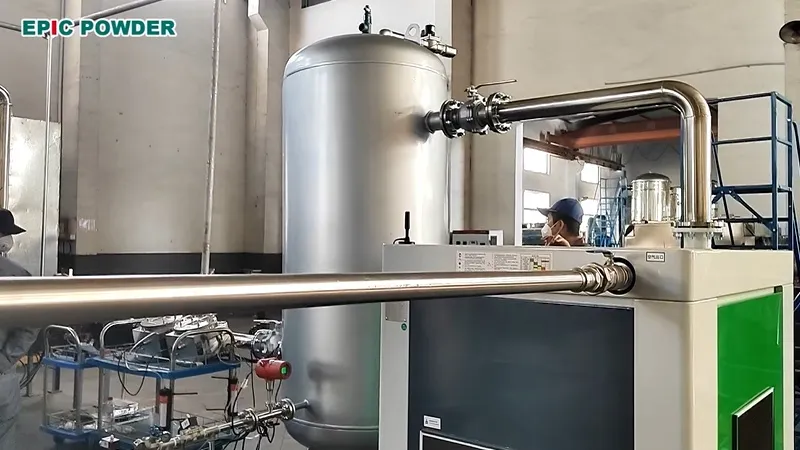
When processing combustible or heat-sensitive powders, maintaining a safe environment inside your milling system is critical. A nitrogen inerting system transforms a standard milling process into a highly secure, inert-gas-protected ACM pulverizer. It replaces ambient oxygen with non-reactive nitrogen.
The system operates through a continuous, automated loop designed to suppress any potential ignition sources:
- Oxygen Monitoring: Highly sensitive sensors constantly measure the oxygen levels inside the grinding chamber.
- Nitrogen Injection: If oxygen levels approach the Maximum Oxygen Concentration (MOC), the system automatically injects pure nitrogen gas.
- Pressure Management: The system maintains a slight positive pressure to prevent outside air from leaking back into the mill.
For maximum efficiency, this setup is typically integrated into a re-circulation system in ACM configurations. By recycling the inert gas stream rather than venting it, you drastically reduce your total nitrogen consumption while keeping the entire milling environment completely safe, stable, and explosion-proof.
FAQ
Q1: Can I use an open-loop system with nitrogen injection, or must it be a closed-loop ACM system?
While you can technically inject nitrogen into an open-loop setup, it is highly inefficient and expensive because the inert gas constantly vents out into the atmosphere. For proper safety and cost control, an inert gas protected ACM pulverizer runs best on a closed-loop configuration. Utilizing a dedicated closed-loop system in an air classifier mill allows you to continuously recirculate the nitrogen, maintaining the strict inert blanket while keeping gas consumption to an absolute minimum.
Q2: How do I determine the exact Oxygen Limit (MOC) for my specific material in the ACM mill?
Determining the Minimum Oxygen Concentration (MOC) requires a precise approach to ensure your Inert Gas ACM system remains completely safe during operation:
- Standardized Lab Testing: Send a sample of your material to a certified laboratory for dust explosibility testing (such as ASTM or ISO standards) to find the exact ignition thresholds.
- Apply a Safety Buffer: Never operate right at the baseline MOC limit. Standard safety protocols require subtracting a 2% to 10% safety margin from the laboratory result to establish your actual system shutdown triggers.
- Consult SDS Documentation: Review sections 5 and 9 of your material’s Safety Data Sheet for preliminary data on deflagration characteristics and dust explosion hazards.

Gracias por leer. Espero que mi artículo les sea útil. Dejen sus comentarios abajo. También pueden contactar al servicio de atención al cliente de Zelda para cualquier otra consulta.
— Publicado por Emily Chen