Struggling to achieve precise ultrafine powder particle size distribution in your production process? Choosing the right equipment can be a game-changer. That’s exactly why an Air Classifier Mill often stands out as the top choice for industries demanding accuracy and efficiency in powder processing. In this article, I’ll break down why this milling technology is the key to unlocking superior particle size control and how it can elevate your product quality. Ready to dive into the details? Let’s get started!
Understanding Air Classifier Mills
What is an Air Classifier Mill?
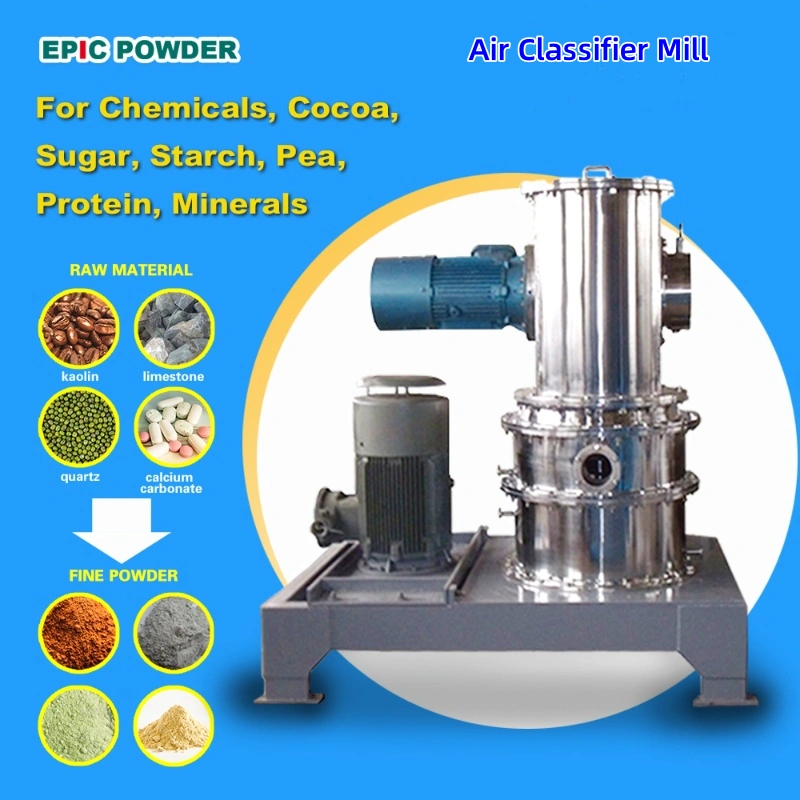
An air classifier mill is a specialized grinding machine designed to produce ultrafine powders with precise particle size distribution. Unlike traditional mills, it combines grinding and classifying in one compact unit. This makes it ideal for industries requiring consistent ultrafine powder quality, such as pharmaceuticals, chemicals, and minerals. Its ability to produce finely controlled particle sizes sets it apart as the preferred air classifier mill for ultrafine powder production.
How Does It Work?
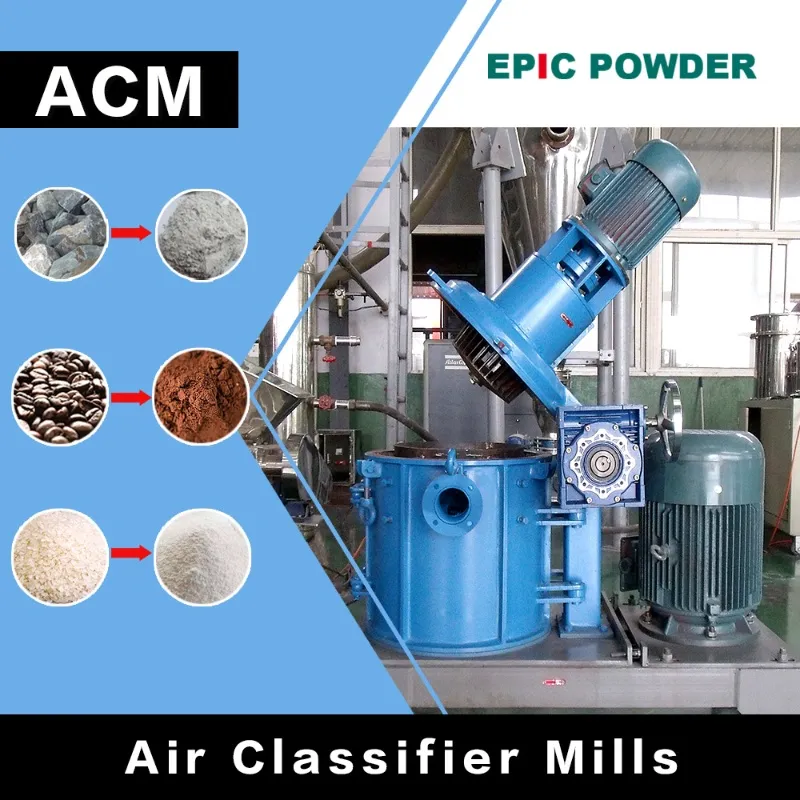
The air classifier mill operates by using a high-speed rotor to grind raw materials into fine particles while simultaneously separating them with an integrated air classifier. The classifier wheel sorts particles based on size by using centrifugal force and airflow, allowing only powders meeting the required specification to pass through. Coarser particles are sent back for further grinding until the desired ultrafine size is reached. This continuous process ensures precise particle size distribution efficiently and with minimal energy consumption.
Addressing Key Questions About Air Classifier Mills
How Does It Ensure Precise Particle Size Distribution?
Air classifier mills are designed to deliver precise control over particle size distribution by combining grinding and air classification in one system. Inside the mill, materials are ground by high-speed rotors, then carried by air streams toward a classifier wheel that separates particles based on size and density. The adjustable classifier wheel regulates which particles return for further grinding and which are discharged as final product. This process makes it easy to achieve consistent ultrafine powder particle sizes with tight tolerances. The continuous feedback loop ensures that only particles within the set size range are collected, leading to an accurate and uniform distribution without over-grinding or waste. This precise control is why many choose an air classifier mill for ultrafine powder processing, especially when exact particle size is critical.
What Types of Materials Can It Process?
One of the strengths of air classifier mills is their versatility in handling a wide range of materials. They can efficiently process hard, brittle, fibrous, or heat-sensitive substances without degrading their quality. Common materials include minerals, chemicals, pharmaceuticals, food products, and even biomass like bamboo charcoal. The mill’s design allows it to gently grind and classify powders ranging from soft to moderately abrasive. For example, the efficient ultrafine grinding of Indonesian bamboo charcoal using an air classifier mill demonstrates its capability with natural materials efficient ultrafine grinding of Indonesian bamboo charcoal. This adaptability makes air classifier mills a top choice for many industries requiring precise ultrafine powder particle size distribution.
Benefits of Using an Air Classifier Mill
Enhanced Precision in Particle Size Control
Air classifier mills excel at delivering precise ultrafine powder particle size distribution. Thanks to their built-in air classification system, they separate particles based on size during the milling process. This means you can achieve tight control over the particle size, adjusting the classifier speed to fine-tune the output.
Key points:
- Adjustable classifier allows exact particle size control
- Consistent ultrafine powders with minimal coarse particles
- Reduced need for secondary milling or sieving
This precision helps meet strict product specifications, which is crucial in industries like pharmaceuticals, cosmetics, and specialty chemicals. For more details on advanced grinding technology, check out the ultrafine grinder operation and maintenance guide.
Improved Product Quality and Consistency
Using an air classifier mill also means improved product quality. Consistent particle size ensures uniformity in texture, flowability, and reactivity of the powders. This uniformity is vital for reliable performance in final applications—whether in coatings, food ingredients, or metal powders.
Benefits include:
- Uniform powder morphology enhances product stability
- Stable process reduces batch-to-batch variations
- Improved mixing and compaction properties due to consistent particle size
Overall, these advantages lead to better performance and higher customer satisfaction. If you work with materials like metals, the air classifier mill for aluminum powder ultrafine grinding offers excellent insights into quality improvements through precise milling.
Steps to Effectively Use an Air Classifier Mill
Preparing the Material
Before milling, make sure the raw material is clean and dry. Remove any large impurities or foreign particles to avoid damage. Pre-crushing or screening may be needed for materials that are too coarse to feed directly. Proper preparation helps achieve a uniform ultrafine powder particle size distribution.
Setting the Milling Parameters
Adjusting the air classifier mill for ultrafine powder is a key step. Here are the main parameters to set:
| Parámetro | Purpose | Typical Range |
|---|---|---|
| Classifier Speed | Controls particle size cutoff | Varies, tune for target size |
| Airflow Rate | Influences milling efficiency | Moderate to high, material-dependent |
| Grinding Pressure | Affects grinding intensity | Low to medium for ultrafine |
| Feed Rate | Balances throughput and quality | Adjust to avoid clogging |
Fine-tuning these settings helps achieve consistent particle size without overgrinding.
Monitoring and Adjusting the Process
Continuous monitoring is crucial to maintain precise ultrafine powder sizes. Use online particle size analyzers or sampling methods to check output regularly. Look out for signs like:
- Sudden shifts in particle size
- Changes in product flow or pressure
- Increased energy consumption
Make small, incremental adjustments to classifier speed or airflow to correct deviations. This keeps product quality steady and energy use efficient.
For more on setting and optimizing milling parameters, see the detailed comparison of pin mill vs air classifier mill.
Practical Results Achieved with Air Classifier Mills
Consistent Ultrafine Powder Production
One of the standout practical benefits of using an Air Classifier Mill for ultrafine powder is its ability to consistently produce powders with precise particle size distribution. This consistency means fewer batch variations and reliable product performance, which is crucial for industries that depend on uniformity, such as pharmaceuticals, chemicals, and food additives.
Reduced Waste and Energy Consumption
Air classifier mills are designed to be efficient. Their precise control over particle size distribution reduces over-grinding and minimizes material waste. Additionally, by optimizing the milling process, they consume less energy compared to traditional grinding methods. This combination leads to lower operational costs and supports more sustainable manufacturing practices.
Optimized Performance in End-Use Applications
The finely tuned ultrafine powders produced with air classifier mills enhance the quality and functionality of the final product. Whether it’s improving solubility, reactivity, or texture, the optimized particle size boosts performance across a wide range of applications. For example, in the condiment industry, mills tailored for ultrafine grinding have helped improve product texture and consistency, as seen in this impactful impact grinding mill production line for fried wheat.
In , adopting air classifier mills not only improves powder consistency and saves resources but also directly benefits the end-use quality, making it a smart choice for companies aiming for precision and efficiency.

Gracias por leer. Espero que mi artículo les sea útil. Dejen sus comentarios abajo. También pueden contactar al servicio de atención al cliente de Zelda para cualquier otra consulta.
— Publicado por Emily Chen