De ideale deeltjesgrootte van alginaatpoeder voor zeer nauwkeurige tandheelkundige afdrukken ligt doorgaans tussen de 10 en 40 micron (μm), waarbij veel moderne ultrafijne of zeer nauwkeurige formuleringen een detailreproductie tot ongeveer 15-25 μm bereiken. Dit bereik is de "ideale" zone voor klinisch gebruik, omdat het een balans biedt tussen uitzonderlijke detailweergave, soepel mengen, minder luchtbellen en praktische verwerking. Commerciële producten die op de markt worden gebracht als "precisie", "ultrafijn" of "extrafijn" alginaat, hebben vaak een deeltjesgrootte van ongeveer 15-25 μm voor superieure prestaties bij restauratieve toepassingen en studiemodellen.
1. Inleiding: De evolutie van tandheelkundige afdrukmaterialen
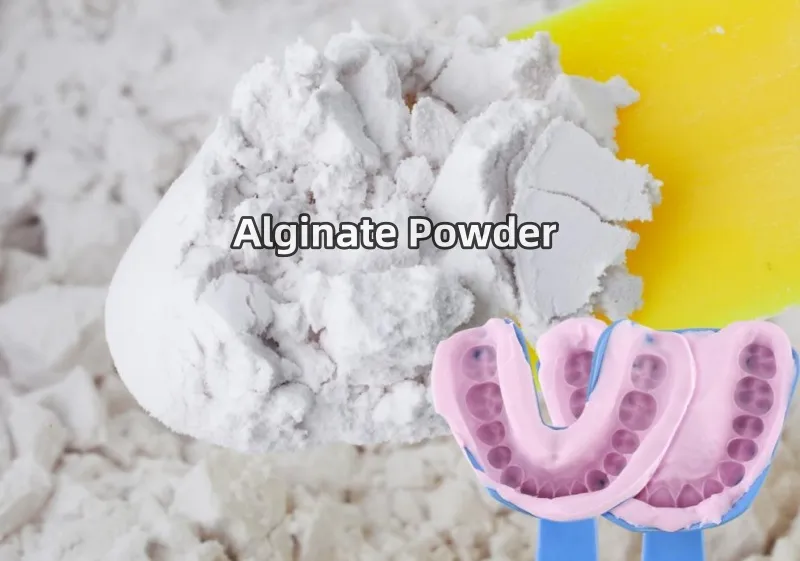
Alginaat-afdrukmaterialen, afkomstig van alginezuur uit zeewier, worden al lange tijd beschouwd als de "gouden standaard" voor voorlopige afdrukken, tegenmodellen, studiemodellen, orthodontische dossiers en diagnostische doeleinden. Hun populariteit is te danken aan de lage kosten, het gebruiksgemak, de snelle uitharding, de tolerantie door de patiënt en het hydrofiele karakter, waardoor ze uitstekende prestaties leveren in een natte omgeving in vergelijking met sommige hydrofobe alternatieven.
In de loop der tijd heeft er een opmerkelijke verschuiving plaatsgevonden van traditionele grove alginaatpoeders naar gemicroniseerde of ultrafijne formuleringen. Vroege alginaten maakten gebruik van grotere vuldeeltjes (vaak in het bereik van 200-300 mesh, ongeveer 50-75 μm of groter), waardoor de reproductie van fijne details beperkt bleef tot ongeveer 50 μm volgens de ISO 1563-normen. Moderne ontwikkelingen in de deeltjestechnologie hebben geleid tot deeltjesgroottes kleiner dan 50 μm, waardoor de precisiekloof tussen alginaat en hoogwaardigere elastomere materialen zoals VPS of polyether voor bepaalde toepassingen kleiner is geworden.
StellingDe deeltjesgrootte is een cruciale factor voor het vermogen van alginaat om oppervlaktedetails te reproduceren, een consistente menging zonder klonten te bereiken, stofvorming tijdens de verwerking te minimaliseren en de algehele klinische resultaten te verbeteren, waaronder patiëntcomfort en compatibiliteit met vervolgprocessen zoals steengieten of digitalisering.
2. Het definiëren van "ideaal": het micronbereik voor hoge precisie.
Standaard alginaten voor consumenten of budgetmodellen gebruiken vaak deeltjes met een maasgrootte van 200-300 mesh (ongeveer 50-75 μm of grover), wat voldoende is voor eenvoudige afdrukken, maar gevoelig is voor zichtbare oppervlakteruwheid en beperkte weergave van fijne details.
Daarentegen maken professionele en zeer nauwkeurige alginaten gebruik van ultrafijn of gemicroniseerde poeders, waarbij de gemiddelde deeltjesgrootte is gereduceerd tot het submicron- tot laag-micronbereik voor vulstoffen en het algehele mengsel. De algemeen aanvaarde "ideale" verhouding voor klinisch precisiewerk is 10–40 μm, vaak gecentreerd rond 15–25 μm in toonaangevende producten. Dit maakt de reproductie mogelijk van details zo fijn als 15-25 μm, waardoor subtiele anatomie zoals de gingivale sulcus, randranden en oppervlaktestructuren worden vastgelegd, wat essentieel is voor een nauwkeurige restauratieplanning.
Daarnaast maken fijnere deeltjes "stofvrije" of stofarme formuleringen mogelijk door gecontroleerde engineering, waardoor de hoeveelheid zwevende deeltjes die de luchtwegen kunnen irriteren of werkruimtes kunnen verontreinigen, wordt verminderd.
3. Invloed van de deeltjesgrootte op de materiaaleigenschappen
Kleinere deeltjes zorgen voor een aanzienlijke verbetering. reproductie van oppervlaktedetails Hierdoor kan de gemengde pasta gemakkelijker in microscopische spleetjes en ondersnijdingen van het gebit vloeien, waaronder de delicate tandvleesplooi en de interproximale gebieden. Grotere deeltjes creëren een grovere matrix die dergelijke fijne penetratie tegenwerkt, wat resulteert in afgeronde of gladde details op het uiteindelijke model.
Fijnere deeltjes verhogen het totaal oppervlakteDit bevordert het thixotrope gedrag: het materiaal vloeit onder schuifspanning (tijdens het mengen en plaatsen), maar is bestand tegen inzakken zodra het zich in de bak bevindt. Dit resulteert in een betere aanpassing en stabiliteit van de bak zonder overmatige uitstroom.
Ook de reactiekinetiek profiteert: de ultrafijne verdeling bevordert een homogener bevochtigen en oplossen van de alginaatzouten en de calciumreactor, wat leidt tot een uniform geleringsfront, minder plaatselijke over- of onderverharding en een scherpere "snap-harding" met minimale vervorming.
4. De verwerkingsuitdaging: Ultrafijne slijptechnieken
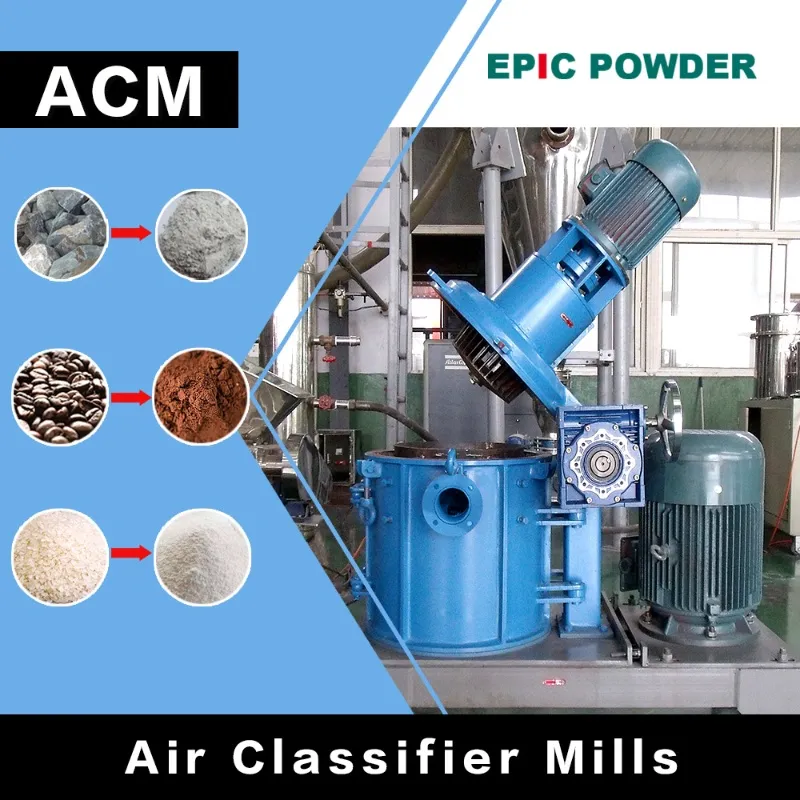
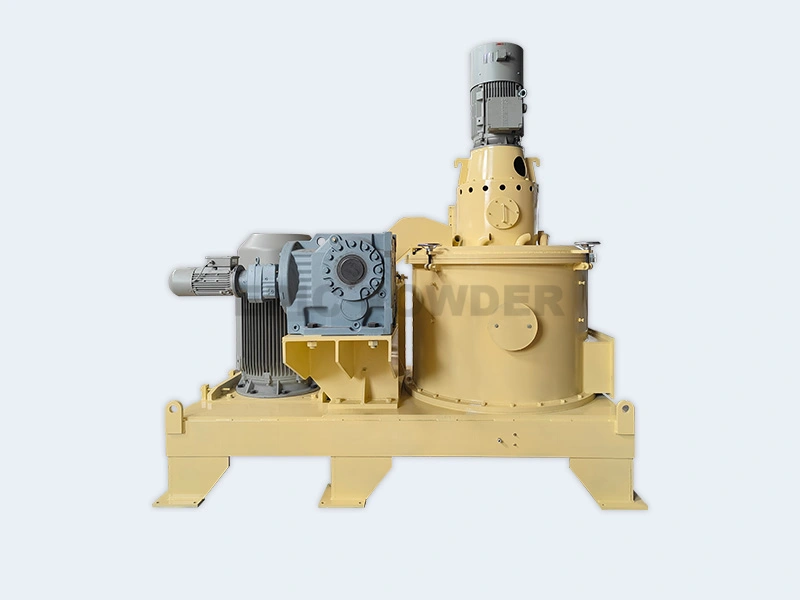
Voor de productie van ultrafijn alginaatpoeder is zorgvuldig malen noodzakelijk om te voorkomen dat de hittegevoelige alginaatpolymeerketens worden afgebroken. Overmatige wrijving of temperatuurschommelingen tijdens het malen kunnen ketenbreuk veroorzaken, waardoor het molecuulgewicht en de uiteindelijke gelsterkte afnemen.
Luchtclassificatiefrezen (ACM) is de voorkeursmethode geworden voor het bereiken van een smalle deeltjesgrootteverdeling (PSD). De geïntegreerde classificator scheidt te grote deeltjes direct af en recycleert deze voor hervermalen, terwijl alleen de gewenste fijne fractie wordt afgevoerd. Dit resulteert in een nauwkeurige controle (bijv. d50 in het bereik van 10–25 μm) met minimale warmteontwikkeling.
Het voorkomen van agglomeratie is eveneens cruciaal: ultrafijne poeders zijn gevoelig voor klontering door van der Waals-krachten en vochtgevoeligheid. Fabrikanten passen oppervlaktebehandelingen, antiklontermiddelen of verpakkingen met gecontroleerde luchtvochtigheid toe om een soepele stroming tijdens opslag en scheppen te behouden.
5. Klinische voordelen van Ultrafijn alginaat Poeder
Ultrafijne formuleringen produceren gladdere, homogener mengsels, waardoor de hoeveelheid aanzienlijk wordt verminderd. holtevorming door ingesloten luchtbellen. Dit leidt tot schonere modeloppervlakken met minder oppervlaktedefecten.
Het resulterende afdrukoppervlak hecht beter aan tandheelkundig gips, waardoor luchtbellen aan de grens tussen alginaat en gips worden geminimaliseerd en scherpere, nauwkeurigere gegoten modellen ontstaan.
Voor patiënten betekenen snellere bevochtiging en een gladdere textuur sneller mengen (vaak 30-45 seconden), een verminderde kokhalsreflex door een kortere tijd op het dienblad en een minder korrelig gevoel – wat het algehele comfort verbetert, vooral bij gevoelige personen.
6. Conclusie: De toekomst van alginaatpoeder in een digitaal tijdperk
Hoewel intraorale scantechnieken zich steeds verder ontwikkelen, blijft alginaat onmisbaar voor voorlopige afdrukken van de volledige tandboog, tegenmodellen en situaties waarin snelle en kosteneffectieve vastlegging vereist is. Ultrafijne alginaatmodellen hebben gladdere oppervlakken en fijnere details, waardoor ze veel gemakkelijker en nauwkeuriger te digitaliseren zijn met 3D-laboratorium- of intraorale scanners. Dit vermindert scanartefacten en verbetert de integratie van CAD/CAM-workflows.
EindoordeelVoor klinieken die prioriteit geven aan nauwkeurige restauraties, diagnostische betrouwbaarheid of hybride analoge-digitale workflows, is investeren in "superfijne" of "ultrafijne" alginaatsoorten (gericht op 10-40 μm, idealiter 15-25 μm) essentieel. Deze formuleringen overbruggen de kloof in precisie, behouden de klassieke voordelen van alginaat en verbeteren de prestaties om aan de moderne eisen te voldoen.
Veelgestelde vragen
Vraag 1: Bestaat er een significant klinisch verschil tussen een alginaatpoeder van 25 μm en een poeder van 50 μm of grover?
AJa, vooral in situaties waar hoge precisie vereist is. Een poeder van 25 μm (of fijner) legt fijnere oppervlaktedetails vast (tot een resolutie van ~15-25 μm), vermindert zichtbare ruwheid op gegoten modellen en minimaliseert kleine holtes of luchtbellen. Grovere poeders (~50 μm+) beperken de detailweergave vaak tot de drempel van ~50 μm volgens ISO 1563, wat voldoende is voor eenvoudige studiemodellen, maar onvoldoende voor het plannen van kronen en bruggen of subtiele occlusale morfologie waarbij elke micron telt.
Vraag 2: Vereist het gebruik van ultrafijn alginaat speciale meng- of verwerkingstechnieken in vergelijking met standaard alginaat?
AGeen grote veranderingen, maar de beste resultaten worden behaald door de poeder-waterverhouding van de fabrikant strikt aan te houden (doorgaans 1:2–1:3 in gewicht/volume), water op kamertemperatuur of licht koel water te gebruiken voor een gecontroleerde uithardingstijd en krachtig te spatelen gedurende 30-45 seconden om de deeltjes met een groot oppervlak volledig te bevochtigen. Stofvrije ultrafijne varianten verminderen het risico op inademing, maar meng altijd in een goed geventileerde ruimte of, indien mogelijk, onder een afzuigkap. Vermijd overmatig mengen, omdat dit overtollige lucht kan introduceren.
"Bedankt voor het lezen. Ik hoop dat mijn artikel nuttig is. Laat gerust een reactie achter. Voor verdere vragen kunt u ook contact opnemen met de online klantenservice van Zelda."
— Geplaatst door Emily Chen