Spørgsmål 1: Hvad er en laboratorieluftklassificeringsmølle?
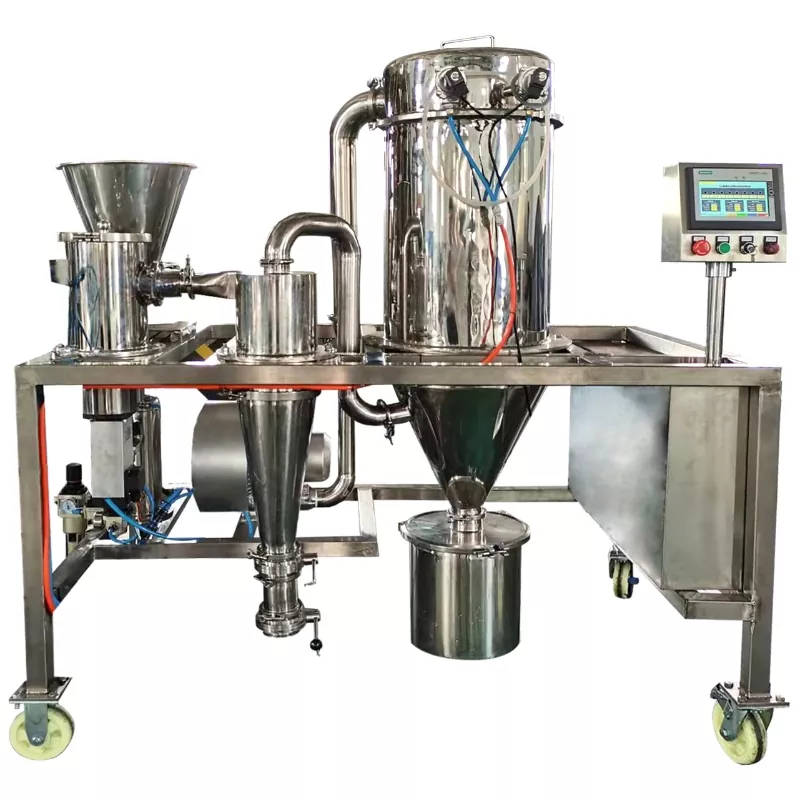
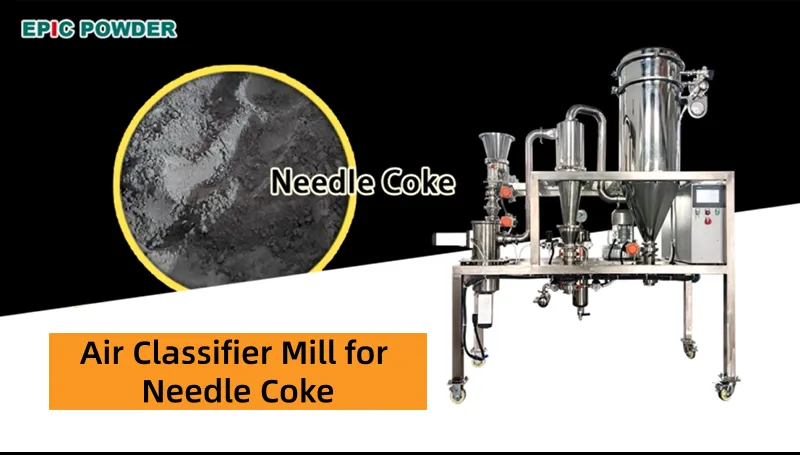
En Laboratory Air Classifier Mill (ofte forkortet som lab ACM) er et kompakt pulverforarbejdningsudstyr. Det kombinerer mekanisk slagmaling og dynamisk luftklassificering i en enkelt maskine.
Møllen kan male tørre pulvermaterialer til ultrafine partikler (typisk D97 under 20 mikron, og i nogle tilfælde D50 så fine som 5-10 mikron). Samtidig giver den præcis partikelstørrelseskontrol og en smal partikelstørrelsesfordeling.
Sammenlignet med udstyr i industriel skala er laboratorieversionen mindre i størrelse og har en lavere gennemløbskapacitet (fra et par gram til ti kilogram pr. batch). Den er fleksibel at betjene, nem at rengøre og praktisk til parameterjustering.
Q2: Hvordan fungerer det?
Funktionsprincippet for en luftklassificeringsmølle kombinerer to processer: slagmaling og luftklassificering.
- Fodring og kværningMaterialet føres ind i slibekammeret gennem en føder. Den højhastighedsroterende rotor med hamre eller klinger rammer, kolliderer med og skærer materialet kraftigt, hvilket opnår en initial størrelsesreduktion.
- LuftklassificeringSamtidig roterer det indbyggede sorterhjul med høj hastighed og genererer centrifugalkraft. Luftstrømmen fører fine partikler gennem sorterhjulet ind i produktopsamlingssystemet. Større inerti og centrifugalkraft kaster grove partikler tilbage i malekammeret til yderligere formaling. Dette skaber en lukket kredsløbsformalingsproces.
- LuftstrømsfunktionHele systemet bruger et luftblæst design. Luftstrømmen fjerner effektivt varme, forhindrer overophedning af varmefølsomme materialer og hjælper med at transportere partiklerne.
Klassificeringshjulets hastighed og luftstrømningshastighed er centrale justerbare parametre. De kan styres uafhængigt for præcist at justere den endelige partikelstørrelsesfordeling.
Q3: Hvad er fordelene sammenlignet med almindelige møller (såsom jetmøller eller slagmøller)?
- Integreret designDen udfører både formaling og klassificering i én maskine. Der er ikke behov for yderligere sigter eller separate klassificeringsmaskiner, hvilket forhindrer tilstopning eller beskadigelse af sigten.
- Præcis partikelstørrelseskontrolDen producerer en stejl partikelstørrelsesfordelingskurve med et meget lavt indhold af overdimensionerede partikler. Produktet er meget ensartet.
- Velegnet til varmefølsomme materialerLuftstrømmen fører varme væk, hvilket resulterer i en lav temperaturstigning. Dette gør den ideel til varmefølsomme eller oxidationstruede pulvere i fødevare-, farmaceutiske og kemiske industrier.
- AlsidighedDen kan håndtere en bred vifte af materialer — fra bløde til hårde og fra varmefølsomme til slibende. Den understøtter både kontinuerlig drift eller batchdrift i små serier og i pilotskala.
Sammenlignet med rene jetmøller har den et lavere energiforbrug og en højere gennemstrømning. Sammenlignet med almindelige slagmøller opnår den finere partikelstørrelser og smallere fordeling.
Q4: Hvad er de primære anvendelser af laboratorieluftklassificeringsmøller?
Laboratoriemodeller bruges primært til forskning og procesvalidering. Almindelige anvendelser omfatter:
- Farmaceutisk industriUltrafin formaling af aktive farmaceutiske ingredienser (API'er) for at kontrollere opløsningshastighed og biotilgængelighed.
- Fødevarer og nutraceutiske produkterFinforarbejdning af varmefølsomme materialer såsom krydderier, proteinpulver, chokolade og kostfibre.
- Kemikalier og nye materialerFremstilling af pigmenter, belægninger, batterimaterialer, metalpulvere og nanopulvere.
- Forskningsinstitutter og universitetslaboratorierUdvikling af nye materialer, pulverkarakteriseringsstudier og optimering af procesparametre.
- AndreKosmetik, pesticider og testning af mineralpulver i lille skala.
Q5: Hvad er de typiske tekniske specifikationer?
- PartikelstørrelsesområdeD97 = 5–20 μm (nogle modeller kan opnå endnu finere størrelser).
- GennemløbLaboratoriemodeller starter normalt fra 0,5 lb/time (ca. 0,23 kg/t) op til flere kilogram pr. batch.
- MagtSmå enheder er ofte 3 HK (ca. 2,2 kW) til dedikeret laboratoriebrug.
- KlassificeringshjulUafhængigt drevet med variabel hastighedskontrol.
- KonstruktionKompakt design, ofte med indbyggede filtre og rengøringsvenlige funktioner. Rustfri stålkonstruktion er almindelig for at opfylde GMP-kravene.
Populære modeller inkluderer laboratorieversionerne af Hosokawa Mikro ACM-serien og Prater CLM-18.
Q6: Hvordan driver og vedligeholder man en luftklassificeringsmølle til laboratorier?
Typiske driftstrin omfatter:
Indstil tilførselshastighed, klassificeringshjulets hastighed og luftstrøm → Start maskinen → Overvåg produktets partikelstørrelse (prøveudtagning kan udføres online) → Juster parametre for optimering.
Vedligeholdelsespunkter: Rengør regelmæssigt malekammeret og klassificeringshjulet for at forhindre krydskontaminering, kontroller lejer og tætninger, og smør efter behov. Mange modeller har sikkerhedslåse på dørene for at forhindre åbning under drift. Ingeniører designer ofte laboratorieversioner til hurtig demontering. Disse modeller understøtter også Clean-In-Place (CIP) systemer.
Q7: Hvad skal man overveje, når man køber en?
- MaterialeegenskaberHårdhed, varmefølsomhed, brandbarhed og hygroskopicitet. Disse faktorer afgør, om der er behov for beskyttelse mod inert gas eller specielle materialer.
- Målpartikelstørrelse og -kapacitetI laboratoriet er fleksibilitet og repeterbarhed vigtigere end høj produktionskapacitet.
- Sikkerhed og overholdelseEksplosionssikker design (ATEX), GMP/FDA-kompatibilitet.
- LeverandørsupportTilgængelighed af stikprøvetestning, assistance til procesoptimering og reservedele.
Vi anbefaler en kompakt "alt-i-en" laboratoriemodel, der integrerer jetfræsning, slagfræsning og klassificeringsfunktioner. Dette giver større alsidighed til forskellige forskningsbehov.
Laboratorieluftklassificeringsmøllen er et vigtigt værktøj inden for pulverteknik. Den hjælper forskere med hurtigt at opnå ensartede, ultrafine og repeterbare pulverprodukter. Hvis du har specifikke krav til materiale eller partikelstørrelse, anbefales det at kontakte professionelle producenter for stikprøvetestning for at bestemme de optimale procesparametre.

"Tak fordi du læste med. Jeg håber, at min artikel hjælper. Skriv venligst en kommentar nedenfor. Du kan også kontakte Zeldas online kundeservicemedarbejder for yderligere spørgsmål."
— Skrevet af Emily Chen