Det er vigtigt at forstå partikelstørrelsen, når man arbejder med calciumcitrat. Jo finere pulveret er, desto bedre er dets opløselighed, opløsningshastighed og biotilgængelighed – alt sammen afgørende for effektive calciumtilskud og lægemidler. Superfin formaling reducerer partikelstørrelsen typisk til et D99-område på 20 μm, hvilket skaber ultrafint calciumcitratpulver med overlegne egenskaber.
| Feature | Grovere calciumcitrat | Superfint calciumcitrat (D99 20μm) |
|---|---|---|
| Opløselighed | Moderat | Høj |
| Opløsningshastighed | Langsom | Hurtig |
| Biotilgængelighed | Sænke | Forbedret |
| Affjedringsstabilitet | Dårlig | Forbedret |
| Flydeevne | Variabel | Konsekvent |
Sammenlignet med andre calciumsalte tilbyder superfint calciumcitrat bedre dispergerbarhed i væsker, hvilket gør det ideelt ikke kun til kosttilskud, men også til funktionelle fødevarer og lægemidler.
Direkte fordele ved superfin slibning
- Forbedret opløselighed og hurtigere opløsning forbedre absorptionen.
- Forbedret biotilgængelighed understøtter effektiv dosering med mindre mængder.
- Stabile affjedringer muliggør bedre formulering i væsker.
- Konsekvent flydeevne letter fremstilling og pakning.
Industriapplikationer
- Kosttilskud: Øget calciumoptagelse for knoglesundhed.
- Fødevareindustrien: Berigede drikkevarer og ernæringsprodukter.
- Lægemidler: Præcis dosering og forbedret bioeffektivitet.
Udfordringer med standardslibemetoder
Konventionelle møller producerer ofte ujævne partikelstørrelser med bredere fordeling, hvilket resulterer i:
- Lavere opløselighed og variabel biotilgængelighed.
- Dårlig pulverflow og problemer med håndtering.
- Øget risiko for kontaminering på grund af varme og friktion.
- Vanskeligheder med at opnå den smalle PSD, der kræves for premiumkvalitet.
Derfor er luftklassificeringsmøller, der er optimeret til superfin formaling af calciumcitrat, ved at blive branchestandarden for at opfylde strenge produktspecifikationer.
Videnskaben bag reduktion af calciumcitratpartikelstørrelse
Calciumcitrats fysiske og kemiske egenskaber spiller en stor rolle i, hvordan det reagerer på superfin formaling. Dets krystallinske struktur og hårdhed påvirker formalingseffektiviteten og partikelnedbrydningen. Reduktion af partikelstørrelsen, især med henblik på en D99 20μm fordeling, øger overfladearealet betydeligt, hvilket direkte øger opløseligheden og biotilgængeligheden – nøglen til kosttilskud og farmaceutiske produkter.
Finere partikler betyder også bedre dispersion i væsker, hvilket forbedrer suspensionens stabilitet og forbedrer holdbarheden. En smal partikelstørrelsesfordeling (PSD), hvor de fleste partikler falder mellem D50- og D90-tærsklerne tæt på 20 mikron, sikrer ensartet kvalitet og ydeevne.
Studier viser, at når man når en D99 på omkring 20 μm med en luftklassificeringsmølle, optimeres calciumcitrats funktionelle egenskaber uden at forårsage strukturelle skader. Dette finhedsniveau forbedrer biotilgængeligheden og formuleringens ensartethed, hvilket gør superfin formaling til et vigtigt trin i produktionen af ultrafint calciumcitratpulver af høj kvalitet.
For præcision i PSD og effektiv partikelstørrelseskontrol, avancerede slibeopsætninger ved hjælp af luftklassificeringsmølle Teknologi er standarden for at imødekomme industriens krav.
Anbefalet udstyr: Luftklassificeringsmøller til calciumcitrat
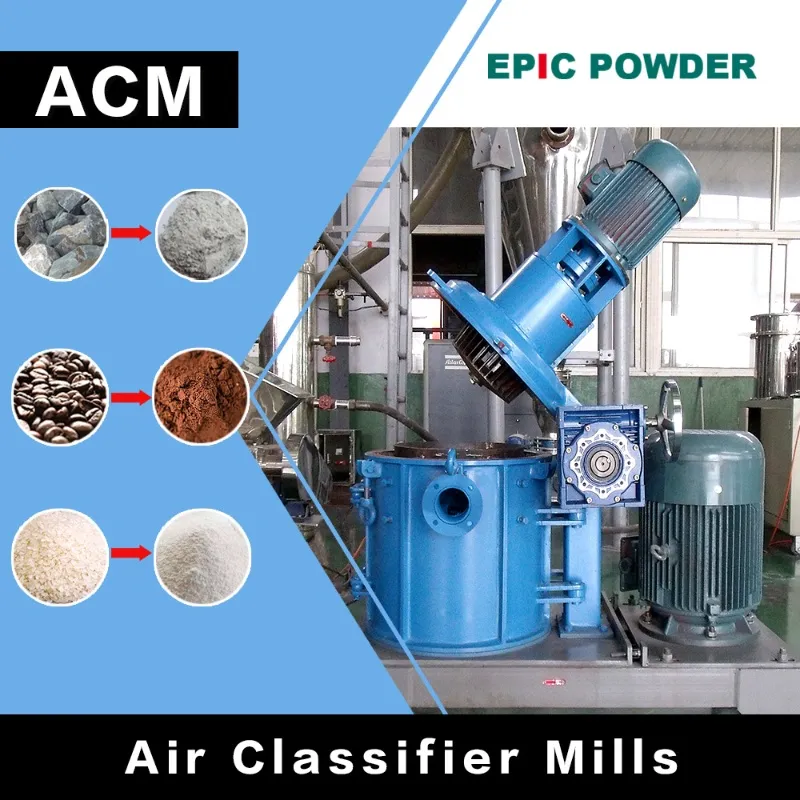
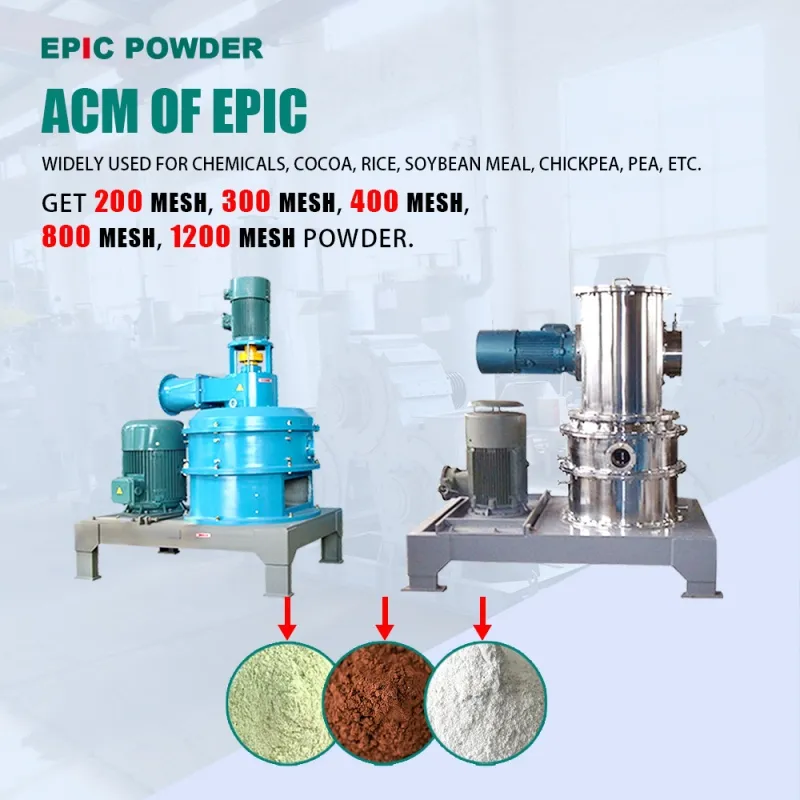
Luftklassificeringsmøller (ACM) kombinerer formaling og klassificering i én enhed, hvilket gør dem ideelle til produktion af superfint calciumcitratpulver. Dette integrerede system muliggør præcis partikelstørrelseskontrol, hvilket sikrer en ensartet D99 20μm partikelstørrelsesfordeling, der er afgørende for forbedret biotilgængelighed og opløselighed.
Hvorfor ACM er optimal til superfin slibning
- Præcisionsklassificering: ACM'er adskiller finpartikler fra grove partikler øjeblikkeligt, hvilket resulterer i en smal PSD (partikelstørrelsesfordeling).
- Reduceret varmeudvikling: Blid formaling bevarer calciumcitrats kemiske integritet.
- Energieffektiv: Lavere strømforbrug sammenlignet med traditionelle møller.
- Skalerbar og konsistent: Velegnet til både små serier og industriel produktion.
Funktioner i Epic Powders luftklassificeringsmøller
- Tilpasset rotorhastighed og klassificeringshjulindstillinger for skræddersyet finhed
- Avanceret luftstrømsstyring for stabil pulversuspension og flydeevne
- Holdbar konstruktion, der er egnet til fødevare- og farmaceutisk calciumcitrat
- Nem vedligeholdelse med minimal nedetid
- Dokumenteret evne til at opnå smal PSD, ideel til ultrafint calciumcitratpulver
Procesflow og drift
- Rå calciumcitrat tilført via snegleføder ind i ACM-kammeret
- Rotorpåvirkninger nedbryder partikler
- Klassificeringshjulet udvælger partikler under 20 mikron (D99) til udledning
- Grovere partikler returneres til yderligere formaling
- Det endelige ultrafine pulver opsamles i cyklon eller filtersystem
Sammenligning af ACM med andre kværne
| Mølletype | PSD-kontrol | Varmeproduktion | Energiforbrug | Egnethed til superfint calciumcitratpulver |
|---|---|---|---|---|
| Air Classifier Mill | Fremragende (D99 20μm) | Lav | Høj effektivitet | Det bedste valg til superfine materialer, fødevare- og farmaceutisk kvalitet |
| Jet Mill | God | Moderat | Høj | Godt, men højere energiforbrug |
| Vibrerende mølle | Moderat | Høj | Medium | Mindre præcis, risiko for overslibning |
| Kuglemølle | Dårlig/Variabel | Høj | Lav | Kun grovmalning, ikke egnet til superfin maling |
Epic Powders specialiserede ACM-teknologi skiller sig ud ved at levere produktion af ultrafint pulver i fødevarekvalitet med forbedret dispergerbarhed og flydeevne for calciumcitrat, hvilket gør den til den foretrukne løsning for producenter, der fokuserer på kvalitet og effektivitet.
For yderligere indsigt i luftstrømsstyring og skruefremføring i integrerede slibesystemer, se vores detaljerede oversigt over skruefødermekanismer anvendes i luftklassificeringsmøller.
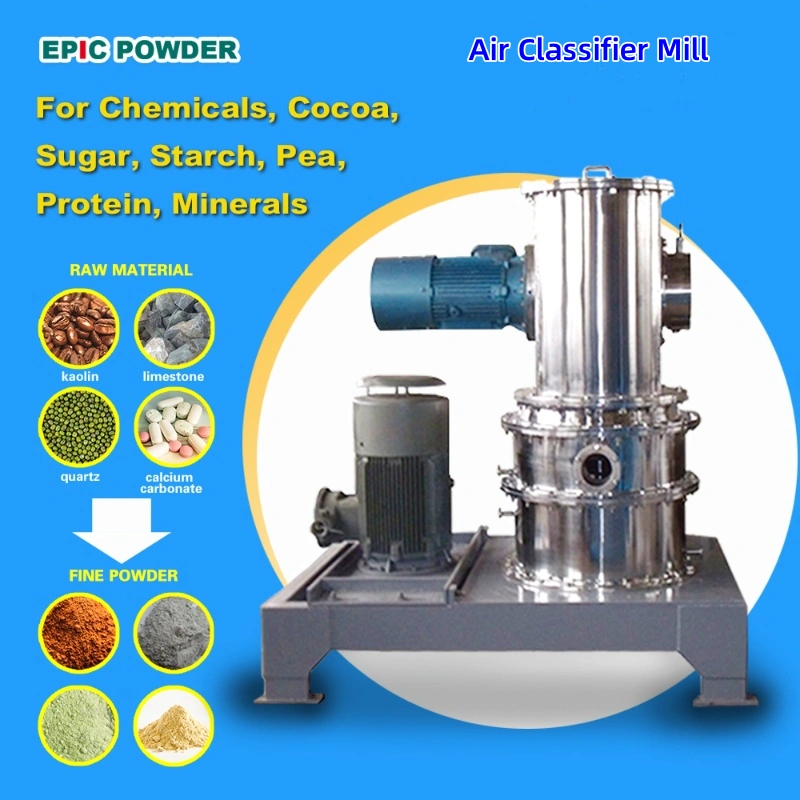
Trin-for-trin superfin formalingsproces for calciumcitrat
For at opnå et ensartet ultrafint calciumcitratpulver med en D99 20μm partikelstørrelsesfordeling starter processen med omhyggelig forberedelse af råmaterialet. Calciumcitrat med høj renhed er afgørende – urenheder påvirker både formalingseffektiviteten og den endelige pulverkvalitet. Ved at sikre fødevaregodkendte eller farmaceutiske standarder i udgangsmaterialet undgås kontamineringsrisici efterfølgende.
Dernæst skal driftsparametrene styres præcist. Rotorhastighed, klassificeringshjulets indstillinger, luftstrøm og tilførselshastighed påvirker alle partikelstørrelse og -fordeling. For eksempel forbedrer øget rotorhastighed og luftstrøm typisk finheden, men kræver afbalancering for at forhindre overformaling eller varmeophobning. Justering af klassificeringsenheden finjusterer partikelsorteringen, hvilket hjælper med at opretholde en smal PSD, der er afgørende for forbedring af calciumcitrats biotilgængelighed og ensartet dispergerbarhed.
Efter formaling er korrekt håndtering nøglen til at bevare pulverets kvalitet. Flydemidler kan tilsættes for at forbedre flydeevnen og forhindre klumpning under pakning og opbevaring. Grundig kvalitetstestning sikrer, at pulveret opfylder målspecifikationerne for finhed, renhed og fugtindhold, og er klar til brug i kosttilskud, farmaceutiske produkter eller fødevareapplikationer.
Gennem hele processen er sikkerhed og overholdelse af regler altafgørende. Brug af fødevaregodkendte luftklassificeringsmøller designet til følsomme materialer minimerer risikoen for kontaminering, samtidig med at hygiejnestandarder overholdes. For et dybdegående kig på teknologien bag disse møller, og hvordan de håndterer temperatur og fugtighed for varmefølsomme pulvere som calciumcitrat, se vores detaljerede vejledning om luftklassificeringsmøllekontrol af temperatur og fugtighed.
Ved omhyggelig at følge disse trin sikres et superfint calciumcitratpulver af høj kvalitet med fremragende opløselighed og ydeevne i forskellige formuleringer.
Fordele og ydeevneresultater for D99 20μm calciumcitratpulver
Superfin formaling for at opnå en D99 20 μm partikelstørrelsesfordeling tilbyder betydelige tekniske og praktiske fordele ved calciumcitratpulver.
| Fordelskategori | Vigtigste fordele | Indvirkning |
|---|---|---|
| Teknisk | Øget opløselighed og hurtigere opløsningshastighed | Forbedrer calciumcitrats biotilgængelighed for bedre sundhedsresultater |
| Større overfladeareal fra mindre partikler | Forbedrer interaktionen med flydende medier og øger absorptionen | |
| Formulering | Overlegen dispergerbarhed og suspensionsstabilitet | Nemmere at blande i kosttilskud, fødevarer og farmaceutiske produkter |
| Forbedret kompressibilitet og flydeevne | Muliggør ensartet tabletproduktion og doseringsnøjagtighed | |
| Potentiale for dosisreduktion | Effektiv calciumtilførsel med mindre pulver | |
| Slutbruger | Sikrer overholdelse af lovgivningen i farmaceutiske og fødevaregodkendte pulvere | Opfylder strenge sikkerheds- og kvalitetsstandarder |
| Potentiale for premium-mærkning | Understøtter markedsføringspåstande om "ultrafine" eller "mikroniserede" |
Casestudier, der fremhæver produktionsgevinster
- Producenter rapporterede 30% hurtigere opløsningshastigheder med D99 20μm superfint calciumcitrat sammenlignet med grovere kvaliteter.
- En kosttilskudsproducent opnåede bedre ensartethed fra batch til batch og reducerede problemer med agglomeration.
- Fødevareproducenter bemærkede forbedret pulverspredning i drikkevarer, hvilket forbedrede mundfølelsen og produktstabiliteten.
Disse resultater bekræfter, hvorfor superfin slibning ved hjælp af systemer som luftklassificeringsmølle er den foretrukne metode til produktion af calciumcitratpulver med optimeret ydeevne og brugerfordele.
.webp)
Almindelige spørgsmål og svar (Q&A)
Q1: Hvordan afbalancerer jeg "finhed" og "output", når jeg producerer D99 20μm calciumcitrat?
EN: Dette er en vigtig teknisk balance. I en luftklassificeringsmølle (ACM) forbedrer en øget klassificeringshastighed finheden. Højere hastigheder returnerer dog mere materiale til formalingskammeret. Dette øger den interne belastning og sænker timeoutputtet.
- Optimeringstip: Brug en højpræcisions-snegleføder. Den sikrer en stabil materialestrøm og forhindrer udsving i lufttrykket.
- Det "gyldne snit": Juster forholdet mellem luftstrøm og klassificeringshastighed. Dette opretholder en smal D99 20μm fordeling, samtidig med at gennemløbet maksimeres.
- Teknisk kerne: Brug et ACM med et frekvensstyringssystem. Det muliggør justeringer i realtid for at holde energiforbruget lavt og produktionen høj.
Q2: Hvordan håndterer ACM-systemet ophobning af statisk elektricitet og klumpning af pulver?
EN: Finere calciumcitrat har et større overfladeareal. Dette øger overfladeenergien, hvilket fører til statisk elektricitet og agglomerering. Dette kan forringe pulverets flydeevne og dispergerbarhed.
- Luftstrømskøling: ACM'en bruger en høj luftmængde. Dette fjerner slibevarmen og hjælper med at sprede partiklerne fysisk. Det forhindrer klumpning forårsaget af varme.
- Materiale og jordforbindelse: Vi bruger spejlpoleret rustfrit stål (fødevare- og farmaceutisk kvalitet). Korrekt systemjording hjælper også med at transportere statiske ladninger.
- Proceshjælp: Du kan tilsætte små mængder fødevaregodkendte flydemidler, hvis reglerne tillader det.
- Indsamlingsfase: Vores højtrykspuls-støvsamlere bruger luftstød til at bryde "bløde" klumper. Dette sikrer, at det færdige D99 20μm pulver har fremragende flydeevne.

"Tak fordi du læste med. Jeg håber, at min artikel hjælper. Skriv venligst en kommentar nedenfor. Du kan også kontakte Zeldas online kundeservicemedarbejder for yderligere spørgsmål."
— Skrevet af Emily Chen