
Projektübersicht und Hintergrund:
Ruß ist ein unverzichtbarer industrieller Rohstoff, der in der Gummi-, Kunststoff-, Druckfarben-, Beschichtungs- und neuartigen Batterietechnologie weit verbreitet ist. In Hochleistungsbereichen – insbesondere bei Spezialbeschichtungen und leitfähigen Materialien – ist eine extrem feine Partikelgrößenverteilung entscheidend. Die präzise Kontrolle der Produktfeinheit (z. B. des D97-Wertes) bestimmt direkt die Eigenschaften des Endprodukts.
Dieses Fallprojekt befindet sich im Irak, wo der Kunde eine ultrafeine Vermahlung und präzise Klassifizierung eines bestimmten Rußrohstoffs benötigte.
Kernanforderungen und Herausforderungen
Zielgröße für ultrafeine Partikel
Das Endprodukt musste einen D97-Wert von 10 μm erreichen.
Bei Ruß – einem Material mit starker Agglomerationstendenz und großer spezifischer Oberfläche – stellt die Erzielung einer so feinen Vermahlung und präzisen Partikelgrößenkontrolle hohe Anforderungen an die Mahleffizienz und Klassifizierungsgenauigkeit.
Durchsatzsicherung
Der Kunde forderte eine stabile Produktionsrate von 250 kg/h, um einen kontinuierlichen Betrieb und eine wirtschaftliche Produktivität zu gewährleisten.
Materialeigenschaften
Ruß ist leicht, wird leicht aufgewirbelt und neigt zur Agglomeration. Diese Eigenschaften beeinträchtigen die Dichtigkeit von Anlagen, die Staubkontrolle, den Explosionsschutz (bei brennbaren Rußsorten) und die Reinigungsfreundlichkeit bei der Wartung.
Geräteauswahl
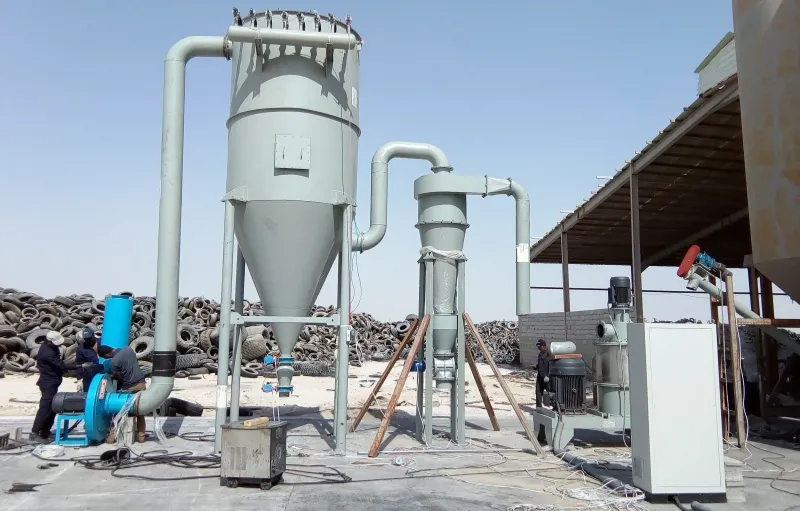
Der Episches Pulver Das Ingenieurteam führte Untersuchungen vor Ort durch, analysierte die Eigenschaften des lokal im Irak verwendeten Rußes (wie Härte und Feuchtigkeitsgehalt) und führte Leistungssimulationen für den MJW-400L durch.
Die abschließende Auswertung bestätigte, dass dieses Modell einen D97-Wert von 10 μm bei gleichzeitigem Durchsatz von 250 kg/h erreichen kann.
MJW-400L Vorteilsanalyse
| Besonderheit | MJW-400L Vorteile – Erläuterung |
|---|---|
| Integriertes Design | Die Mahlzone und die Präzisionsklassierzone sind in derselben Kammer integriert, sodass das Mahlgut direkt in das Klassierrad gelangt. Dies verhindert Übermahlung und gewährleistet eine präzise Kontrolle der Partikelgröße D97. |
| Ultrafeinmahlfähigkeit | Nutzt Schlag- und Schermechanismen, um Rußagglomerate effizient zu dispergieren und auf Mikrometer-Feinheit zu vermahlen. |
| Klassifizierungsgenauigkeit | Durch die einstellbare Drehzahl des Klassierrades und den einstellbaren Luftstrom wird eine flexible und präzise Steuerung des Partikelabscheidegrades ermöglicht, wodurch ein stabiles Erreichen von D97 = 10 μm gewährleistet wird. |
| Anpassungsfähigkeit an Ruß | Durch die optimierte interne Strömungsfeldgestaltung wird die Materialanhaftung reduziert; der vollständig geschlossene Betrieb trägt zum Umweltschutz bei und minimiert die Staubemissionen. |
Projektdurchführung und Ergebnisse
Während der Inbetriebnahme und Produktion erfüllte und übertraf die Klassiermühle MJW-400L die Kundenerwartungen voll und ganz.
| Schlüsselindikator | Zielvorgabe | Tatsächliches Betriebsergebnis | Leistungsniveau |
|---|---|---|---|
| Produktpartikelgröße | D97 = 10 μm | Stabil geregelt bei D97 ≤ 10 μm | Erreicht |
| Produktionsdurchsatz | 250 kg/h | Die Leistung von 250 kg/h wurde konstant erreicht oder überschritten. | Übertroffen |
| Betriebsstabilität | Kontinuierlich und stabil | Hervorragender Dauerbetrieb mit niedriger Ausfallrate | Exzellent |