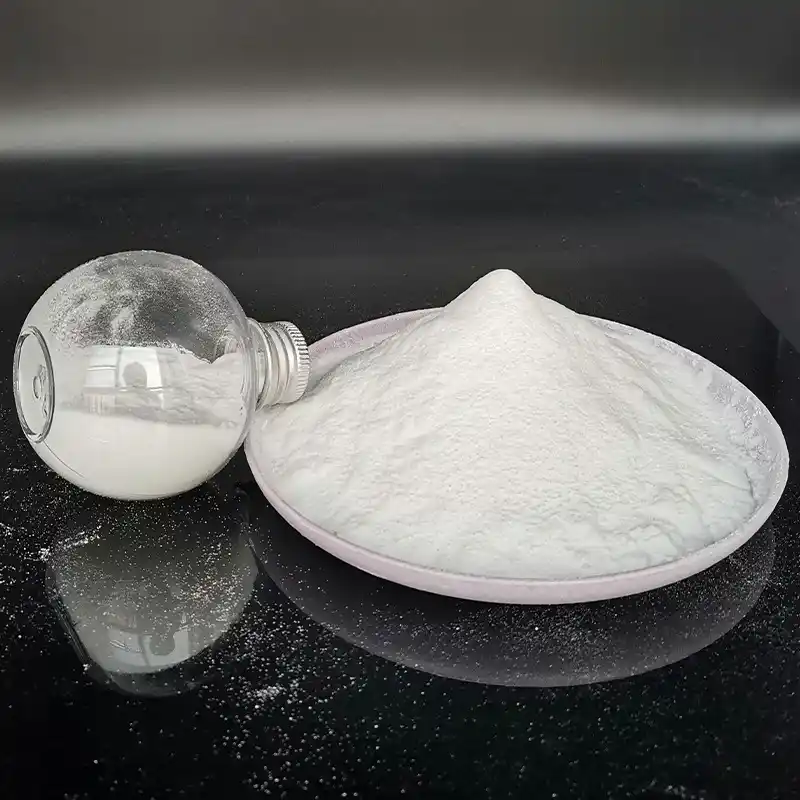
Waspoeder (gemicroniseerde was) is een onmisbaar functioneel additief in de moderne industrie en wordt veelvuldig gebruikt in coatings, inkten, kunststofmasterbatches, rubber, cosmetica, smeltlijmen, textielhulpstoffen, poedercoatings en meer. De kernwaarde ervan ligt in het verbeteren van oppervlakte-eigenschappen (slijtvastheid, krasbestendigheid, mattering, slipweerstand, antiblokkeereffect), reologiecontrole, verbeterde lossing uit mallen en het creëren van speciale texturen (zoals zandachtige effecten).
Naarmate de downstream-industrieën steeds hogere eisen stellen aan fijnheid, een smalle deeltjesgrootteverdeling, oppervlakteactiviteit en dispergeerbaarheid, is de trend verschoven van traditionele grove poeders van tientallen microns naar D50 3–10 μm of zelfs D97 < 5 μm ultrafijne waspoeders op micron-/submicronniveau. De belangrijkste apparatuur die deze transformatie mogelijk maakt, is de luchtclassificatiemolen (ook wel impactclassificatiemolen, luchtclassificatiemolen of geïntegreerde maal-classificatiemolen genoemd) – die een efficiënte, continue en controleerbare ultrafijne verwerkingsroute in één stap biedt.
Waarom is waspoeder nodig? Ultrafijn slijpenWat zijn de pijnpunten in de markt?
Conventioneel waspoeder (doorgaans 20–100 μm) voldoet niet altijd aan de eisen van hoogwaardige toepassingen vanwege de volgende knelpunten:
- Te grote deeltjes → slechte dispergeerbaarheid, snelle bezinking, ongelijkmatige oppervlakte-effecten
- Brede deeltjesgrootteverdeling → inconsistente batchstabiliteit, variabele mat-/slip-prestaties
- Hoge hittegevoeligheid (PE-was, PP-was, Fischer-Tropsch-was hebben smeltpunten van doorgaans 80-140 °C) → traditionele mechanische maalinstallaties genereren aanzienlijke warmte, wat leidt tot agglomeratie, oxidatie en vergeling.
- Hoogwaardige toepassingen (bijv. autolakken, cosmetica, materialen voor contact met levensmiddelen) → strenge eisen aan zuiverheid, deeltjesvorm, oppervlakte-energie en microbiële beheersing.
De luchtclassificatiemolen pakt deze problemen direct aan en levert een complete oplossing, van grove grondstoffen tot fijn poeder op micronniveau.
Kernwerkingsprincipe en processtroom van Luchtklasseermolen
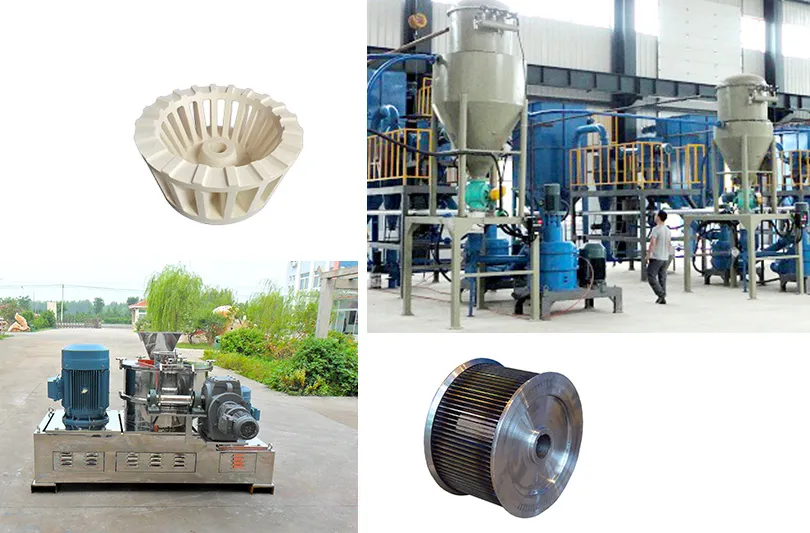
De luchtclassificatiemolen is voorzien van een geïntegreerd ontwerp met “malen en dynamische classificatie”:
- Voeding → Grove wasdeeltjes (meestal honderden microns tot enkele millimeters groot) worden via een schroef- of pneumatisch transport in de maalkamer gevoerd.
- Hogesnelheids-impactslijpen → Het materiaal wordt intensief bewerkt, afgesneden door snel roterende hamers/bladen/slagblokken en botst tegen de tanden van de stator voor de eerste verkleining.
- Gelijktijdige dynamische classificatie → Gemalen poeder stijgt met de luchtstroom mee naar de ingebouwde turbineclassificatiezone; gekwalificeerde fijne deeltjes worden door de luchtstroom meegevoerd, terwijl grove deeltjes door het classificatiewiel worden tegengehouden en teruggevoerd naar de maalzone voor verdere verwerking, waardoor een interne recirculatiekring.
- Productcollectie → Fijnstof wordt opgevangen via een cycloonafscheider + zakkenfilter; het hele systeem werkt onder negatieve druk, waardoor er vrijwel geen stof ontsnapt.
Het proces integreert malen en sorteren tegelijkertijd, waardoor de efficiëntie aanzienlijk wordt verbeterd en de complexiteit en energieverspilling van traditionele "eerst malen, dan sorteren"-systemen met meerdere machines worden vermeden.
Typische technische specificaties voor de verwerking van waspoeder in een luchtclassificatiemolen (industriële referentiewaarden)
| Wassoort | Doelfijnheid (D50 / D97) | Typisch voorbeeld van een apparatuurmodel | Capaciteit per machine (kg/u) | Temperatuurregeling | Belangrijkste voordelen aangetoond |
|---|---|---|---|---|---|
| PE-was | 8–15 μm / 25–40 μm | ACM-30 ~ ACM-60 | 200–1500 | <50°C | Hoge kosteneffectiviteit, hoge doorvoer |
| PP-was, FT-was | 5–10 μm / 15–30 μm | Tegengestelde straalmolen + classificator of premium ACM | 100–800 | Rond kamertemperatuur | Afgeronde deeltjesvorm, smalle verdeling |
| Premium wax op micronniveau | 3–8 μm / 10–20 μm | Verbeterde classificatiemolen of hybride luchtsysteem | 50–500 | Regelbare lage temperatuur | Bij uitstek geschikt voor cosmetische autolakken. |
| Submicron waspoeder | D50 < 5 μm / D97 < 10 μm | Vereist ondersteuning voor het malen met stoom/lage temperatuurlucht. | 20–200 | <30°C | Hoogwaardige functionele toepassingen (bijv. optische films) |
Belangrijkste voordelen van een luchtclassificatiemolen ten opzichte van traditionele methoden voor de verwerking van waspoeder
| Aspect | Traditionele mechanische molen + daaropvolgende classificatie | Traditionele straalmolen (zonder ingebouwde classificator) | Luchtclassificatiemolen (geïntegreerde impact + classificatie) | Praktische waarde voor de verwerking van waspoeder |
|---|---|---|---|---|
| Bereikbare fijnheid | Doorgaans 15–50 μm | 2–20 μm | 3–30 μm (eenvoudig instelbaar) | Omvat het volledige spectrum, van middenklasse tot premium. |
| Deeltjesgrootteverdeling | Breder, vaak multimodaal | Smaller | Smalste (goede controle van één piek) | Uitstekende batchstabiliteit, consistente prestaties van het eindproduct. |
| Temperatuurregeling | Gevoelig voor verhitting (60–120 °C) | Laag (kamertemperatuur of lager) | Matig tot laag (water-/luchtkoeling mogelijk) | Minimaliseert verzachting, samenklontering en vergeling. |
| Energieverbruik en -efficiëntie | Gematigd | Hoger | Relatief zuinig (hoge interne recirculatie-efficiëntie) | Optimale prijs-prestatieverhouding |
| Voetafdruk en processtroom | Multimachineserie, groot grondoppervlak | Grote voetafdruk per machine | Eén machine voltooit het proces, kortste doorlooptijd | Lagere investerings- en operationele kosten |
| Deeltjesvorm en -oppervlak | Hoekig, onregelmatig | Bijna bolvormig | Vrijwel bolvormig, glad oppervlak | Betere dispergeerbaarheid, superieure glans/gevoel na toevoeging |
| Toepasselijke wassoorten | Gewone PE/PP-was | Hittegevoelige/hoogsmeltende was | Vrijwel alle soorten was (inclusief geoxideerde was, EBS, enz.) | Hoogste veelzijdigheid |
Praktische waarde en toepassingsvoorbeelden van de totaaloplossing
Veel producenten van gemicroniseerde was hebben luchtclassificatiemolens als kernapparatuur ingezet om complete productielijnen op te bouwen:
- Voorbehandeling van de grondstoffen (breken, zeven) → ultrafijne classificatiemolen → optionele oppervlaktebehandeling → eindverpakking.
- Typische capaciteitsconfiguratie: Een enkele ACM-50 kan stabiel PE-waspoeder met een deeltjesgrootte van D50 ≈ 8–12 μm produceren met een capaciteit van 400–800 kg/u.
- Premium route: Classificatiemolen + secundaire verwerking met lage-temperatuurstraalraffinage om waspoeder met een D50 < 5 μm te verkrijgen voor hoogwaardige autolakken, cosmetische crèmes, enz.
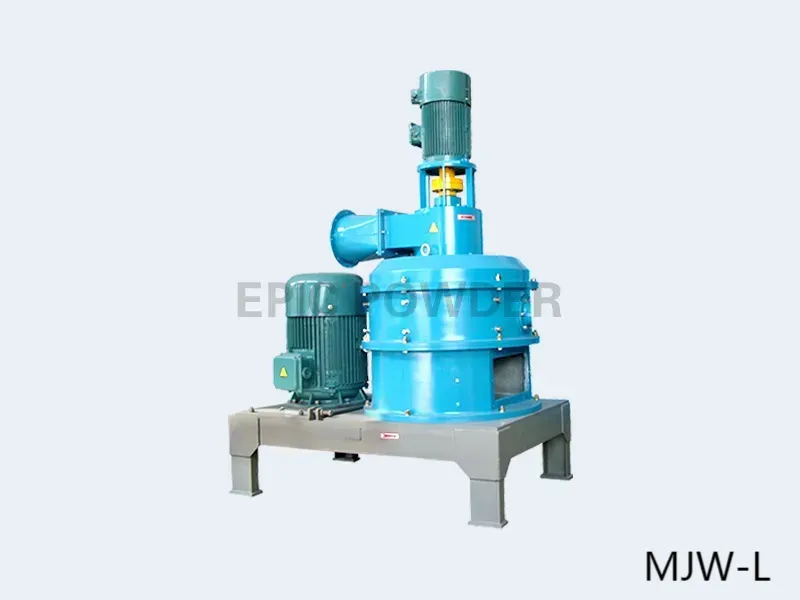
ConclusieDe luchtclassificatiemolen hervormt het landschap van de waspoederindustrie.
Van grove deeltjes tot ultrafijn poeder op micronniveau: de luchtclassificatiemolen biedt een complete oplossing met geïntegreerde maal- en classificatiefunctie, regelbare lage temperatuur, nauwkeurige fijnheidsregeling en een gestroomlijnd proces. Het verlaagt niet alleen de productiedrempel en de kosten voor ultrafijn waspoeder aanzienlijk, maar stimuleert ook de prestaties en functionaliteit van de daaropvolgende coatings-, kunststof-, cosmetica- en andere industrieën.
In de toekomst, met de toenemende vraag naar nanowaxpoeders en gemodificeerde composietwassen, zullen luchtclassificatiemolens zich blijven ontwikkelen richting fijnere classificatie, lager energieverbruik en meer intelligentie. Voor bedrijven in de waspoederindustrie die zich willen onderscheiden, kan de keuze voor een geschikt luchtclassificatiemolensysteem een cruciale stap zijn om de volgende golf van marktleiderschap te veroveren.

"Bedankt voor het lezen. Ik hoop dat mijn artikel nuttig is. Laat gerust een reactie achter. Voor verdere vragen kunt u ook contact opnemen met de online klantenservice van Zelda."
— Geplaatst door Emily Chen