분말 공학 분야에서 신에너지 소재(리튬 배터리 양극 및 음극 등), 의약품 원료의약품(API), 전자 세라믹, 정밀 화학 제품, 고급 안료 등의 생산에 있어 실험실 단계에서의 초미세 분쇄와 정밀한 분류는 후속 제품 성능을 결정하는 중요한 병목 현상이 되었습니다. 기존의 기계적 분쇄 방법(예: 유성 볼 밀 또는 진동 밀)은 비용이 저렴하지만 고온 상승, 오염 위험, 넓은 입자 크기 분포 등의 단점이 있습니다. 제트 밀링은 저온에서 매체 없이 분쇄할 수 있지만, D97 ≤ 2–5 μm 및 SPAN ≤ 1.5–2.0과 같은 까다로운 요구 사항을 충족할 만큼 충분한 분류 정밀도를 제공하지 못하는 경우가 많습니다. 고성능 실험실용 공기 분류기 밀 (공기 분류 밀, 약칭 ACM 또는 실험실 규모 공기 분류 밀)은 기계적 충격/마찰 분쇄와 내장된 동적 터빈 공기 분류 기능을 심층적으로 통합하여 "하나의 원료로 하나의 품질 기준을 충족하는 완제품"을 생산하는 폐쇄 루프 공정을 가능하게 합니다. 이러한 특징 덕분에 점점 더 많은 연구 개발 연구소와 파일럿 규모 플랫폼에서 선호되는 솔루션이 되고 있습니다.
이 글에서는 실험실용 고성능 공기 분류기 밀을 선택하는 데 필요한 체계적인 가이드를 제공하며, 원리 분석, 핵심 선택 기준, 주요 통합 모델 비교 및 실제 구매 시 유의 사항을 다룹니다.
실험실에서 "초미세 분쇄 + 공기 분류" 통합 솔루션을 선호하는 이유는 무엇일까요?
실험실 환경은 산업 생산 환경과 근본적으로 다르며, 주요 문제점은 다음과 같습니다.
- 처리량이 극히 적음: 일반적으로 시간당 0.1~5kg이며, 경우에 따라 배치당 수십 그램 정도의 소량만 필요한 경우도 있음;
- 엄격한 미세도 요구 사항: D50은 대부분 1~8μm, D97은 종종 2~5μm 이하 또는 심지어 서브마이크론 수준입니다.
- 재료 민감도: 열에 민감한 물질(예: 고분자, 의약품), 산화되기 쉬운 물질(예: 금속 분말, 실리콘-탄소 양극), 고순도 물질(전자 등급), 방폭형 물질(가연성 용매 잔류물이 있는 분말);
- 잦은 자재 교체: 교차 오염은 절대 용납할 수 없으며, 청소 시간은 이상적으로 30분 미만이어야 합니다.
- 공정 반복성: 매개변수(로터 속도, 공기 흐름, 공급 속도)는 정밀하게 조정 가능하고 저장 가능하며 추적 가능해야 합니다.
- 공간 및 소음: 면적 ≤ 1.5–2.5 m², 소음 <75 dB 권장.
기존 장비는 이러한 요구 사항의 균형을 맞추는 데 어려움을 겪습니다. 공기 분류기 밀은 저온(온도 상승은 일반적으로 15~35°C 미만), 좁은 분포(우수한 SPAN 값), 높은 청정도(선택 사양인 세라믹/PTFE 라이닝)라는 세 가지 요소를 결합하여 최적의 균형을 달성합니다. 기계식 로터 충격 + 독립형 가변 주파수 터빈 분류그 결과, 이 제품들은 오늘날 실험실에서 가장 널리 사용되는 초미세 분쇄 및 분류 통합 솔루션이 되었습니다.
핵심 작동 원리 개요
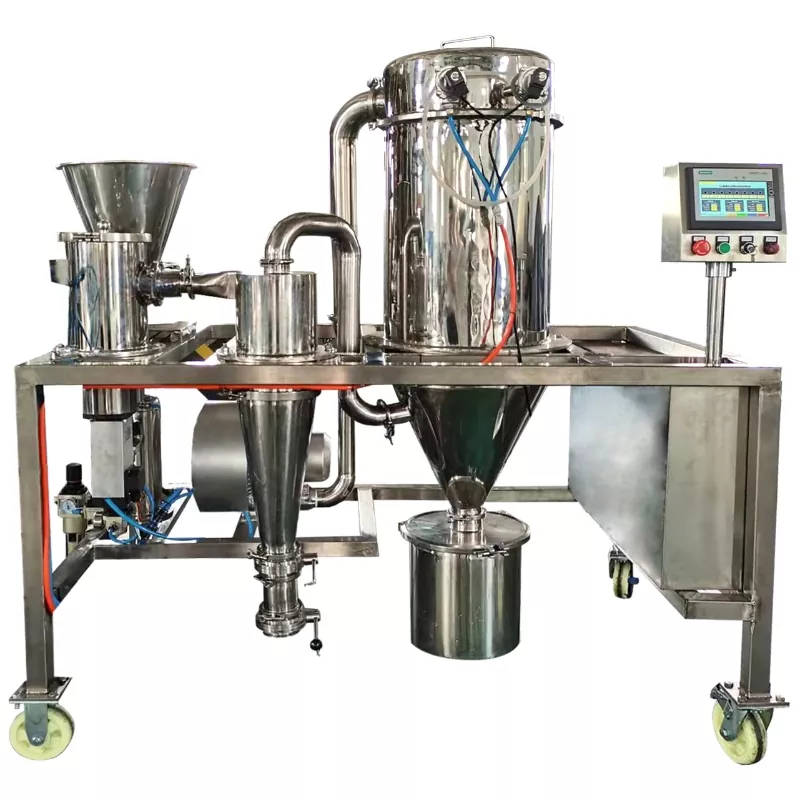
일반적인 고성능 실험실용 ACM은 다음과 같은 방식을 채택합니다. 수직/수평 로터 충격 + 내장형 동적 터빈 분류 구조:
- 연삭 영역재료는 스크류 피더 또는 진동 피더를 통해 분쇄 챔버로 유입됩니다. 고속으로 회전하는 충격 로터(해머/블레이드/톱니 디스크)는 재료에 강력한 기계적 충격, 전단력 및 입자 간 충돌을 가하고, 상승 기류는 유동화 및 이송을 도와 효율적인 크기 감소를 가능하게 합니다.
- 분류 구역지표면의 입자들이 기류를 따라 상승하여 상부 터빈 분류 구역으로 들어갑니다. 고속으로 회전하는 분류 휠은 강력한 원심력을 발생시킵니다.
- 미세 입자(주로 공기 흐름 저항에 의해 발생)는 분류기 날개 사이의 틈을 통과하여 깨끗한 공기에 의해 사이클론 및 백 집진기로 운반됩니다.
- (원심력에 의해 주로 발생하는) 굵은 입자는 바깥쪽 벽으로 밀려나 분쇄 영역으로 되돌아가 추가 처리가 진행됩니다.
- 조정 메커니즘최종 입자 크기는 공동으로 결정됩니다. 분류기 휠 속도(가변 주파수 제어, 일반적으로 3000~12000rpm), 시스템 공기 흐름, 그리고 공급 속도이를 통해 D97 값을 수십 마이크론에서 2 마이크론까지 조절할 수 있습니다.
통합의 이점: 분쇄와 분류가 동일한 기계 본체 내에서 이루어지므로 외부 이송으로 인한 오염, 침전 및 에너지 손실을 방지할 수 있습니다. 높은 분류 효율(80%–92%)과 더욱 균일한 입자 크기 분포를 제공합니다.
핵심 선정 기준 및 우선순위 순위 (2026년 기준)
| 선택 차원 | 주요 지표 및 권장 실험실 수치 | 중요도 순위 | 주요 점검 사항 및 위험 신호 |
|---|---|---|---|
| 세밀도 및 분포 | D97은 안정적으로 ≤2–5 μm, SPAN은 ≤1.5–1.8입니다. | ★★★★★ | 유사 재료에 대한 실제 시험 입자 크기 곡선(레이저 회절 데이터)이 필요합니다. |
| 처리량 | 0.1~5kg/h(주요 공정), 초소량 배치 생산 시 0.05~1kg/h(선택 사항) | ★★★★ | 실제 실험 빈도에 맞춰 모델을 제작하고, 낭비를 초래하는 과도하게 큰 모델은 피하십시오. |
| 온도 상승 제어 | 분쇄 챔버 온도 상승 <20–30°C, 저온 질소/액체 질소 인터페이스 선택 가능 | ★★★★★ | 열에 민감한 재료에 필수적이며, 온도 상승이 40°C를 초과하면 부적합 판정을 받게 됩니다. |
| 청결 및 자재 | 316L/세라믹/PTFE 라이닝, GMP/FDA 기준 충족, 빠른 분해 및 데드존 없음 설계 | ★★★★★ | 전자제품/의약품은 금속 오염이 전혀 없어야 하며, 세척 시간은 30분 미만이어야 합니다. |
| 분류 정밀도 및 조정 가능성 | 분류기 휠 속도 가변 0–12000 rpm, 온라인 조정 가능 d97 | ★★★★ | PLC 터치스크린 지원, 레시피 저장 기능, 파라미터 반복성 RSD <5% |
| 풋프린트 및 통합 | 설치 공간 ≤1.5–2.5 m², 일체형 급이기 + 사이클론 + 집진 백 + 소음기 | ★★★ | 모듈식 설계로 이동 및 유지보수가 용이합니다. |
| 안전 및 폭발 방지 | 방폭형 모터/불활성 가스 보호, 산소 모니터링, ATEX 인증(선택 사양) | ★★★★ | 가연성/금속 분말의 경우 필수 사항; 산소 <5% 제어 가능 |
| 에너지 및 소비 | 낮은 단위 제품 출력/가스 소비량 (효율적인 임펠러 + 노즐 설계 선호) | ★★★ | 비용에 민감한 실험실을 장기간 운영하는 데 중요합니다. |
| 체험 및 서비스 | 무료 시험 연삭, 유사 재료 사례, 공정 데이터베이스 지원 | ★★★★★ | 임상시험 지원이 없으면 위험도가 매우 높습니다. |
2026년 권장 우선순위정밀도 및 온도/청결도 관리 > 시범 서비스 및 사례 > 분류 조정 기능 > 처리량 최적화 > 브랜드 및 사후 서비스
주류 실험실용 고성능 공기 분류기 모델 비교 (2026년 시장 동향)
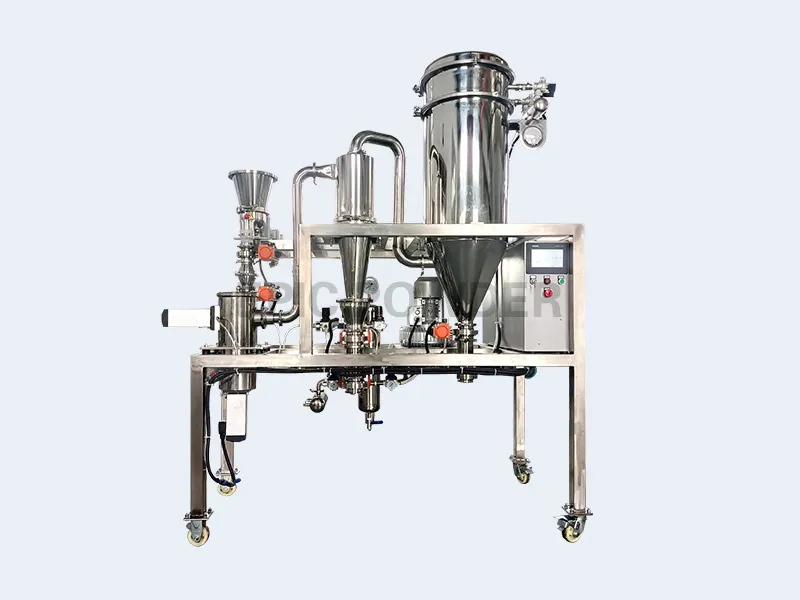
- 클래식 수직 로터 + 내장형 터빈 분류 (가장 다재다능한)
- 입자 크기 범위: D97 3–25 μm (2 μm로 최적화됨)
- 대표 제품: 에픽파우더 ACM 랩 시리즈, 다양한 국내 "쓰리인원" 모델
- 용도: 일반 화학물질, 안료, 비금속 광물, 식품 첨가물 등
- 고정밀/저온 강화형 (신에너지/제약 분야에 선호됨)
- 정밀도: D97 ≤2–4 μm 안정, 온도 상승 <15°C
- 특징: 세라믹/PTFE 라이닝 + 질소 극저온 시스템 + 온라인 입자 크기 피드백
- 응용 분야: 리튬 삼원계/LFP/실리콘-탄소 양극, 원료 의약품, 전자 페이스트
- 초소형/모듈형 (소량 생산 및 잦은 변경에 적합)
- 처리량: 0.05~1kg/시간, 설치 공간: 1m² 미만
- 특징: 빠른 분해 구조, 일회용 라이너 디자인, 글러브 박스와의 손쉬운 통합
- 응용 분야: 귀금속 분말, 나노 촉매, 고부가가치 소량 생산 연구 개발
구매 시 피해야 할 함정과 최종 권장 사항
흔히 저지르는 주요 실수:
- 실제 재료 분포 폭과 반복성을 무시하고 광고에 나온 "D97=1 μm"에만 초점을 맞추는 것;
- 청소의 어려움을 간과하여 다음 실험을 위해 몇 시간 동안 분해해야 하는 결과를 초래했습니다.
- 무료 시연용 장비 없이 장비를 선택했다가 구매 후에야 호환성 문제를 발견하는 경우;
- 분류기 휠 속도 범위 및 안정성을 희생하면서까지 극단적인 소형화를 추구하는 것;
- 불활성 가스 보호를 무시하고 인화성 분말을 사용하여 안전 위험을 초래했습니다.
2026년 최종 권장 사항: 무료 소량 시료 시험 분쇄, 광범위한 실험실 사례, 그리고 선택적 온라인 입자 크기 모니터링(예: 에픽 파우더 (등) 구매 전:
- 재료의 특성(모스 경도, 밀도, 융점, 수분/휘발성 물질, 산화/응집 용이성 등)을 제공하십시오.
- 목표 D50/D97 값, 처리량 및 불활성 가스 요구량을 명시하십시오.
- 유사 재질에 대한 실제 시험 입자 크기 분포 곡선, 온도 상승 데이터 및 세척 시연 영상을 요청합니다.
- 빠른 분해 및 청결 상태에 대한 현장 또는 영상 검증을 실시하십시오.
고성능 실험실용 공기 분류 분쇄기는 목표 분말을 신속하게 얻을 수 있을 뿐만 아니라, 후속 파일럿 규모 확대를 위한 안정적인 공정 범위와 매개변수 기준을 제공합니다. 적합한 장비를 선택하면 연구 개발 주기를 30%~60% 단축할 수 있습니다.

"읽어주셔서 감사합니다. 제 글이 도움이 되었으면 좋겠습니다. 아래에 댓글을 남겨주세요. 추가 문의 사항이 있으시면 젤다 온라인 고객 상담원에게 연락하셔도 됩니다."
— 게시자: 에밀리 첸