В порошковой инженерии, новых энергетических материалах (таких как катоды и аноды литиевых батарей), фармацевтических активных фармацевтических ингредиентах, электронной керамике, тонких химикатах и высококачественных пигментах сверхтонкое измельчение в сочетании с точной классификацией на лабораторном этапе стало критическим узким местом, определяющим характеристики конечного продукта. Традиционные методы механического измельчения (например, планетарные шаровые мельницы или вибрационные мельницы) являются недорогими, но страдают от высокого повышения температуры, риска загрязнения и широкого распределения частиц по размерам. Автономное струйное измельчение обеспечивает низкотемпературную обработку без использования среды, но часто не обладает достаточной точностью классификации для таких сложных требований, как D97 ≤ 2–5 мкм с SPAN ≤ 1,5–2,0. Высокопроизводительные лабораторные воздухоклассификаторы Воздушная классификационная мельница (сокращенно ACM или лабораторная воздушная классификационная мельница) глубоко интегрирует механическое ударное/истирающее измельчение со встроенной динамической турбинной воздушной классификацией, обеспечивая замкнутый цикл процесса «один исходный материал — один качественный готовый продукт». Это стало предпочтительным решением для все большего числа научно-исследовательских лабораторий и пилотных платформ.
В данной статье представлено систематическое руководство по выбору подходящей высокопроизводительной воздушной классификационной мельницы для лабораторного использования, охватывающее анализ принципов работы, основные критерии выбора, сравнение распространенных интегрированных моделей и практические ошибки при покупке.
Почему лаборатории предпочитают комплексное решение, сочетающее сверхтонкое измельчение и воздушную классификацию?
Лабораторные условия принципиально отличаются от условий промышленного производства, и к основным проблемам относятся:
- Чрезвычайно низкая производительность: обычно 0,1–5 кг/ч, при этом в некоторых случаях потребность может составлять всего несколько десятков граммов за партию;
- Строгие требования к тонкости зернистости: D50 в основном 1–8 мкм, D97 часто ≤ 2–5 мкм или даже субмикронный;
- Чувствительность материалов: термочувствительные (например, полимеры, лекарства), легко окисляющиеся (например, металлические порошки, кремний-углеродные аноды), высокочистые (электронного класса), взрывобезопасные (порошки с остаточными легковоспламеняющимися растворителями);
- Частая смена материалов: нулевая терпимость к перекрестному загрязнению, время очистки в идеале <30 минут;
- Повторяемость процесса: параметры (скорость вращения ротора, расход воздуха, скорость подачи) должны точно регулироваться, храниться и иметь возможность отслеживания;
- Пространство и уровень шума: площадь основания ≤ 1,5–2,5 м², предпочтительный уровень шума <75 дБ.
Традиционное оборудование с трудом справляется с этими требованиями. Воздушные классификационные мельницы достигают компромисса между низкой температурой (повышение температуры обычно <15–35°C), узким распределением (отличные значения SPAN) и высокой чистотой (опционально керамическое/ПТФЭ покрытие) за счет сочетания различных технологий. Механический удар ротора + независимая классификация турбин с регулируемой частотойчто делает их наиболее распространенным интегрированным решением для сверхтонкого измельчения и классификации в современных лабораториях.
Обзор основных принципов работы
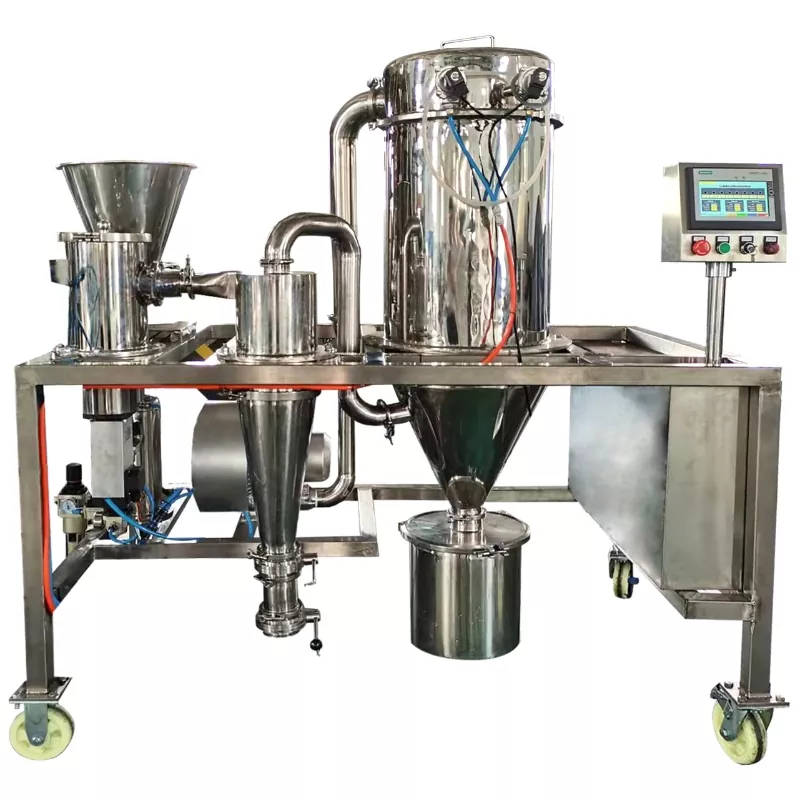
Типичные высокоэффективные лабораторные ACM используют вертикальное/горизонтальное воздействие ротора + встроенная динамическая классификация турбин структура:
- Зона шлифовкиМатериал поступает в камеру измельчения через шнековый или вибрационный питатель. Высокоскоростной вращающийся ударный ротор (молотки/лезвия/зубчатые диски) оказывает сильное механическое воздействие, сдвиг и межчастичное столкновение, а восходящий поток воздуха способствует псевдоожижению и транспортировке для эффективного измельчения.
- Зона классификацииЧастицы грунта поднимаются вместе с потоком воздуха в верхнюю зону классификации турбины. Высокоскоростное вращающееся классификационное колесо создает сильное центробежное поле:
- Мелкие частицы (в основном за счет сопротивления воздушного потока) проходят через зазоры между лопастями классификатора и переносятся чистым воздухом в циклон и мешочный сбор;
- Крупные частицы (в основном под действием центробежной силы) отбрасываются к внешней стенке и возвращаются в зону измельчения для дальнейшей обработки.
- Механизм регулировкиОкончательный размер частиц определяется совместно следующими лицами: Скорость вращения классификационного колеса (с частотно-регулируемым приводом, обычно 3000–12000 об/мин), системный воздушный поток, и скорость подачи, что позволяет регулировать значение D97 в диапазоне от десятков микрон до 2 микрон.
Преимущества интеграции: измельчение и классификация происходят в одном корпусе машины, что позволяет избежать загрязнения, отложений и потерь энергии от внешней транспортировки; высокая эффективность классификации (80%–92%) и более четкое распределение частиц по размерам.
Основные критерии отбора и приоритетный рейтинг (справочная информация на 2026 год)
| Размер выбора | Ключевые показатели и рекомендуемые лабораторные значения | Рейтинг важности | Ключевые моменты проверки и тревожные сигналы |
|---|---|---|---|
| Тонкость помола и распределение | D97 стабильно ≤2–5 мкм, SPAN ≤1,5–1,8 | ★★★★★ | Необходимо предоставить фактические кривые распределения размеров частиц (данные лазерной дифракции) для аналогичных материалов. |
| Пропускная способность | 0,1–5 кг/ч (основной поток), сверхмалые партии по желанию 0,05–1 кг/ч | ★★★★ | Соответствуйте фактической частоте проведения экспериментов; избегайте использования моделей слишком больших размеров, приводящих к потерям. |
| Контроль повышения температуры | Повышение температуры в камере измельчения <20–30 °C, опционально низкотемпературный интерфейс азот/жидкий азот. | ★★★★★ | Это крайне важно для термочувствительных материалов; повышение температуры выше 40°C является основанием для отказа. |
| Чистота и материалы | Внутренняя облицовка из стали 316L/керамики/ПТФЭ, соответствует стандартам GMP/FDA, обеспечивает быструю разборку и исключает образование мертвых зон. | ★★★★★ | В электронных/фармацевтических устройствах не должно быть никаких металлических загрязнений; время очистки <30 мин. |
| Точность классификации и возможность регулировки | Скорость вращения классификационного колеса регулируется в диапазоне 0–12000 об/мин, регулировка в режиме реального времени d97 | ★★★★ | Поддержка сенсорного экрана ПЛК + сохранение рецептов, повторяемость параметров RSD <5% |
| Зона охвата и интеграция | Площадь основания ≤1,5–2,5 м², интегрированный подающий механизм + циклон + мешок + глушитель | ★★★ | Модульная конструкция для удобства перемещения и обслуживания. |
| Безопасность и взрывозащита | Взрывозащищенный двигатель/защита от инертных газов, контроль уровня кислорода, опционально сертификат ATEX. | ★★★★ | Обязательно для легковоспламеняющихся/металлических порошков; содержание кислорода <5% под контролем. |
| Энергия и потребление | Низкое удельное энергопотребление/потребление газа (предпочтительна эффективная конструкция рабочего колеса и форсунки) | ★★★ | Важно для долгосрочно работающих лабораторий, чувствительных к затратам. |
| Испытания и обслуживание | Бесплатная пробная шлифовка, примеры работы с аналогичными материалами, поддержка базы данных технологических процессов. | ★★★★★ | Чрезвычайно высокий риск без поддержки клинических испытаний. |
Рекомендуемый приоритет на 2026 год: Точность + температура/чистота > Пробное обслуживание и примеры использования > Настраиваемость классификации > Соответствие производительности > Бренд и послепродажное обслуживание
Сравнение основных моделей высокопроизводительных лабораторных воздухоклассификаторов (рыночные тенденции 2026 года)
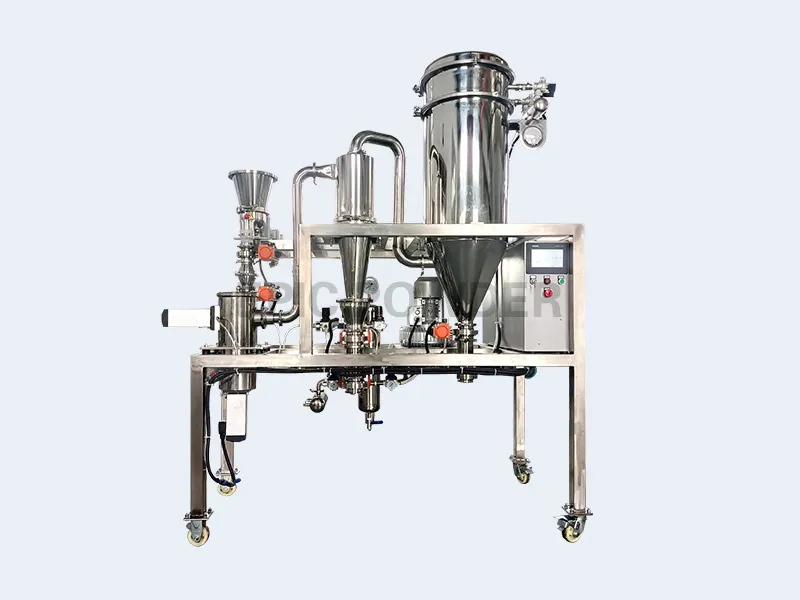
- Классическая вертикальная роторная турбина со встроенной системой охлаждения (Наиболее универсальный)
- Диапазон тонкости: D97 3–25 мкм (оптимизировано до 2 мкм)
- Представители: серия Epic Powder ACM lab, различные отечественные модели «три в одном».
- Области применения: химические вещества общего назначения, пигменты, неметаллические минералы, пищевые добавки и т. д.
- Высокоточный/низкотемпературный усовершенствованный тип (Предпочтительно для новых энергетических/фармацевтических компаний)
- Тонкость: D97 ≤2–4 мкм, стабильная работа, повышение температуры <15°C
- Особенности: Керамическое/ПТФЭ покрытие + криогенная система с азотом + онлайн-индикация размера частиц
- Области применения: литиевые тройные/LFP/кремний-углеродные аноды, активные фармацевтические ингредиенты, электронные пасты.
- Сверхкомпактный/модульный тип (Для очень небольших партий и частых изменений)
- Производительность: 0,05–1 кг/ч, площадь основания <1 м²
- Особенности: Быстроразборная конструкция, конструкция со сменными вкладышами, легкая интеграция с бардачками.
- Области применения: порошки драгоценных металлов, нанокатализаторы, высокоэффективные мелкосерийные исследования и разработки.
Ошибки при покупке, которых следует избегать, и заключительные рекомендации.
Основные типичные ошибки:
- Сосредоточение внимания только на заявленном значении «D97=1 мкм», игнорируя фактическую ширину распределения материала и повторяемость;
- Игнорирование трудностей с очисткой приводит к многочасовой разборке перед следующим экспериментом;
- Выбор оборудования без бесплатного пробного шлифования, чтобы потом обнаружить несовместимость после покупки;
- Стремление к предельной миниатюризации происходит за счет диапазона скорости вращения классификационных колес и их стабильности;
- Игнорирование защиты инертными газами создает угрозу безопасности при работе с легковоспламеняющимися порошками.
Окончательные рекомендации на 2026 год: Приоритет следует отдавать ведущим поставщикам порошкового оборудования, предлагающим бесплатное пробное измельчение небольших образцов, обширные лабораторные исследования и дополнительный онлайн-мониторинг размера частиц (например, ЭПИЧЕСКИЙ ПОРОШОК и т. д.). Перед покупкой:
- Укажите свойства материала (твердость по шкале Мооса, плотность, температура плавления, содержание влаги/летучих веществ, легкость окисления/агломерации и т. д.);
- Укажите целевые значения D50/D97, пропускную способность и потребности в инертном газе;
- Запросите фактические кривые распределения частиц по размерам, данные о повышении температуры и демонстрационные видеоролики по очистке аналогичных материалов;
- Проведите проверку быстрой разборки и чистоты на месте или с помощью видеозаписи.
Высокопроизводительная лабораторная воздушно-классификационная мельница не только обеспечивает быстрое получение целевых порошков, но и предоставляет надежные технологические окна и эталонные параметры для последующего пилотного масштабирования. Правильный выбор оборудования может сократить циклы НИОКР на 301–601 ТТ.

«Спасибо за прочтение. Надеюсь, моя статья вам поможет. Пожалуйста, оставьте комментарий ниже. Вы также можете связаться со службой поддержки Zelda Online по любым дополнительным вопросам».
— Опубликовано Эмили Чен