Innenfor feltet pulverbehandling, pinnemøllen (pinnemølle av pinnetypen) og luftklassifiseringsmøllen (ultrafin mølle med intern eller ekstern klassifiseringsenhet) er blant de mest brukte – og oftest feilvalgte – ultrafine slipemaskinene.
Mange brukere velger utstyr basert på bare én parameter: endelig partikkelstørrelse. Resultatet er ofte skuffende etter installasjon:
enten ekstremt lav effektivitet, kraftig overmaling, dårlig partikkelform eller et energiforbruk som er langt høyere enn forventet.
Nedenfor bryter vi ned de reelle ytelsesforskjellene mellom disse to maskinene på den enkleste måten, basert på hvordan de faktisk oppfører seg med ekte materialer.
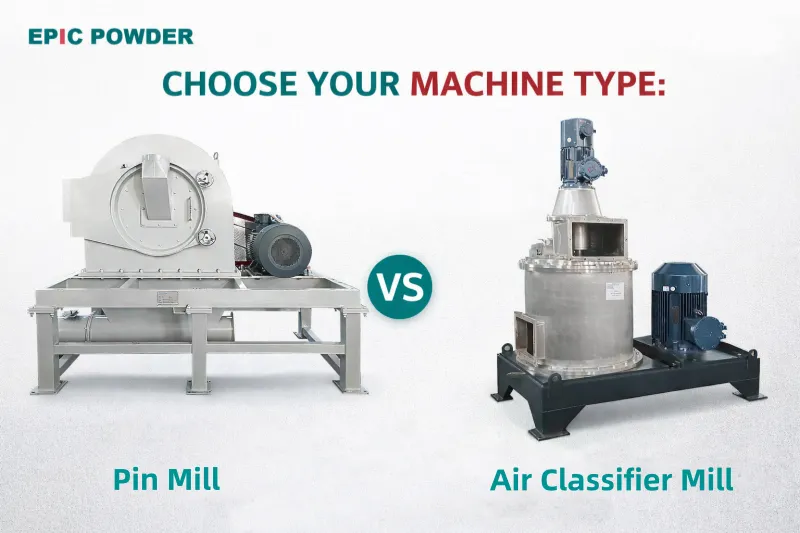
Kjerneforskjeller mellom pinmølle og luftklassifiseringsmølle
(Typisk ytelse for vanlige modeller, 2025)
| Punkt | Pin Mill (typiske 2–3-trinns pin-skiver) | Luftklassifiseringsmølle (vertikal/horisontal turbinklassifiseringstype) | Fordel (typiske scenarier) |
|---|---|---|---|
| Slipeprinsipp | Høyhastighetskollisjon + skjær + friksjon | Høyhastighetsslag + gjentatt sliping med klassifiseringsløyfe | – |
| Partikkelstørrelsesfordelingsbredde | Relativt smal (RSD vanligvis 0,4–0,65) | Relativt bred (RSD vanligvis 0,7–1,2 eller bredere) | Pinmølle |
| Kontroll av gjennomsnittlig partikkelstørrelse | ★★★★☆ | ★★★☆☆ | Pinmølle |
| Følsomhet for hardhet | Svært sensitiv (alvorlig slitasje hvis Mohs > 7) | Mer tolerant (kan fortsatt behandle opptil Mohs 9 med vanskeligheter) | ACM |
| Klebrige / fiberholdige materialer | Svært dårlig, utsatt for tilstopping | Betydelig bedre (men ikke universell) | ACM |
| Lavt smeltepunkt / varmefølsomme materialer | Bedre (øyeblikkelig sliping, kort oppholdstid) | Middels til dårlig (flere sykluser, merkbar temperaturøkning) | Pinmølle |
| Oppnåelig finhet (D97) | Vanligvis stabilt ved 2–8 μm; <1 μm er vanskelig | Lettere å nå 0,5–2 μm, til og med submikron | Luftklassifiseringsmølle |
| Spesifikt energiforbruk (kWh/t) | Middels til lav | Middels høy til ekstremt høy (øker kraftig med finhetsgraden) | Pinmølle |
| Partikkelform | Nesten likeakset, kantete | Mer platelignende, høyere sideforhold | Pinmølle (de fleste bruksområder) |
| Investering i utstyr | Medium | Middels høy til høy | Pinmølle |
| Vedlikeholdskostnader | Rask slitasje på pinnene, dyre reservedeler | Klassifiseringshjul og -foringer er også kostbare, men med lengre intervaller | Omtrent lik / klassifikator litt bedre (materialavhengig) |
Hurtigreferanse: Anbefalte freser for typiske materialer
(Praktisk veiledning for 2025–2026)
| Materialtype | Førstevalg | Alternativ | Hovedårsak |
|---|---|---|---|
| Kalsiumkarbonat (GCC/PCC), 800–3000 mesh | Luftklassifiseringsmølle | Pinmølle (kostnadsdrevet) | Stor produksjon, høy finhet, kostnadseffektivitet |
| Talkum (høy hvithet, høy renhet) | Pinmølle | Luftklassifiseringsmølle (ultrafin) | Partikkelformen er kritisk, unngå for store lameller |
| Glimmer (sericitt, våtmalt glimmer) | Pinmølle (med forsiktighet) | – | Fiberholdige materialer tetter lett til pinnfreser |
| Diatomitt, wollastonitt | Luftklassifiseringsmølle | Pinmølle (grovtrinn) | Høy hardhet og porøsitet forårsaker rask slitasje på pinnen |
| Grafitt (pre-sfæronisering) | Pinmølle | Luftklassifiseringsmølle | Trenger nesten likevektsede partikler og skarpe kanter |
| Al₂O₃, ZrO₂, SiC | Luftklassifiseringsmølle (vanlig) | Fluidisert sjiktstrålemølle | Hardheten er for høy for nålefreser |
| Batterimaterialeforløpere (NCM, LFP) | Pinmølle (vanlig) | Luftklassifiseringsmølle (noen tilfeller) | Ekstremt følsom for form, PSD-bredde og metallforurensning |
| Farmasøytiske mellomprodukter, antibiotika, PPC | Pinmølle (lavtemperaturtype) | Jetmølle | Varmefølsom, høy renhet |
| Landbrukskjemikalier, herbicider | Pinmølle | Luftklassifiseringsmølle | For det meste lavt smeltepunkt, varmefølsom |
| Karbonsvart, utfelt silika | Luftklassifiseringsmølle | Pinmølle (grovtrinn) | Ekstremt fin, strukturkontrollert |
| Diamantmikropulver, CBN | Sjelden pin-møller | Planetarisk kulemølle / jetmølle | Ekstrem hardhet |
| Zeolitt, bentonitt, kaolin | Luftklassifiseringsmølle | Pinmølle | Klebrige, nålefreser tetter seg lett |
Fem «fatale illusjoner» i valg av ekte utstyr
- «Hvis jeg trenger 2 μm, må en luftklassifiseringsmølle være bedre.»
→ For mange materialer i området 3–5 μm tilbyr pinnefreser faktisk mye bedre totalkostnadsytelse. - «Høy hardhet betyr at jeg må velge en luftklassifiseringsmølle.»
→ Hardhet er viktig, men hvis partikkelform, smal PSD og lav metallforurensning også er kritisk, kan en pinnfres med spesielle slitesterke materialer være den bedre løsningen. - «Jeg trenger høy gjennomstrømning – det kan ikke pin-fresere håndtere.»
→ Moderne store pinmøller (800–1200-modeller) kan nå 3–8 t/t per enhet (f.eks. 1250 mesh GCC). - «Finere betyr alltid høyere energiforbruk – det er normalt.»
→ Feil. Energikurvene varierer sterkt etter slipeprinsipp. Med samme D97 = 2 μm kan det hende at pinmøller bare forbruker 50–70% av energien til luftklassifiseringsmøller for visse materialer. - «Jeg begynner med en liten maskin for å teste først.»
→ Oppskaleringsatferden varierer betydelig mellom pinmøller og luftklassifiseringsmøller. En liten modell som yter bra, skalerer kanskje ikke bra – og omvendt.
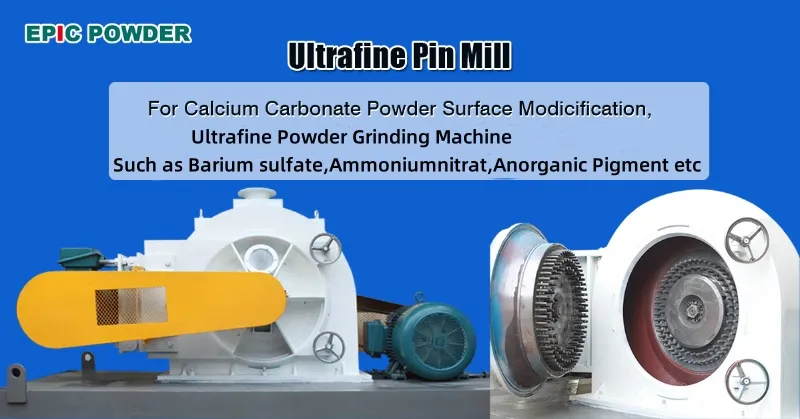
Logikk for valg av én setning
- For utmerket partikkelform, smal PSD, lav temperatur og middels finhet (D97 > 2,5–3 μm) → velg en PIN MILL først.
- For ekstrem finhet (D97 < 2 μm eller submikron), svært harde materialer, mindre bekymring for partikkelform og svært høy gjennomstrømning → velg en KLASSIFISERINGSMØLLE (eller jetmølle).
Så – hvor havner materialet ditt?
Legg gjerne igjen materialnavn + målfinhet + toppprioritet i kommentarfeltet.
Episk pulver vil hjelpe deg med raskt å avgjøre hvilken sliperute som mest sannsynlig er den rette for deg.

Takk for at du leste.
Jeg håper artikkelen min hjelper. Legg igjen en kommentar nedenfor. Du kan også kontakte Zeldas kundeservicerepresentant på nett hvis du har ytterligere spørsmål.
–Postet av Emily Chen