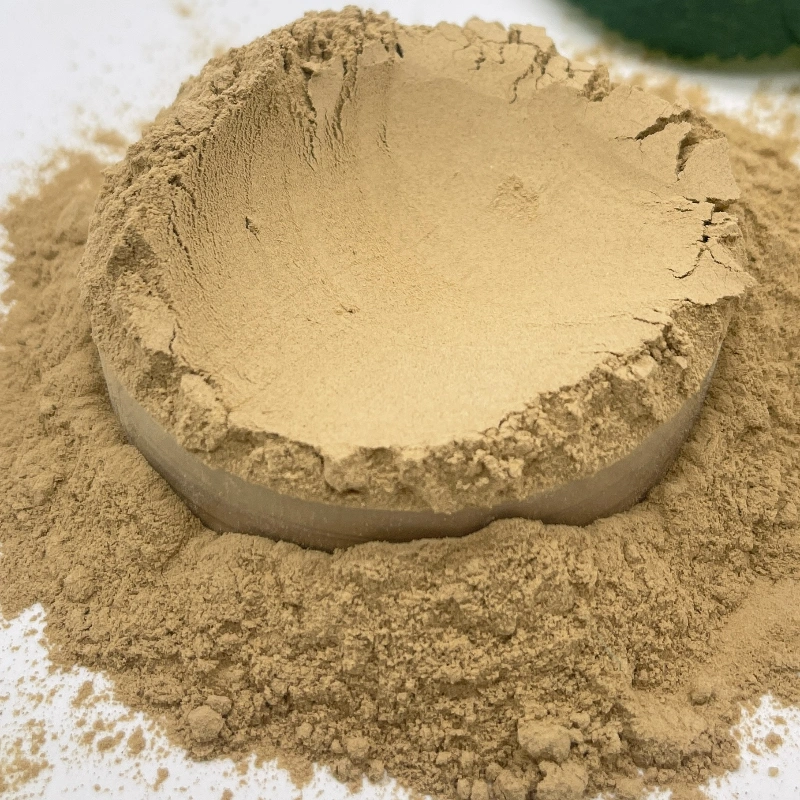
Bentoniet staat bekend als een klassiek materiaal met een hoge viscositeit, dat gemakkelijk agglomereert en moeilijk te vermalen is, vanwege de gelaagde structuur, het sterke adsorptievermogen en de hoge zwellingseigenschappen. Bij het produceren van ultrafijne deeltjes, met name D97 ≤ 5 μm, is conventioneel gebruik slijpapparatuur Vaak doet zich een probleem voor zoals verstoppingen, vastlopen van de kamer, ongelijkmatige fijnheid en een instabiele productiecapaciteit. Luchtclassificatiemolen (ACM)De technologie, die mechanisch impactmalen combineert met nauwkeurige luchtclassificatie, is uitgegroeid tot een van de meest efficiënte en stabiele industriële oplossingen voor de verwerking van ultrafijn bentoniet.
Belangrijkste uitdagingen bij het ultrafijn malen van bentoniet
| Eigendom | Gedrag | Invloed op het slijpen |
|---|---|---|
| Hoge viscositeit | Sterke oppervlakteadsorptie; de deeltjes kleven gemakkelijk aan elkaar. | Veroorzaakt agglomeratie, vastlopen van de kamer, ophoping van materiaal en verstopping. |
| Vochtabsorptie | Gevoelig voor omgevingsvochtigheid; absorbeert water en zwelt op. | Verhoogt de slijpweerstand en het energieverbruik. |
| Agglomeratietendens | De gelaagde structuur wordt samengedrukt en krult onder invloed van externe krachten. | Hoge verhouding grove deeltjes; moeilijk om de fijne deeltjesgrootte te behouden. |
| Thermische gevoeligheid | Bij verhoogde temperaturen droogt het uit en ondergaat het structurele veranderingen. | Overmatige hitte vermindert de activiteit en de adsorptieprestaties. |
Het bereiken van een stabiele D97 ≤ 5 μm vereist daarom geavanceerde dispersie-, deagglomeratie-, koelings- en classificatiemogelijkheden.
Hoe de Luchtklasseermolen Verhelpt de kleverigheid van bentoniet
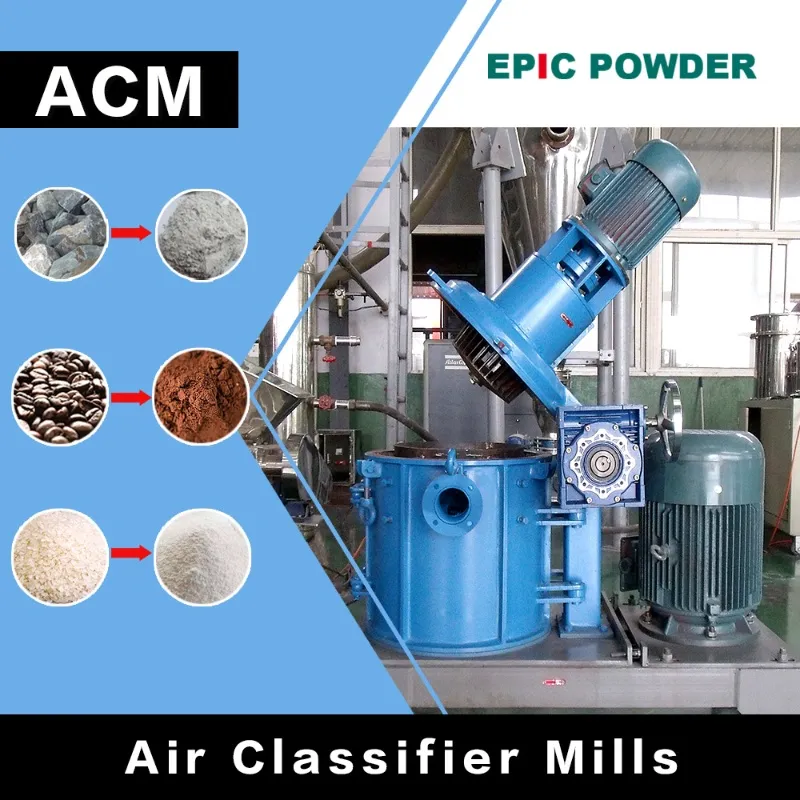
Een ACM bestaat uit een hogesnelheidsslijprotor, een precisieclassificatiewiel, een gecontroleerd luchtstroomsysteem en optionele temperatuurregelmodules. De voordelen zijn onder andere:
Hoge luchtsnelheid + mechanische impact voor krachtige deagglomeratie
De intense, turbulente luchtstroom in de maalkamer verspreidt de bentonietclusters continu, waardoor ze gescheiden blijven voordat ze de classificatiezone bereiken en de vorming van grote agglomeraten wordt voorkomen.
Geïntegreerd classificatiewiel voor stabiele D97 ≤ 5 μm
Het classificatiewiel scheidt de deeltjes in realtime:
- Fijne deeltjes volgen de luchtstroom naar de opvangbak.
- Grove deeltjes keren onmiddellijk terug voor verder impactvermalen.
Door de wielsnelheid nauwkeurig af te stellen, is het eenvoudig te bereiken:
D97 ≤ 5 μm, D50 = 1,5–3 μm met een smalle deeltjesgrootteverdeling
Slijpen bij lage temperatuur met optionele koeltechnologieën
Bentoniet is thermisch gevoelig. ACM-systemen kunnen worden uitgerust met:
- Koude lucht / gekoelde lucht
- Koeljassen
- Stikstofcirculatiesystemen
Hierdoor stabiliseert de uitlaattemperatuur zich onder de ingestelde waarde. 45°Cwaardoor het zwelvermogen en de adsorptieactiviteit van bentoniet behouden blijven.
Antiaanbakrotor en kamerontwerp
Slijpcomponenten hebben vaak de volgende kenmerken:
- Antiaanhechtende harde legeringscoatings
- Gepolijste, antiaanbaklaag aan de binnenzijde
- Speciaal ontworpen rotors om materiaalophoping te minimaliseren.
Deze producten verminderen aanhechting, afzettingen op de wanden en verstoppingen aanzienlijk.
Geïntegreerd drogen en malen voor optimale vochtregulatie.
Het optimale vochtgehalte voor het malen van bentoniet is ≤8%.
ACM's kunnen worden geïntegreerd met:
- Heteluchtovens
- Flash-drogers
- Trillende wervelbeddrogers
Het doel is een continu systeem te vormen voor drogen, malen en sorteren met een stabiele output.
Vergelijking met andere gangbare slijpmachines
| Criteria | Luchtclassificatiemolen (ACM) | Kogelmolen | Raymond Mill | Straalmolen |
|---|---|---|---|---|
| Geschiktheid voor bentoniet | ★★★★★ Uitstekend | ★★ Plakt makkelijk/slechte fijnheid | ★★★ Matig; risico op verstopping | ★★★★ Goed, maar prijzig |
| Bereikbare fijnheid | D97 ≤ 5 μm | D97 > 10 μm | D97 ≈ 10–20 μm | D50 < 3 μm (hoge energiekosten) |
| Energieverbruik | Middelmatig tot laag | Hoog | Laag | Zeer hoog |
| Temperatuurregeling | Goed | Eerlijk | Arm | Uitstekend |
| Productiecapaciteit | Middelhoog (100–5000 kg/u) | Hoog | Hoog | Middelmatig tot laag |
| Stabiliteit | Uitstekend | Laag | Medium | Hoog, maar duur |
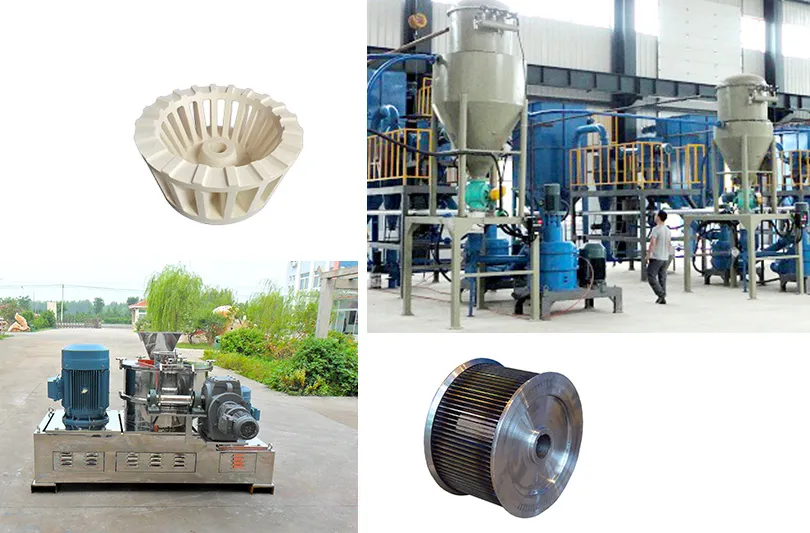
Typische systeemconfiguratie (voorbeeld van een Epic-poederhuls)
- Capaciteit: 800–3000 kg/u
- Eindresultaat: D97 ≤ 5 μm
- Energieverbruik: 40–60% lager dan straalmolens
- Functies:
- Anti-aanhechtingskamerontwerp
- Online monitoring van de deeltjesgrootte
- Luchtstroom + mechanische dubbele deagglomeratie
- Zeer nauwkeurige turbineclassificator voor een hoge opbrengst in één doorgang.
Belangrijkste toepassingsgebieden van ultrafijn bentoniet
| Industrie | Sollicitatie |
|---|---|
| Olieveld-/booradditieven | Verbetert de reologische eigenschappen, de verdikkingseigenschappen en de eigenschappen van de suspensie. |
| Coatings en inkten | Verhoogt de viscositeit, thixotropie en gladheid. |
| Rubber en kunststoffen | Verbetert de barrière-eigenschappen en de mechanische prestaties. |
| Katalysatordragers | Een groot oppervlak verbetert de katalytische activiteit. |
| Geosynthetische materialen | Gebruikt in inlegvellen en sterk absorberende producten. |
| Cosmetica | Diepe reiniging en absorptie van overtollig talg. |
| Farmaceutische en voedselzuivering | Hoge adsorptiecapaciteit gebruikt voor het verwijderen van gifstoffen |
Waarom kiezen voor Episch poederOplossingen voor het malen van bentoniet?
- Speciaal antikleefontwerp voor materialen met een hoge viscositeit.
- Uiterst nauwkeurige classificatietechnologie die een D97 ≤ 5 μm garandeert.
- Complete turnkey-systemen, van laboratoriumschaal tot grote industriële installaties.
- Het energieverbruik is aanzienlijk lager dan bij straalmolens.
- PSD-curven, proefrapporten en stabiliteitsverificatie zijn beschikbaar.
Als u een project plant voor het ultrafijn malen van bentoniet, kan Epic Powder u volledige technische ondersteuning bieden – van laboratoriumtests tot engineering op industriële schaal en de inbedrijfstelling van systemen.
"Bedankt voor het lezen. Ik hoop dat mijn artikel nuttig is. Laat gerust een reactie achter. Voor verdere vragen kunt u ook contact opnemen met de online klantenservice van Zelda."
— Geplaatst door Emily Chen