In der Pulverbeschichtungsproduktion und -anwendung stellt eine ungleichmäßige Partikelgröße seit Langem ein Problem für viele Unternehmen dar. Ein Überschuss an groben Partikeln kann zu rauen Beschichtungsoberflächen und einer ausgeprägten Orangenhautstruktur führen. Umgekehrt kann ein hoher Anteil an feinem Pulver – insbesondere Partikel kleiner als 10 µm – verschiedene Probleme verursachen. Dazu gehören eine mangelhafte elektrostatische Haftung, unzureichende Verlaufseigenschaften, Verstopfungen der Spritzpistole und Randablagerungen (Faraday-Käfig-Effekt). Letztendlich resultieren diese Probleme in einer ungleichmäßigen Schichtdicke, reduziertem Glanz, geringer Deckkraft und erheblichem Pulververlust.
Viele Hersteller kämpfen zudem mit mangelnder Chargenkonstanz, Verklumpung während der Lagerung und geringer Auftragseffizienz. Herkömmliches mechanisches Mahlen oder einfaches Sieben können diese Probleme nicht grundlegend lösen. Die Luftklassiermühle (ACM) ist ein weit verbreitetes, integriertes Mahl- und Klassiergerät in der Pulverbeschichtungsindustrie. Sie optimiert die Partikelgrößenverteilung (PSD) von Pulverbeschichtungen durch präzises Mahlen und dynamische Klassierung. Dadurch unterstützt sie Unternehmen bei der Erzielung einer hocheffizienten und qualitativ hochwertigen Produktion.
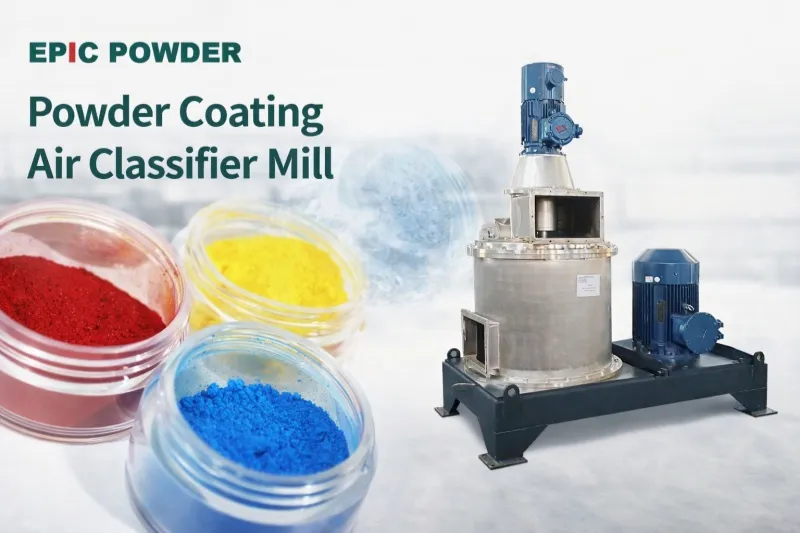
Funktionsprinzip und Kernvorteile von Luftklassierermühle für Pulverbeschichtungen
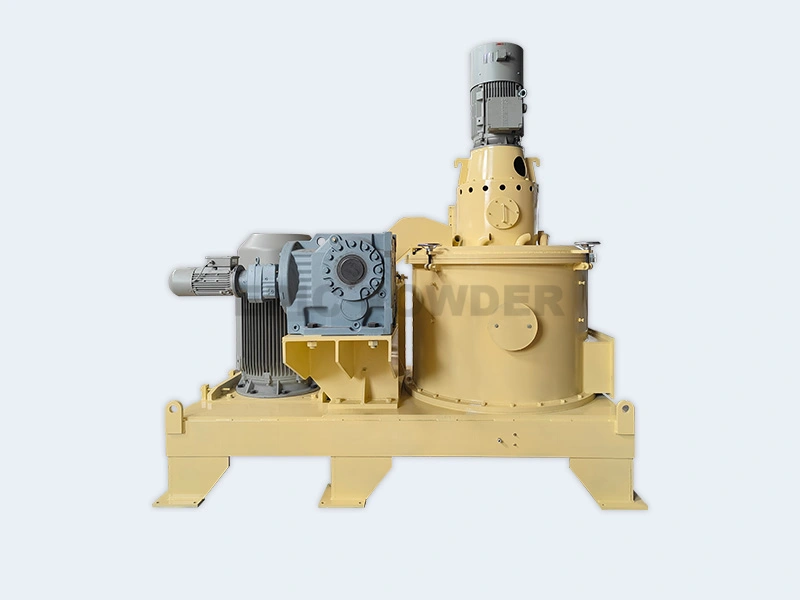
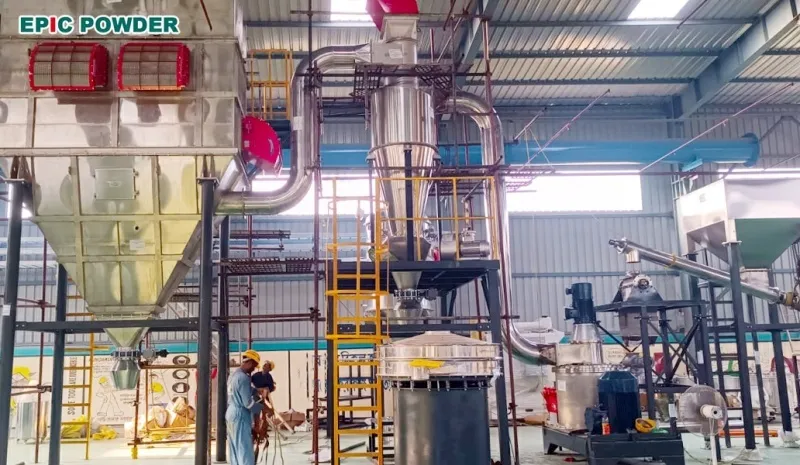
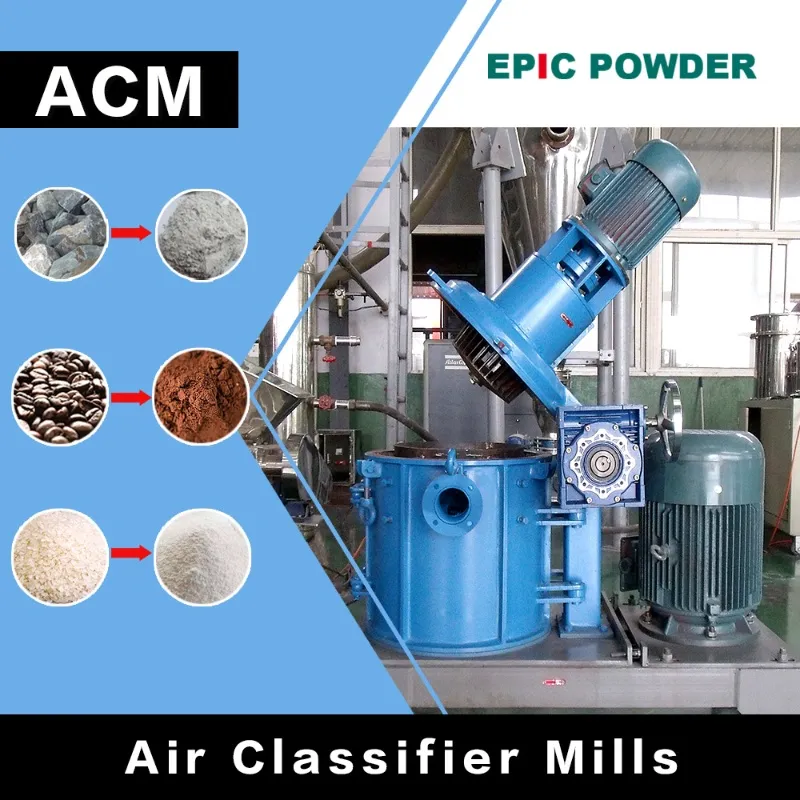
Das Herzstück einer Windsichtermühle ist ihr integriertes Design aus Mahlen und Klassieren. Sie ist nicht nur eine einfache Mühle, sondern vereint mechanisches Schlagmahlen mit aerodynamischer Klassierung. Beim Eintritt in die Mühle werden die Pulverbeschichtungsspäne (aus dem Extruderausgang) zunächst von der schnell rotierenden Hauptmahlscheibe erfasst. Durch Kollision, Reibung und Scherung an den Mahlstiften wird die Vormahlung erreicht.
Anschließend werden die Partikel durch den Luftstrom entlang der Wände der Mahlkammer transportiert und gelangen in die Klassierzone. Hier erzeugt das schnell rotierende Klassierrad eine starke Zentrifugalkraft, während der Saugzugventilator für einen nach oben gerichteten Sog sorgt. Die Partikel wirken gleichzeitig auf Zentrifugal- und Widerstandskräfte ein: Grobe Partikel, deren Zentrifugalkraft den Widerstand übersteigt, werden zur Außenwand geschleudert und gelangen zur weiteren Vermahlung zurück in die Mahlzone. Qualifizierte Feinpartikel werden durch den Luftstrom zur Abscheidung in den Zyklonabscheider transportiert, wodurch die präzise Klassierung abgeschlossen wird.
Dieses Verfahren ist kontaktlos und kontinuierlich und ermöglicht die stabile Kontrolle der mittleren Partikelgröße (D50) zwischen 15 und 60 μm, was sich besonders für Dünnschichtpulver (15–25 μm) eignet.
Vergleich mit herkömmlichen Geräten: Warum Windsichter Excel
Im Vergleich zu herkömmlichen Kugel- oder Hammermühlen liegt der größte Vorteil von Windsichtermühlen in der dynamischen Parametersteuerung, die eine enge Partikelgrößenverteilung ermöglicht (Reduzierung der Spanne von 1,8–2,0 auf 1,3–1,6). Zu den wichtigsten Steuerungsparametern gehören:
- Geschwindigkeit des KlassierradesHöhere Drehzahlen erhöhen die Zentrifugalkraft, was zu einem gründlicheren Partikelbruch und einer kleineren mittleren Partikelgröße führt. Der Anteil an Feinpulver steigt leicht an, lässt sich aber präzise steuern.
- Einlass- und AuslassluftbilanzEine Erhöhung des Einlassluftstroms senkt die Systemtemperatur und erhöht die Partikelbrüchigkeit, während eine stärkere Absaugung die Partikel gröber machen kann; umgekehrt führt eine Reduzierung des Luftstroms zu feineren Partikeln. Moderne Systeme passen das Luftgleichgewicht an, um die Bildung von ultrafeinem Pulver effektiv zu unterdrücken.
- FütterungsrateLangsamere Zufuhr verlängert die Verweilzeit feinerer Partikel; schnellere Zufuhr erzeugt gröbere Partikel.
- Bildschirmauswahl und UmgebungsfaktorenIn Kombination mit Temperatur- und Feuchtigkeitskontrolle werden dadurch Schwankungen der Partikelgrößenverteilung vermieden, die durch Änderungen der Pulverflexibilität verursacht werden.
Herkömmliche ACMs benötigen häufig einen Nachzyklon zur Entfernung von überschüssigem Feinstaub. Dies verlängert nicht nur die Produktionszeit und reduziert die Ausbeute, sondern erhöht auch den Energieverbrauch. Die neue Generation partikelgrößenoptimierter Mahlsysteme reduziert die Feinstaubbildung bereits in der Primärklassierung durch die Anpassung des Luftstromgleichgewichts zwischen Ein- und Auslass. Große Partikel werden wiederholt auf die Zielgröße vermahlen, wodurch hochkonzentrierte Produkte ohne Nachtrennung und mit einer Ausbeuteverbesserung gegenüber 10% erzielt werden.
Umfassende Optimierung der Leistung von Pulverbeschichtungen durch die Luftklassierermühle
Die Optimierungseffekte von ACMs spiegeln sich in fünf wichtigen Leistungsbereichen der Pulverbeschichtung wider:
- Fließfähigkeit und AnwendbarkeitEine enge Partikelgrößenverteilung reduziert die Van-der-Waals-Kräfte und die statische Adsorption zwischen den feinen Pulverpartikeln. Dadurch verbessert sich die Fließfähigkeit des Pulvers, das Verstopfen der Spritzpistole wird verringert, die Randablagerung minimiert und der Faraday-Käfigeffekt deutlich reduziert, was zu einer verbesserten Abdeckung an komplexen Bauteilecken führt.
- LagerstabilitätDurch den geringeren Anteil an ultrafeinen Pulvern neigen die Pulver weniger zum Verklumpen, bleiben unter Feuchtigkeit oder hohen Temperaturen stabil und weisen eine hohe Wiederholgenauigkeit von Charge zu Charge auf.
- BeschichtungsqualitätEine einheitliche Partikelgröße gewährleistet eine gleichmäßige Filmdicke, hohen Glanz sowie die Abwesenheit von Orangenhaut und anderen Makeln. Bildschärfe und Oberflächenglätte werden deutlich verbessert.
- Wirtschaftliche Vorteile: Die Deckkraft erhöht sich um 10–15% bei gleicher Dicke oder die Dicke kann um 25–30% reduziert werden, während die Normen eingehalten werden, wodurch Abfall und Gesamtkosten gesenkt werden.
- Umwelt- und EffizienzvorteileDas integrierte Design reduziert Energieverbrauch und Staubbelastung. Die Kapazität ist für verschiedene Modelle geeignet, von kleinen Anlagen bis hin zu industriellen Anlagen.
Häufig gestellte Fragen und Antworten
Frage 1: Warum kann die Windsichtermühle das Problem übermäßiger Feinpulverbeschichtungen effektiver lösen als herkömmliche Sieb- oder mechanische Mühlen? Warum ist die Effizienz herkömmlicher Methoden gering?
Antwort: Die traditionelle Siebung basiert ausschließlich auf mechanischer Lochtrennung, die leicht verstopft und ineffizient ist. Sie kann Übermahlung während des Mahlvorgangs nicht verhindern. Herkömmliche mechanische Mühlen verfügen nicht über eine dynamische Klassierung, wodurch feine und grobe Pulver vermischt werden und eine zusätzliche Nachbearbeitung erforderlich ist. Luftklassierermühlen nutzen Aerodynamik und Zentrifugalkraft für eine Echtzeit-„Online“-Trennung: Grobe Partikel werden zur Nachvermahlung zurückgeführt, während feine Partikel schnell ausgetragen werden, wodurch Übermahlung vermieden wird. Optimierte Modelle können zudem die Bildung von ultrafeinem Pulver (<10 μm) durch Luftstromausgleich unterdrücken, wodurch ein Sekundärzyklon überflüssig wird. Die Produktionszeit verkürzt sich und die Ausbeute verbessert sich um über 201 TP3T. Experimente zeigen, dass herkömmliche Luftklassierermühlen 15–201 TP3T Feinanteile produzieren, während optimierte Systeme diesen auf 5–81 TP3T reduzieren und so nachgelagerte Probleme wie schlechtes statisches Verhalten und Nivellierungsprobleme direkt lösen.
Frage 2: Wie verhindert eine Windsichtermühle bei Dünnschichtpulvern (D50 15–25 μm) ein explosionsartiges Feinkornwachstum und damit einhergehende Ausbeuteverluste? Welche Parametereinstellungen sind hierfür entscheidend?
Antwort: Für Dünnschichtpulver werden feinere Partikelgrößen benötigt, doch herkömmliche Verfahren führen zu übermäßigem Feinanteil und Ausbeuten von lediglich 70–801 µg/kg. ACMs (Air Conditioning Machines) erreichen diese Feinheit durch Erhöhung der Klassierraddrehzahl bei gleichzeitig präziser Abstimmung von Luftstrom (leicht reduziert zur Saugkraftkontrolle) und Zufuhrrate (moderat verlangsamt zur Verlängerung der Verweilzeit). Optimierte Mühlenstrukturen (verbesserte Klassierradschaufeln und Mahlstifte) vermahlen große Partikel wiederholt, anstatt sie in einem einzigen Durchgang zu übermahlen. Neue Anlagen können zudem die Einlasslufttemperatur anpassen, um die optimale Pulverbrüchigkeit zu gewährleisten und eine Überverfeinerung zu vermeiden. Praktische Einstelltechnik: Zunächst wird die Drehzahl so eingestellt, dass der Zielwert für D50 erreicht wird. Anschließend wird der Luftstrom feinjustiert, um Zentrifugal- und Widerstandskräfte auszugleichen. Abschließend wird die Partikelgrößenverteilung mit einem Laser-Partikelgrößenanalysator überprüft. Dies stabilisiert die Produktion im Bereich von 15–25 µm, hält den Feinanteil des Pulvers im optimalen Bereich und gewährleistet eine Ausbeute von über 951 µg/kg.
Praktische Ergebnisse
Ergebnis 1: Optimierung der Pulverbeschichtungslinie durch verbesserten Klassierzyklon (SAG-Typ)
Ein Beschichtungsunternehmen ersetzte einen Standardzyklon durch einen SAG-Zyklon mit Sekundärlufteinlässen und Leitschaufeln. CFD-Simulationen und Messungen zeigten eine verbesserte äußere Wirbelströmung bei gleichbleibend hoher Abscheideleistung und gleichzeitig effektiver Entfernung von ultrafeinem Pulver < 5 μm. Die Partikelgrößenverteilung (PSD) verringerte sich, der Schüttwinkel (AOR) sank von 42° auf 35°, und der Lawinenwinkel (AVA) sowie die Rotationsbett-Expansionsrate (RBER) reduzierten sich signifikant, was die Fließfähigkeit verbesserte. Die Beschichtungstiefe (DOI) verbesserte sich um 151 TP/3T, die Oberflächenrauheit Ra sank um 201 TP/3T, und die Laser-Konfokalmikroskopie zeigte eine ausgezeichnete Planheit. Beim Sprühen auf Automobilteile erhöhte sich die Eckabdeckung um 181 TP/3T ohne Kantenansammlungen. Die Gesamtauftragsrate verbesserte sich von 921 TP/3T auf 981 TP/3T.
Ergebnis 2: Industrielle Anwendung von Dünnschichtpulver (D50 15–25 μm)
Ein professioneller Hersteller von Dünnschichtpulvern nutzte optimierte ACMs (Anticopolymere) verschiedener Modelle zur Massenproduktion von D50-Pulver mit einer Partikelgröße von 22 µm. Herkömmliche Verfahren führten zu Verklumpungen und Verstopfungen der Spritzpistole. Die optimierte Produktion gewährleistete einen feinen Pulveranteil, erhöhte den Fließfähigkeitsindex um 301 TP3T und erzielte eine gleichmäßigere elektrostatische Aufladung. Bei Anwendung auf Metallmöbeln erhöhte sich die Deckkraft bei gleichem Materialeinsatz um 281 TP3T. Die Beschichtungsdicke konnte von 80 µm auf 55 µm reduziert werden, ohne die Haltbarkeitsstandards zu beeinträchtigen. Dadurch wurden 221 TP3T Rohmaterial eingespart. Der kontinuierliche Betrieb über sechs Monate hielt die D50-Abweichung zwischen den Chargen unter ±1 µm. Kundenfeedback bestätigte eine branchenführende Konsistenz des Beschichtungsbildes, und die Auftragseingänge stiegen um 351 TP3T.
Abschluss
Die Optimierung von Windsichtermühlen beschränkt sich nicht auf die Anlagen selbst. Sie erfordert eine systematische Anpassung der Rohmaterialrezeptur, der Extrusionsprozesse und der Sprühparameter. Unternehmen können Partikelgrößenverteilungskurven in Echtzeit mithilfe von Laser-Partikelgrößenanalysatoren überwachen. Darüber hinaus können sie Parameter mittels Versuchsplanung (Design of Experiments, DOE) optimieren und so ihren Ansatz von „passiver Anpassung“ zu „aktiver Steuerung“ verlagern.
Zukünftig werden ACMs intelligente Steuerungssysteme wie die Online-Partikelgrößenüberwachung und automatische Rückkopplung integrieren. Diese Fortschritte werden die Pulverbeschichtung weiter in Richtung hoher Effizienz, Umweltfreundlichkeit und intelligenter Produktion vorantreiben.
Befürchten Sie immer noch ungleichmäßige Partikelgrößen? Mit der richtigen Windsichtermühle und der Kombination aus wissenschaftlicher Parametersteuerung und neuen Strukturoptimierungen erzielen Sie mühelos Pulverbeschichtungen mit enger Partikelgrößenverteilung und hoher Leistungsfähigkeit. Dies steigert die Wettbewerbsfähigkeit Ihrer Produkte und senkt die Gesamtkosten.
Unternehmen wird empfohlen, die Ausrüstung anhand ihrer Produktionskapazität auszuwählen. Wir raten außerdem dazu, in Zusammenarbeit mit professionellen Herstellern Kleinversuche und Pilotprojekte durchzuführen, um Optimierungslösungen schnell umzusetzen. Die Revolution in der Pulverbeschichtungsqualität beginnt mit präziser Partikelgrößenkontrolle!

Vielen Dank fürs Lesen. Ich hoffe, mein Artikel war hilfreich. Hinterlassen Sie gerne einen Kommentar. Bei weiteren Fragen können Sie sich auch an den Online-Kundendienst von Zelda wenden.
— Gepostet von Emily Chen