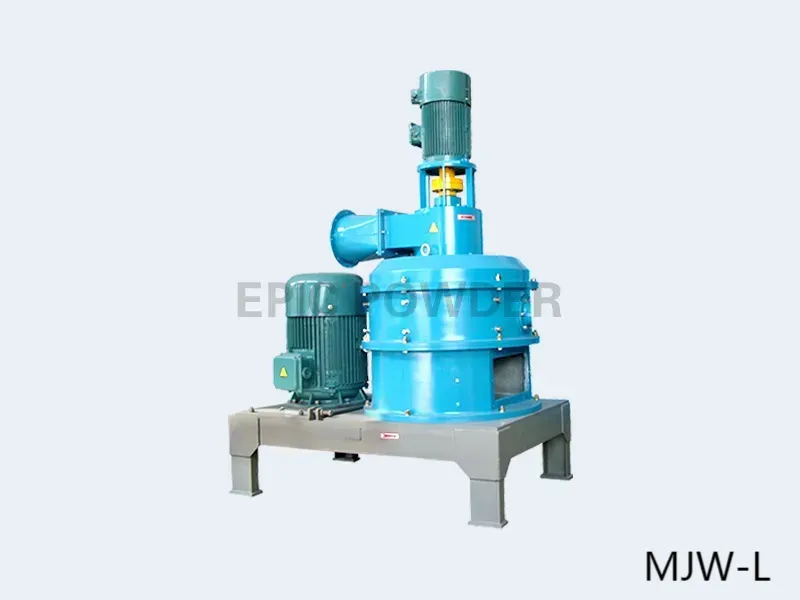
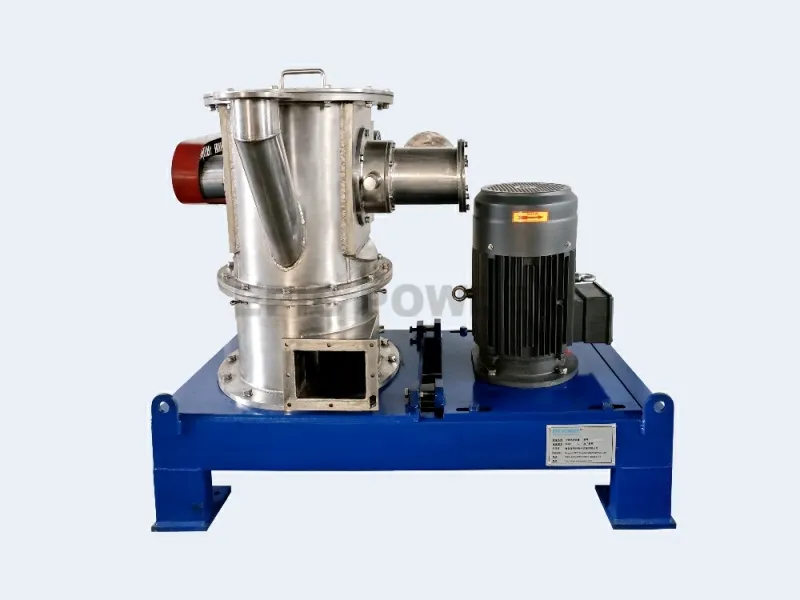
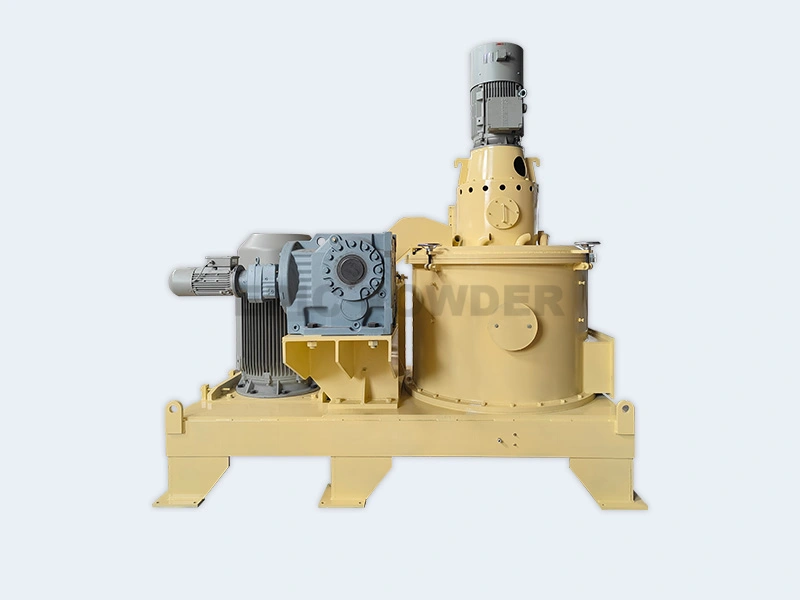
Innen industriell pulverbehandling, den Luftklassifiseringsmølle (ACM) har blitt et flaggskipapparat for håndtering av harde, sprø og middels harde materialer takket være sin unike integrerte design for sliping og klassifisering. Ved å kombinere høyhastighets mekanisk slag med presis luftklassifisering oppnår den effektiv ultrafin sliping samtidig som den kontrollerer partikkelstørrelsesfordelingen nøyaktig. Den er mye brukt i kjemikalier, legemidler, mat, nye energimaterialer, mineraler, avansert keramikk og mange andre industrier. Denne artikkelen gir en systematisk oversikt over arbeidsprinsipp, kjernefordeler, retningslinjer for valg og praktiske anvendelser.
I. Kjerneprinsipp for arbeidsoperasjon: Den perfekte kombinasjonen av slagsliping og dynamisk klassifisering
Luftklassifiseringsmøllen fungerer som et kontinuerlig internt sirkulasjonssystem, bestående av to hovedtrinn:
Slagsliping Scene
Materialet mates jevnt inn i slipekammeret via en skruemater eller et pneumatisk transportsystem. Den høyhastighetsroterende rotoren (vanligvis 3000–8000 o/min) driver hammere, pinner eller blader for å gi et intenst slag på materialet. Samtidig kolliderer partiklene voldsomt med foringen, tannplaten og hverandre. Under den kombinerte effekten av slag-, skjær- og friksjonskrefter brytes materialet raskt ned i fine partikler. Dette stadiet er spesielt effektivt for sprø materialer med Mohs-hardhet mellom 3 og 7.
Dynamisk klassifiseringsfase
Det malte materialet føres av den oppadgående luftstrømmen inn i klassifiseringssonen. Det høyhastighetsroterende klassifiseringshjulet genererer sterk sentrifugalkraft. Bare partikler mindre enn den innstilte kuttestørrelsen kan overvinne denne sentrifugalkraften og passere gjennom klassifiseringshjulet med luftstrømmen inn i oppsamlingssystemet (syklon + pulsposefilter). Grove partikler kastes tilbake i slipekammeret for videre slagmaling. Denne interne sirkulasjonsmekanismen «mal-klassifiser-ommal» forhindrer effektivt overmaling og sikrer en smal, jevn partikkelstørrelsesfordeling.
Kjernen i teknologien ligger i den presise koordineringen mellom klassifiseringshjulets hastighet og luftstrømvolum, noe som skaper en dynamisk balanse mellom sentrifugalkraft og luftmotstandskraft.
II. Fire kjernefordeler med luftklassifiseringsmølle
Høy effektivitet og betydelige energibesparelser
Sammenlignet med tradisjonelle kulemøller eller Raymond-møller, kan luftklassifiseringsmøllen oppnå "ett-pass"-maling, noe som reduserer unødvendig ettermaling betraktelig. ultrafin sliping av materialer som kalsiumkarbonat, kvarts og talkum, kan energiforbruket per enhet vanligvis reduseres med 30%–50%, mens slipeeffektiviteten øker med 1,5–3 ganger
Presis og kontrollerbar partikkelstørrelse med smal fordeling
Ved å justere klassifiseringshjulets hastighet (via frekvensomformer) og systemets luftstrøm, kan den endelige partikkelstørrelsen styres fleksibelt innenfor 3–200 μmNøkkelindikatorer som D97, D90 og D50 kan styres presist. For eksempel krever farmasøytiske råvarer ofte D90 < 10 μm, mens katodematerialer for litiumbatterier trenger streng kontroll av D50 mellom 5–15 μm uten å skade krystallstrukturen.
Sterk tilpasningsevne og bred materialkompatibilitet
Egnet for et bredt spekter av materialer: sprø mineraler, harpikser, plast, matvarer (f.eks. risprotein, kostfiber), tradisjonell kinesisk medisin, batterimaterialer (LFP, ternære katoder, silisium-karbonanoder), osv. Ved å velge passende hammer- og foringsmaterialer (høymanganstål, keramikk, wolframkarbid, osv.), kan den håndtere materialer med høy hardhet, høy renhet, brannfarlige eller eksplosive materialer.
Sterk tilpasningsevne og bred materialkompatibilitet
Utmerket miljøytelse og temperaturkontroll
Det fullstendig lukkede systemet minimerer støvlekkasje. Valgfrie kjølekapper eller inertgassbeskyttelse kontrollerer effektivt temperaturstigningen under sliping, noe som gjør det ideelt for varmefølsomme og oksidasjonsutsatte materialer.
III. Praktisk utvalgsguide: Tre viktige hensyn + to samsvarende faktorer
1. Materialegenskaper
- Hardhet og slitestyrke: Materialer med høy hardhet krever slitesterke konfigurasjoner.
- Fuktighetsinnhold: Materialer med >5% fuktighet trenger tørkesystemer eller varmluftsirkulasjon.
- Klebrighet og bulktetthet: Klebrige materialer krever optimaliserte kammer- og klassifiseringsdesign for å forhindre oppbygging.
- Brannfarlighet/eksplosjonsfare: Eksplosjonssikre motorer og nitrogenbeskyttelsessystemer er påkrevd.
2. Krav til kapasitet og partikkelstørrelse
Laboratorie-/pilotskalaenheter: 5–100 kg/t; industrielle enheter: 1–20 t/t. Merk at større maskiner ikke alltid betyr høyere effektiv kapasitet – store kamre kan noen ganger forstyrre luftstrømmen og redusere klassifiseringspresisjonen.
3. Vedlikehold og intelligens
Foretrekk modulære design for rask utskifting av hammere, klassifiseringshjul og foringer. Intelligente overvåkingssystemer (vibrasjon, lagertemperatur, strøm osv.) anbefales for prediktivt vedlikehold og minimert nedetid.
Ytterligere samsvarsfaktorer:
- Sømløs integrering med oppstrøms tørking og nedstrøms overflatemodifiserings-/pakkingsprosesser.
- Omfattende evaluering av energiforbruk, støy og fotavtrykk.
IV. Typiske brukstilfeller
- Nye energimaterialerSliping og modifisering av litiumjernfosfat (LFP) og ternære katodematerialer for å forbedre batterikapasiteten og levetiden.
- Kjemikalier og ikke-metalliske mineralerUltrafint kalsiumkarbonat (for plast, gummi, belegg), silikapulver, grafittpulver osv.
- Mat og legemidlerLavtemperaturmaling av kinesiske urtepulver og proteinpulver for å bevare aktive ingredienser og forbedre biotilgjengeligheten.
- Avanserte materialerFremstilling av fint keramisk pulver, sjeldne jordartsmaterialer og 3D-printingspulver.
V. Konklusjon
Med sine enestående egenskaper som høy effektivitet, presisjon, fleksibilitet og miljøvennlighet har luftklassifiseringsmøllen blitt et uunnværlig kjerneutstyr i moderne pulverteknikk. Etter hvert som intelligent produksjon og mål om «dobbelt karbon» utvikler seg, vil den fortsette å utvikle seg innen områder som energistyring, online partikkelstørrelsesovervåking og AI-optimalisert kontroll.
Hvis du står overfor utfordringer med materialsliping – enten du trenger finere partikkelstørrelse, smalere fordeling eller lavere energiforbruk – kan du gjerne dele dine spesifikke krav. Profesjonelle ingeniører kan tilby tilpassede løsninger basert på dine materialegenskaper, målpartikkelstørrelse og kapasitetsbehov, slik at du kan få maksimal verdi ut av hver mikron pulver.

«Takk for at du leste. Jeg håper artikkelen min hjelper. Legg igjen en kommentar nedenfor. Du kan også kontakte Zeldas kundeservicerepresentant på nett hvis du har ytterligere spørsmål.»
— Skrevet av Emily Chen