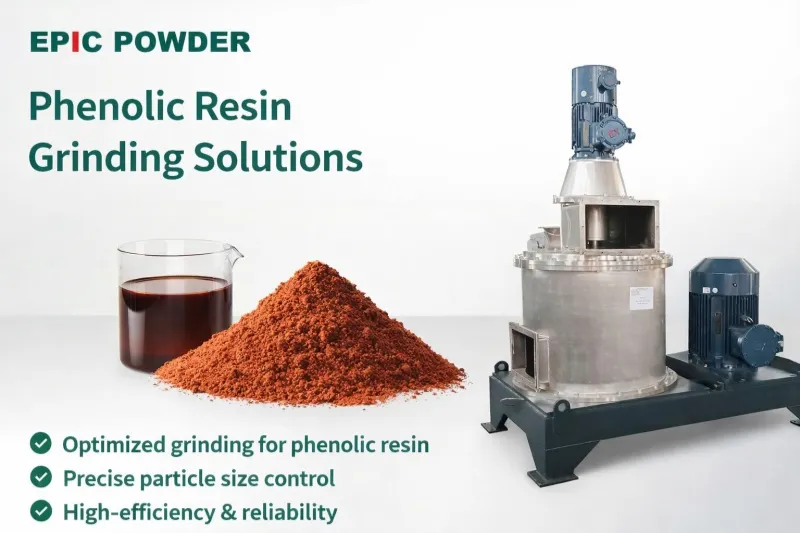
Phenolharz (Phenol-Formaldehyd-Harz) ist ein klassisches Duroplast, das in Reibmaterialien (Bremsbelägen), Schleifscheiben, Formmassen, feuerfesten Bindemitteln und zur Elektronikverkapselung weit verbreitet ist. Um spezifische Leistungsanforderungen zu erfüllen – wie z. B. eine bessere Dispergierung in Verbundwerkstoffen, eine höhere Fließfähigkeit beim Formen oder eine verbesserte Reaktivität in Reibmaterialien – muss Phenolharz oft zu ultrafeinem Pulver verarbeitet werden (üblicherweise D50 < 10–20 μm, in einigen High-End-Anwendungen sogar im Submikrometerbereich). Die Herstellung eines solchen Pulvers ist jedoch mitunter schwierig. ultrafeines Phenolharzpulver Die mechanische Vermahlung stellt eine zentrale Herausforderung dar: die präzise und strikte Temperaturkontrolle. Wird diese nicht sachgemäß durchgeführt, kann dies direkt zu Materialversagen oder erheblichen Leistungseinbußen führen. Dies ist zum kritischsten und anspruchsvollsten Aspekt des gesamten Ultrafeinmahlprozesses geworden.
Die thermische Empfindlichkeit von Phenolharzen – die grundlegende Ursache
Phenolharze werden in zwei Hauptkategorien unterteilt:
- Novolac-Typ (thermoplastisch, säurekatalysiert, benötigt Härter)
- Resol-Typ (duroplastisch, alkalikatalysiert, selbsthärtend durch Wärme)
Beide Typen weisen bereits bei relativ niedrigen Temperaturen eine deutliche thermische Reaktivität auf:
- Der Erweichungspunkt von Novolak liegt üblicherweise bei 70–100 °C.
- Resol beginnt bei etwa 120–150°C (manchmal sogar schon niedriger mit Katalysatoren) merkliche Vernetzungs-/Polykondensationsreaktionen.
- Oberhalb von 150–180°C erfolgt eine schnelle Aushärtung, begleitet von der Freisetzung kleiner Moleküle (Wasser, Formaldehyd usw.).
Bei der Ultrafeinvermahlung (insbesondere mit mechanischen Verfahren wie Strahlmühlen, mechanischen Prallmühlen oder Vibrationsmühlen) entstehen zwangsläufig folgende Wärmequellen:
- Kollisions- und Scherreibung zwischen Partikeln und zwischen Partikeln und Mahlkörpern
- Aufprallwärme von schnelllaufendem Rotor/Stator
- Kompressionswärme in Hochdruckluftströmungen (in Strahlmühlen)
Diese lokalen oder flächigen Temperaturanstiege lassen sich beim konventionellen Schleifen nur schwer vermeiden. Sobald die Materialtemperatur über einen längeren Zeitraum etwa 60–80 °C übersteigt (oder an lokalen Hotspots kurzzeitig 100–120 °C überschreitet), treten mehrere schwerwiegende Probleme auf.
Hauptfolgen einer mangelhaften Temperaturregelung
(1) Vorzeitige Aushärtung / Vernetzung
- Die Pulverpartikel härten teilweise aus → verlieren ihre thermoplastischen Eigenschaften → werden hart und spröde → lassen sich nur schwer weiter pulverisieren
- Ausgehärtete Partikel verklumpen → verstopfen das Klassifizierungssystem oder die Düsen
- Das Endprodukt weist eine uneinheitliche Molekulargewichtsverteilung auf → schlechte Fließfähigkeit, ungleichmäßige Aushärtung in nachfolgenden Anwendungen
(2) Partikelagglomeration und Verkleben
- Lokale Erweichung + leichte Vernetzung → Partikel haften aneinander und an den Gerätewänden.
- Verklumpungen und Ablagerungen sind sehr häufig und reduzieren die Mahlleistung und Ausbeute erheblich.
- Schwere Fälle führen zur Stilllegung des Werks zur Reinigung.
(3) Verschlechterung der Harzeigenschaften
- Verlust flüchtiger Bestandteile (freies Phenol, freies Aldehyd) → Veränderungen der Reaktivität und der Aushärtungseigenschaften
- Dunkelfärbung/Vergilbung → nicht akzeptabel für helle oder optisch anspruchsvolle Anwendungen
- Verminderte Löslichkeit/Fließfähigkeit bei nachfolgenden Compoundiervorgängen → beeinträchtigt Reibungsverhalten, Formbarkeit usw.
(4) Sicherheitsrisiken
- Angestaute Wärme + Feinstaub + Freisetzung von Spuren von Formaldehyd → erhöhtes Risiko einer Staubexplosion oder Reizung
Warum ist ultrafeines Mahlen besonders temperaturempfindlich?
Grobmahlung (z. B. 100–500 μm) erzeugt weniger Wärme pro Masseneinheit, und die kurze Verweilzeit ermöglicht eine natürliche Wärmeabfuhr. Ultrafeinmahlung erfordert jedoch:
- wesentlich höherer spezifischer Energieeintrag (oft 100–1000 kWh/t oder mehr)
- Wiederholte Zyklen / längere kumulative Verweilzeit
- Kleinere Partikelgröße → größere spezifische Oberfläche → schnellere Wärmeaufnahme und schlechtere Wärmeabfuhr
- Feinerer Klassifikator → engerer Durchgang → leichtere lokale Überhitzung
Diese Faktoren vervielfachen die Herausforderung der Temperaturregelung exponentiell.
Aktuelle gängige Lösungen und ihre Grenzen
| Verfahren | Kühlprinzip | Erreichbare Feinheit | Einschränkungen / Kosten |
|---|---|---|---|
| Normale Temperatur + starke externe Kühlung | Luft-/Wassermantel + niedrige Förderrate | ~20–50 μm | Eingeschränkt, lokal dennoch leicht zu überhitzen. |
| Kaltluftschleifen bei niedrigen Temperaturen | -40 °C ~ 0 °C Druckluft | ~10–30 μm | Energieintensiv, für Sub-10 μm immer noch unzureichend |
| Kryogenes Mahlen (flüssiger Stickstoff) | -196 °C Versprödung + Abkühlung | <10 μm, sogar Submikron | Höchste Kosten, komplexe Ausrüstung, hoher Stickstoffverbrauch |
| Nassmahlen + Trocknen | Die erzeugte Wärme wird von der Flüssigkeit absorbiert. | Sehr gut möglich | Der Trocknungsschritt kann zu sekundärer Agglomeration/Aushärtung führen. |
In der industriellen Praxis ist das kryogene Mahlen mit flüssigem Stickstoff derzeit die zuverlässigste Methode zur Herstellung von hochfeinem Phenolharzpulver (insbesondere <15 μm). Die extrem hohen Kosten für flüssigen Stickstoff, der Bedarf an Anlagenmodifikationen und die Prozesskomplexität machen dieses Verfahren jedoch für viele gängige Produkte unwirtschaftlich.
Abschluss
Die Temperaturkontrolle stellt die größte Herausforderung bei der Ultrafeinvermahlung von Phenolharz dar, weil:
- Das Harz selbst weist bei relativ niedrigen Temperaturen eine mittlere bis hohe thermische Reaktivität auf.
- Die Ultrafeinvermahlung ist ein mechanischer Prozess mit hohem spezifischem Energieaufwand und langer Einwirkungsdauer.
- Die Wärmeerzeugung ist unvermeidbar und lokal konzentriert.
- Bereits geringfügige Überhitzung kann zu irreversibler Aushärtung, Verklumpung und Leistungsminderung führen.
Dieser Widerspruch zwischen dem Bedarf an feinerer Pulverisierung und der geringen Hitzebeständigkeit zwingt Hersteller, entweder teure Tieftemperaturverfahren anzuwenden oder gröbere Produkte mit Leistungseinbußen zu akzeptieren. Daher sind Fortschritte bei Mahlanlagen (z. B. effizientere Wärmeableitung), Prozessoptimierung und die Entwicklung reaktionsarmer, modifizierter Phenolharze speziell für die Herstellung ultrafeiner Pulver zu wichtigen Forschungsschwerpunkten in der Industrie geworden.
Nur durch eine wirkliche Lösung des Temperaturregelungsproblems können hochwertige, ultrafeine Phenolharzpulver wirtschaftlich und stabil hergestellt werden, um den immer strengeren Anforderungen nachgelagerter Bereiche wie Hochleistungsreibungsmaterialien, Elektronikgehäuse und fortschrittliche Verbundwerkstoffe gerecht zu werden.
Verwandte Fragen
Frage 1: Was ist der Hauptvorteil der Ultrafeinvermahlung von Phenolharz?
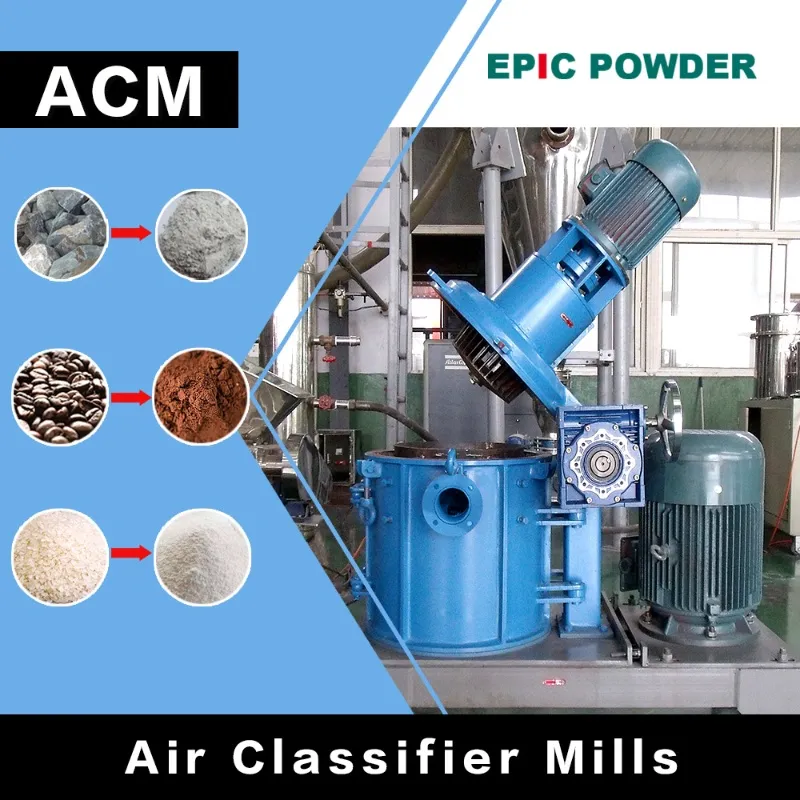
Antwort: Der Hauptvorteil der Ultrafeinvermahlung von Phenolharz liegt in der gesteigerten Effizienz und den verbesserten Verarbeitungsergebnissen. Durch das Aufbrechen des Harzes in ultrafeine Partikel, üblicherweise mit einem d90-Wert von ca. 30 µm, beispielsweise mithilfe einer Windsichtermühle, erzielt das Material eine bessere Dispergierung, Reaktivität und Homogenität. Dies führt zu einer verbesserten Produktqualität und Leistungsfähigkeit in Anwendungen wie Beschichtungen, Klebstoffen und Verbundwerkstoffen.
Frage 2: Wie lässt sich Phenolharz-Ultrafeinvermahlung effektiv durchführen?
Antwort: Für eine erfolgreiche Umsetzung ist ein fundiertes Verständnis der Mahlprinzipien und der verwendeten Anlagen unerlässlich. Der Einsatz moderner Mühlen, wie beispielsweise einer Windsichtermühle, gewährleistet eine präzise Partikelgrößenkontrolle und eine gleichbleibende Feinstvermahlung. Zu den bewährten Verfahren gehören die Optimierung der Mahlparameter für den jeweiligen Harztyp, die Überwachung der Partikelverteilung und die regelmäßige Wartung der Anlagen, um Verunreinigungen zu vermeiden. Für praktische Einblicke empfiehlt sich die Lektüre von Fallstudien zu [hier fehlende Information einfügen]. effizientes Ultrafeinvermahlen ähnlicher Materialien kann sehr hilfreich sein.

Vielen Dank fürs Lesen. Ich hoffe, mein Artikel war hilfreich. Hinterlassen Sie gerne einen Kommentar. Bei weiteren Fragen können Sie sich auch an den Online-Kundendienst von Zelda wenden.
— Gepostet von Emily Chen